
Science
George F. Smoot, Nobel Laureate in Physics, Passes Away at 80

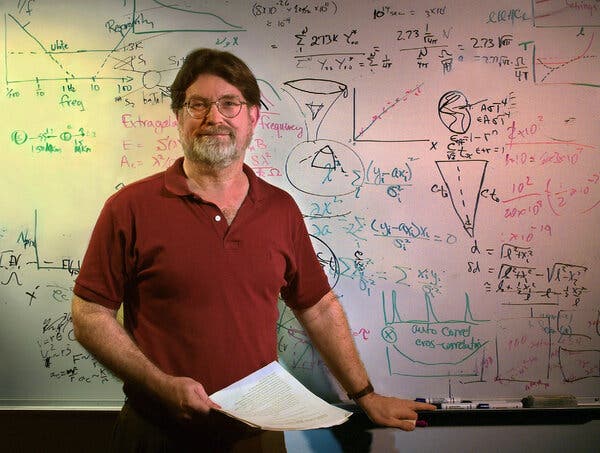
George F. Smoot, an influential American physicist renowned for his contributions to our understanding of the universe, passed away on September 18, 2023, at his residence in Paris. He was 80 years old. His death was confirmed by his sister, Sharon Bowie, and resulted from cardiac arrest.
Dr. Smoot was a prominent research scientist at the Lawrence Berkeley National Laboratory and the Space Sciences Laboratory at the University of California, Berkeley. He gained international acclaim for his leadership of the team that created a detailed image of the early universe using an instrument he developed in the 1970s. This groundbreaking instrument was launched into space in 1989 aboard the NASA satellite known as the Cosmic Background Explorer (COBE). The mission detected minute temperature variations in the remnant light from what many scientists believe was the Big Bang.
These temperature fluctuations revealed how cosmic matter was distributed billions of years ago, serving as the primordial seeds from which galaxies and galaxy clusters eventually formed. Upon announcing the COBE findings in 1992 at an American Physical Society conference, Dr. Smoot remarked, “If you’re religious, it’s like seeing God.” His presentation made headlines globally, most notably in The New York Times, which featured the story as its lead on April 24, under the headline “Scientists Report Profound Insight on How Time Began.” The theoretical physicist Stephen Hawking acknowledged the significance of this work, calling it “the greatest discovery of the century, if not of all time.”
Dr. Smoot’s research built upon earlier discoveries by Arno A. Penzias and Robert W. Wilson, who in 1964 identified the cosmic microwave background, providing compelling evidence that the universe had a beginning marked by a Big Bang. The data obtained from COBE allowed scientists to transition cosmology from a speculative field to one grounded in empirical measurement.
In recognition of his work, Dr. Smoot shared the 2006 Nobel Prize in Physics with John C. Mather, a cosmologist at the NASA Goddard Space Flight Center, for their collaborative efforts with the COBE team. Each scientist played a pivotal role in the project. Despite his acclaim, Dr. Smoot was often viewed as a controversial figure in the scientific community, with some colleagues expressing concerns that he received disproportionate credit for the team’s achievements.
In the days leading up to the 1992 conference, a news release from Berkeley Lab was perceived by many as attributing the discovery of light temperature variations solely to Dr. Smoot and his laboratory, sidelining other key contributors, including NASA. Dr. Smoot later explored the journey to this landmark discovery in his 1993 book, “Wrinkles in Time: Witness to the Birth of the Universe.” Some of his collaborators, including Dr. Mather, published their own accounts, highlighting discrepancies in their narratives.
Born on February 20, 1945, in Yukon, Florida, George Fitzgerald Smoot III was raised in a family that valued education and science. His father, a World War II fighter pilot, later became a hydrologist, while his mother worked as a science teacher and school principal. The family moved several times due to his father’s work with the United States Geological Survey.
Dr. Smoot pursued higher education at the Massachusetts Institute of Technology, where he earned degrees in physics and mathematics in 1966, followed by a Ph.D. in particle physics in 1970. He later transitioned to cosmology under the mentorship of Nobel laureate Luis Alvarez at Berkeley. Together with physicist Richard Muller, Dr. Smoot developed an innovative instrument to measure temperature differences in the cosmic microwave background.
This instrument was initially tested on a U-2 spy plane, leading to one of the first measurements indicating the Milky Way’s rapid movement through space, propelled by the gravitational influence of a larger mass. In 1974, Dr. Smoot proposed sending his instrument into space, which eventually contributed to the formation of the COBE project.
The successful launch of COBE solidified the connection between the cosmic microwave background and the Big Bang, measuring the background temperature at approximately 2.7 kelvin (about minus 455 degrees Fahrenheit). Dr. Smoot’s team detected minute variations in that temperature, leading to groundbreaking insights into the formation of the universe. He described this meticulous measurement as akin to “listening for a whisper during a noisy beach party.”
The discoveries made by COBE not only confirmed the Big Bang theory but also provided strong support for the existence of dark matter and the theory of cosmic inflation, which posits a rapid expansion of the universe shortly after its inception. Subsequent missions, including the Planck observatory launched in 2009, further refined these measurements, with Dr. Smoot among those who proposed the mission.
In 1994, Dr. Smoot became a professor at Berkeley and generously donated a significant portion of his Nobel Prize winnings to establish the Berkeley Center for Cosmological Physics, where he served as the founding director. He played a crucial role in establishing cosmology institutes globally, including in France and South Korea. His professional accolades included election to the National Academy of Sciences and the National Academy of Inventors.
Later in his career, Dr. Smoot joined Paris Cité University and became affiliated with the Astroparticle and Cosmology Laboratory. He was married to Maxine Bixby from 1969 until their divorce in 1979. He is survived by his partner, Nóra Csiszár, and his sister.
Dr. Smoot increasingly engaged in public outreach and science education, launching initiatives to teach high school students and educators about cosmology. He conducted an online course on gravity that attracted over 87,000 participants. His presence extended beyond academia, as he appeared on the CBS sitcom “The Big Bang Theory” and participated in the Fox game show “Are You Smarter Than a Fifth Grader?” In a memorable moment, he won $1 million, which he dedicated to creating scholarships and fellowships for aspiring scientists.
As a scientist, Dr. Smoot’s legacy will be remembered not only for his remarkable discoveries but also for his commitment to inspiring future generations in the field of cosmology.

Philadelphia Parks Launch Free Earth Month Events Starting April 1

Bradford’s Fish Fry Fridays Serve Community with Delicious Dinners

Trump Faces Growing Challenges Amid Rising Tensions with Iran

Scientists Probe the Universe’s Missing Topological Defects

Samsung Galaxy Watch 9 to Feature Larger 435mAh Battery

UConn Huskies Aim to Defend Title in 2026 NCAA Women’s Tournament

U.S. Littoral Combat Ships Dock in Malaysia Amid Regional Tensions

Healthy Choice Wellness Reports Quarterly Earnings, Shares Rise

Urgent News: Charles M. Payment Passes Away at 78 in Duluth

University of Hawaiʻi Joins $25.6M AI Project to Enhance Disaster Monitoring

Major Grant Enhances Cancer Care and Research in Hawaiʻi

Joleen Chaney, Beloved Journalist, Passes Leaving Lasting Legacy

San Francisco’s SFO to Welcome 16 Airlines with Nonstop Flights to Europe in 2026

Goldman Sachs Unveils 2026 Catalyst Playbook for Biotech Investors

Discover Top Business Smartphones for Professionals in 2026

Urgent Update: Tom Aspinall’s Vision Deteriorates After UFC 321

Texas Roadhouse Honors Veterans with Free Meal Vouchers

CD Projekt Red Confirms No Release for The Witcher 4 in 2026
-
Science9 months ago
University of Hawaiʻi Joins $25.6M AI Project to Enhance Disaster Monitoring
-
 Health8 months ago
Major Grant Enhances Cancer Care and Research in Hawaiʻi
-
 Top Stories9 months ago
Joleen Chaney, Beloved Journalist, Passes Leaving Lasting Legacy
-
 World7 months ago
San Francisco’s SFO to Welcome 16 Airlines with Nonstop Flights to Europe in 2026
-
 Business8 months ago
Goldman Sachs Unveils 2026 Catalyst Playbook for Biotech Investors
-
 Business7 months ago
Discover Top Business Smartphones for Professionals in 2026
-
 Top Stories9 months ago
Urgent Update: Tom Aspinall’s Vision Deteriorates After UFC 321
-
 Lifestyle9 months ago
Texas Roadhouse Honors Veterans with Free Meal Vouchers
-
 Entertainment8 months ago
CD Projekt Red Confirms No Release for The Witcher 4 in 2026
-

 Top Stories10 months ago
AI Disruption: AWS Faces Threat as Startups Shift Cloud Focus
-

 Health10 months ago
MIT Scientists Uncover Surprising Genomic Loops During Cell Division
-

 Entertainment10 months ago
Discover the Full Map of Pokémon Legends: Z-A’s Lumiose City