
Politics
Ohio Democrats Eye Five Congressional Seats Amid New Redistricting

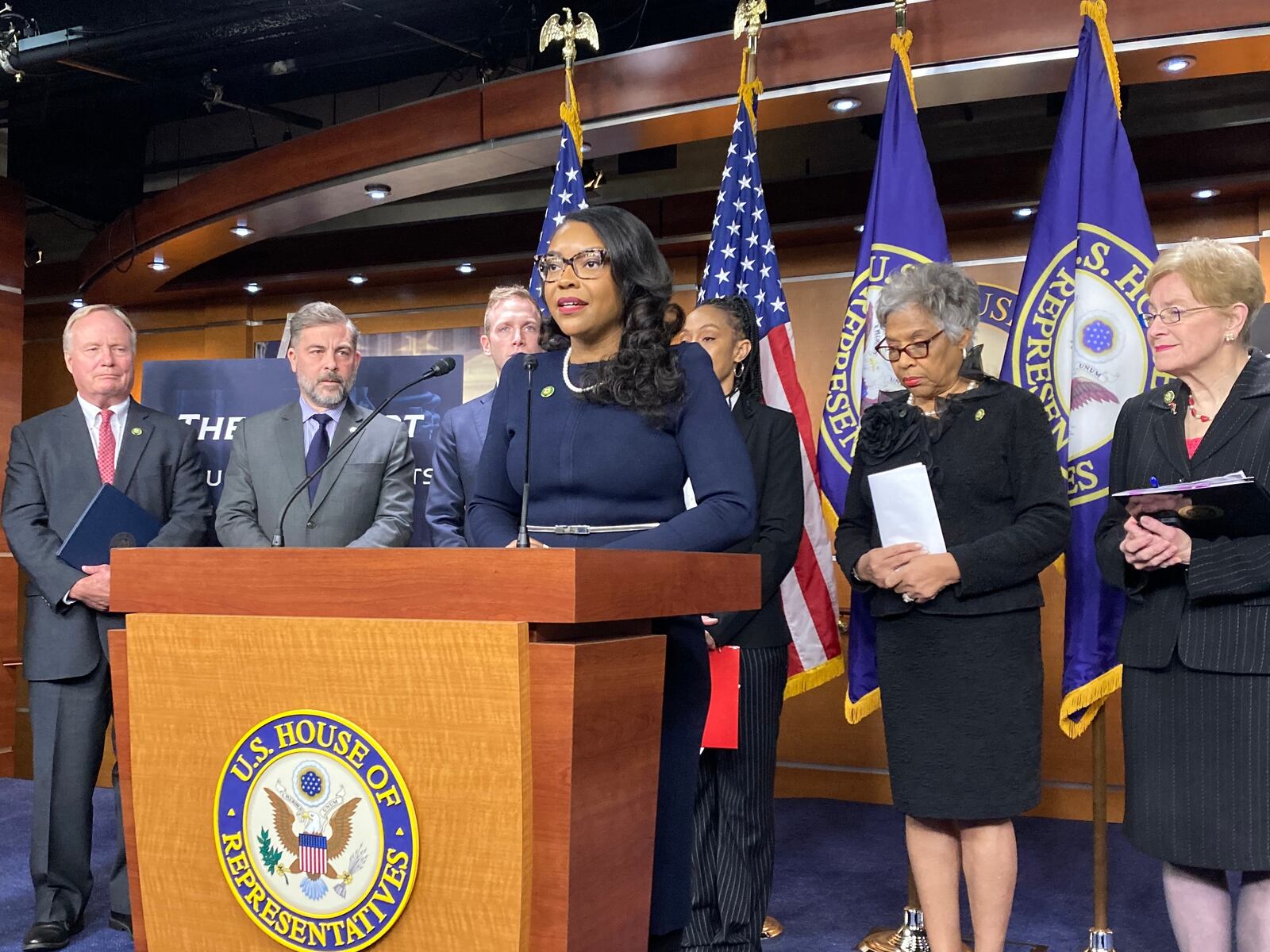
U.S. Representative Emilia Sykes believes that Ohio Democrats have a viable path to secure five congressional seats, despite the recent redistricting efforts led by Republicans. The newly drawn map, approved by the Ohio Redistricting Commission last week, reflects ongoing challenges for Democrats in their bid to regain control of the U.S. House of Representatives in the upcoming 2026 elections.
Sykes criticized the redistricting plan, calling it “a tragic ending” to Republican efforts that disregard the wishes of Ohio voters. In 2018, voters passed a constitutional amendment aimed at combating partisan gerrymandering. Sykes noted that the previous map, which favored Republicans with a 12-3 majority, still allowed five Democrats to win in the last election cycle.
In a recent interview, Sykes expressed optimism about the 2026 elections, stating, “We had a 12-3 map a week ago… It’s still possible for five Democrats to win, and that’s what we’re focused on.” The newly approved map alters the political landscape in Ohio, shifting the 13th Congressional District, which Sykes represents, from a competitive 50-50 district to one that leans Democratic.
The bipartisan agreement on the redistricting plan came after a last-minute negotiation between Democratic and Republican leaders. Although Ohio House Minority Leader Dani Isaacsohn acknowledged that the new map does not fully align with the fair representation that Ohio voters deserve, she considered it a necessary compromise to prevent the implementation of a more aggressively gerrymandered proposal.
The new boundaries will be in effect from the 2026 midterm elections until 2031. Notably, the redistricting has caused former Republican state legislator Kevin Coughlin to withdraw from the race against Sykes, as the changes diminished his chances of winning.
Republican Brian Stewart, who co-chaired the redistricting commission, indicated that the approved map favors Republicans in 12 out of the 15 congressional seats, up from the current 10. He commented on social media, “In a really good year, we could get to 13,” emphasizing the need for strong Republican candidates and effective campaigns.
The redistricting also impacts the districts represented by other Democrats, such as Greg Landsman and Marcy Kaptur. Landsman’s district was adjusted to include more Republican-leaning areas, while Kaptur’s district became significantly more Republican by incorporating some of the most conservative counties in the state.
The latest redistricting follows years of legal disputes over Ohio’s congressional maps. Despite constitutional amendments passed by voters to prevent gerrymandering, the Republican-controlled commission has repeatedly drawn maps that have been deemed unconstitutional by the state’s Supreme Court.
When asked about what constitutes a fair map, Sykes referred to the state’s constitutional language suggesting an 8 to 7 split in Congress. She criticized the failure to adhere to court rulings and the constitutional intent, stating, “The will of Ohio voters is pretty shameful.”
Ohio’s redistricting efforts reflect a broader trend across the United States, where several states have engaged in mid-decade map redrawing. This initiative has been encouraged by former President Donald Trump, who urged Republican-led states to enhance their prospects for maintaining control of the House.
Despite the obstacles posed by the new map, Sykes remains hopeful about the Democratic Party’s chances in 2026. She pointed to the adverse effects of Republican governance on the American public, citing rising costs, inflation, and cuts to crucial programs. “The American public is feeling the effect of Republican governance, and they don’t like it,” she said, emphasizing the importance of addressing these issues as the elections approach.

Urgent: Vehicle Fire Closes Two Lanes on I-215 in Salt Lake City

Knicks Dominate Raptors 116-94, Extend Home Winning Streak

Hallmark’s ‘Christmas at the Catnip Café’ Premieres Tonight

Woman Arrested for Threatening U-Haul Worker with Baton

Japan’s PM Takaichi Vows Urgent Fiscal Management Amid Rate Trends

Bitcoin Plummets Below $88K Amid Tether Concerns and Warnings

Tottenville Falls Short in PSAL 4A Title Game Against Erasmus

Shark Teeth Study Reveals Urgent Clues to Prevent Extinction

Church Members Rally Together After Thanksgiving Fire Devastation

Urgent Update: Tom Aspinall’s Vision Deteriorates After UFC 321

MIT Scientists Uncover Surprising Genomic Loops During Cell Division

University of Hawaiʻi Joins $25.6M AI Project to Enhance Disaster Monitoring

AI Disruption: AWS Faces Threat as Startups Shift Cloud Focus

Time Crystals Revolutionize Quantum Computing Potential

Honeywell Forecasts Record Business Jet Deliveries Over Next Decade

Discover the Full Map of Pokémon Legends: Z-A’s Lumiose City

GOP Faces Backlash as Protests Surge Against Trump Policies

Parenthood Set to Depart Hulu: What Fans Need to Know
-
 Top Stories1 month ago
Urgent Update: Tom Aspinall’s Vision Deteriorates After UFC 321
-
 Health1 month ago
MIT Scientists Uncover Surprising Genomic Loops During Cell Division
-
Science4 weeks ago
University of Hawaiʻi Joins $25.6M AI Project to Enhance Disaster Monitoring
-
 Top Stories1 month ago
AI Disruption: AWS Faces Threat as Startups Shift Cloud Focus
-
 Science2 months ago
Time Crystals Revolutionize Quantum Computing Potential
-
 World2 months ago
Honeywell Forecasts Record Business Jet Deliveries Over Next Decade
-
 Entertainment1 month ago
Discover the Full Map of Pokémon Legends: Z-A’s Lumiose City
-
 Top Stories2 months ago
GOP Faces Backlash as Protests Surge Against Trump Policies
-
 Entertainment2 months ago
Parenthood Set to Depart Hulu: What Fans Need to Know
-

 Politics2 months ago
Judge Signals Dismissal of Chelsea Housing Case Citing AI Flaws
-

 Sports2 months ago
Yoshinobu Yamamoto Shines in Game 2, Leading Dodgers to Victory
-

 Health2 months ago
Maine Insurers Cut Medicare Advantage Plans Amid Cost Pressures