
Science
Congresswoman Demands NASA Release Data on Accelerating 3I/ATLAS

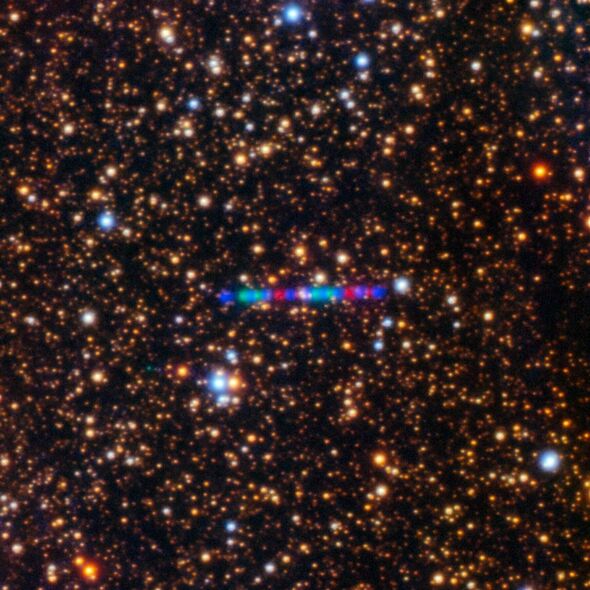
Concerns about a rapidly approaching object designated as 3I/ATLAS have prompted Florida Congresswoman Anna Paulina Luna to call on NASA to release data and images related to this unusual interstellar visitor. The object, described as being the size of Manhattan, has been reported to accelerate unexpectedly as it nears Earth, raising questions about its nature and trajectory.
In a post on X, Congresswoman Luna emphasized the importance of transparency, stating, “I write to request the release of specific observational data related to 3I/ATLAS, recently captured by NASA missions. This information is of great importance to advancing our understanding of interstellar visitors and their interaction with our solar system.” She specifically requested images from the HiRISE camera on the Mars Reconnaissance Orbiter, taken between October 2 and 3, 2025, as well as supplementary data from the Perseverance Rover and other Mars missions that may have detected any unusual activity.
As 3I/ATLAS approaches, scientists noted that it has accelerated from approximately 130,000 mph to 152,000 mph. This increase in speed is attributed to an “extra kick” that cannot be explained solely by the gravitational pull of the Sun, which dominates the solar system’s mass. Traditional models of gravitational dynamics predict a more predictable path for such celestial bodies, leading scientists to question the current understanding of gravity itself.
Most astronomers classify 3I/ATLAS as a comet that has traveled from another star system over billions of years. However, Avi Loeb, a theoretical physicist and professor at Harvard University, has proposed an alternative theory. He suggests that the object’s characteristics, including its acceleration and distinctive blue color, could indicate it is an “extraterrestrial artifact” rather than a typical comet.
Loeb argues that if 3I/ATLAS were a standard comet, the heat from the Sun would cause it to release gas jets, potentially altering its trajectory. “If no gas cloud is detected emanating from the object, it could be a clear indication that this latest speed boost was powered by an extraterrestrial rocket engine,” he stated, highlighting the need for further investigation.
With 3I/ATLAS expected to reach its closest point to Earth in just six weeks, the urgency for NASA to share relevant data increases. The information collected could be crucial for understanding not only this object but also the broader implications of interstellar travel and the nature of our solar system.
As the debate continues, Congresswoman Luna’s demand reflects a growing public interest in space phenomena. The release of NASA’s findings could shed light on the mysteries of 3I/ATLAS and inform future explorations of interstellar objects.

Philadelphia Parks Launch Free Earth Month Events Starting April 1

Bradford’s Fish Fry Fridays Serve Community with Delicious Dinners

Trump Faces Growing Challenges Amid Rising Tensions with Iran

Scientists Probe the Universe’s Missing Topological Defects

Samsung Galaxy Watch 9 to Feature Larger 435mAh Battery

UConn Huskies Aim to Defend Title in 2026 NCAA Women’s Tournament

U.S. Littoral Combat Ships Dock in Malaysia Amid Regional Tensions

Healthy Choice Wellness Reports Quarterly Earnings, Shares Rise

Urgent News: Charles M. Payment Passes Away at 78 in Duluth

University of Hawaiʻi Joins $25.6M AI Project to Enhance Disaster Monitoring

Major Grant Enhances Cancer Care and Research in Hawaiʻi

Joleen Chaney, Beloved Journalist, Passes Leaving Lasting Legacy

San Francisco’s SFO to Welcome 16 Airlines with Nonstop Flights to Europe in 2026

Goldman Sachs Unveils 2026 Catalyst Playbook for Biotech Investors

Discover Top Business Smartphones for Professionals in 2026

Urgent Update: Tom Aspinall’s Vision Deteriorates After UFC 321

Texas Roadhouse Honors Veterans with Free Meal Vouchers

CD Projekt Red Confirms No Release for The Witcher 4 in 2026
-
Science9 months ago
University of Hawaiʻi Joins $25.6M AI Project to Enhance Disaster Monitoring
-
 Health8 months ago
Major Grant Enhances Cancer Care and Research in Hawaiʻi
-
 Top Stories9 months ago
Joleen Chaney, Beloved Journalist, Passes Leaving Lasting Legacy
-
 World7 months ago
San Francisco’s SFO to Welcome 16 Airlines with Nonstop Flights to Europe in 2026
-
 Business8 months ago
Goldman Sachs Unveils 2026 Catalyst Playbook for Biotech Investors
-
 Business8 months ago
Discover Top Business Smartphones for Professionals in 2026
-
 Top Stories9 months ago
Urgent Update: Tom Aspinall’s Vision Deteriorates After UFC 321
-
 Lifestyle9 months ago
Texas Roadhouse Honors Veterans with Free Meal Vouchers
-
 Entertainment8 months ago
CD Projekt Red Confirms No Release for The Witcher 4 in 2026
-

 Top Stories10 months ago
AI Disruption: AWS Faces Threat as Startups Shift Cloud Focus
-

 Health10 months ago
MIT Scientists Uncover Surprising Genomic Loops During Cell Division
-

 Entertainment10 months ago
Discover the Full Map of Pokémon Legends: Z-A’s Lumiose City