
Science
Startup Unveils Breakthrough Satellite Thruster Using Naphthalene

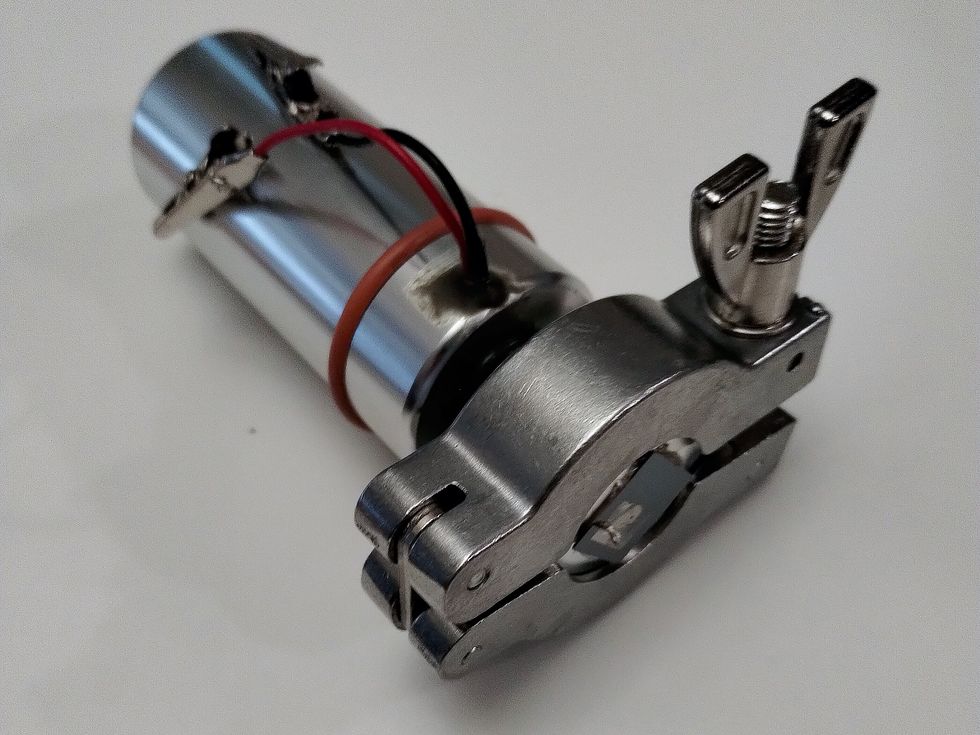
A startup named Orbital Arc has announced a revolutionary spacecraft thruster that promises to be up to 40 percent more power efficient than existing technologies. This new thruster not only costs less than a thousandth of traditional fuels but also weighs significantly less, making it a game-changer for satellite operators and mission planners aiming for interplanetary exploration.
According to Jonathan Huffman, the founder of Orbital Arc, the design minimizes size without sacrificing performance. “We can go from a thruster that’s a few inches across and several kilograms to a thruster on a chip that’s about an inch across and has the same thrust output, but weighs about an eighth as much,” he explained. The company claims that this compact thruster could fit on the smallest low-Earth orbit satellites while providing enough power for ambitious missions beyond our planet.
Innovative Design and Propulsion Mechanism
The technology behind this new thruster diverges from traditional methods. Current thrusters, such as Hall thrusters, rely on creating and expelling plasma to generate thrust. Orbital Arc’s approach utilizes naphthalene, a common compound found in mothballs, combined with MEMS microfabrication techniques. Huffman, who has a background in biotech consulting, drew inspiration from his hobby of designing fictional technologies for video games. This unique perspective allowed him to identify limitations in existing ion thrusters that could be overcome.
Each thruster features millions of nanometer-sized, positively charged tips embedded in a chip. When naphthalene flows through these tips, its molecules become polarized, allowing ions to be generated efficiently. “The repelled ions fly by and spray out into space, propelling the spacecraft forward,” Huffman stated. This method eliminates the energy losses associated with traditional plasma methods, potentially leading to a 30 to 40 percent improvement in energy efficiency.
Testing conducted by Orbital Arc demonstrated that just six of their tips could generate about three times more ion current than a conventional array of 320,000 tips from Massachusetts Institute of Technology (MIT). This efficiency is a crucial factor for both cost and performance in satellite operations.
Prospects and Challenges Ahead
As it stands, the thruster is still in the prototype phase, with initial chips containing only six tips fabricated in a cleanroom at Oak Ridge National Laboratory. The next step involves scaling the design for full production, which Huffman describes as straightforward. “It’s a valve, it’s a few wires, it’s a few structural components. Very, very straightforward,” he noted.
The anticipated launch of this technology could attract interest from small teams and research groups eager to leverage the potential cost savings and efficiency. Naphthalene presents a compelling alternative to more expensive fuels like xenon, which can cost around US $3,000 per kilogram compared to naphthalene’s $1.50 per kilogram price.
Despite the excitement surrounding Orbital Arc’s innovation, experts express caution. Jonathan MacArthur, a postdoctoral researcher at Princeton University, urges the startup to provide more data to substantiate their claims, particularly regarding safety and performance. He highlighted the necessity for customers to have reliable data when selecting propulsion systems, indicating that many might hesitate to adopt unproven technology.
The potential for Orbital Arc’s thrusters extends beyond small missions. Huffman envisions a future where these thrusters could enable more ambitious projects, including human-rated missions to distant destinations like Jupiter. By reducing the mass of spacecraft components, such as solar panels and fuel tanks, the company aims to transform the landscape of space exploration.
In summary, Orbital Arc’s innovative thruster design represents a significant advancement in satellite propulsion technology. As the company prepares for further testing and development, it could open new doors for affordable and efficient missions in the vast expanse of outer space.

Philadelphia Parks Launch Free Earth Month Events Starting April 1

Bradford’s Fish Fry Fridays Serve Community with Delicious Dinners

Trump Faces Growing Challenges Amid Rising Tensions with Iran

Scientists Probe the Universe’s Missing Topological Defects

Samsung Galaxy Watch 9 to Feature Larger 435mAh Battery

UConn Huskies Aim to Defend Title in 2026 NCAA Women’s Tournament

U.S. Littoral Combat Ships Dock in Malaysia Amid Regional Tensions

Healthy Choice Wellness Reports Quarterly Earnings, Shares Rise

Urgent News: Charles M. Payment Passes Away at 78 in Duluth

University of Hawaiʻi Joins $25.6M AI Project to Enhance Disaster Monitoring

Major Grant Enhances Cancer Care and Research in Hawaiʻi

Joleen Chaney, Beloved Journalist, Passes Leaving Lasting Legacy

San Francisco’s SFO to Welcome 16 Airlines with Nonstop Flights to Europe in 2026

Goldman Sachs Unveils 2026 Catalyst Playbook for Biotech Investors

Discover Top Business Smartphones for Professionals in 2026

Urgent Update: Tom Aspinall’s Vision Deteriorates After UFC 321

Texas Roadhouse Honors Veterans with Free Meal Vouchers

CD Projekt Red Confirms No Release for The Witcher 4 in 2026
-
Science9 months ago
University of Hawaiʻi Joins $25.6M AI Project to Enhance Disaster Monitoring
-
 Health8 months ago
Major Grant Enhances Cancer Care and Research in Hawaiʻi
-
 Top Stories9 months ago
Joleen Chaney, Beloved Journalist, Passes Leaving Lasting Legacy
-
 World7 months ago
San Francisco’s SFO to Welcome 16 Airlines with Nonstop Flights to Europe in 2026
-
 Business8 months ago
Goldman Sachs Unveils 2026 Catalyst Playbook for Biotech Investors
-
 Business7 months ago
Discover Top Business Smartphones for Professionals in 2026
-
 Top Stories9 months ago
Urgent Update: Tom Aspinall’s Vision Deteriorates After UFC 321
-
 Lifestyle9 months ago
Texas Roadhouse Honors Veterans with Free Meal Vouchers
-
 Entertainment8 months ago
CD Projekt Red Confirms No Release for The Witcher 4 in 2026
-

 Top Stories10 months ago
AI Disruption: AWS Faces Threat as Startups Shift Cloud Focus
-

 Health10 months ago
MIT Scientists Uncover Surprising Genomic Loops During Cell Division
-

 Entertainment10 months ago
Discover the Full Map of Pokémon Legends: Z-A’s Lumiose City