
Health
Trump Administration’s Baby Bonus Faces Criticism Amid Policy Cuts

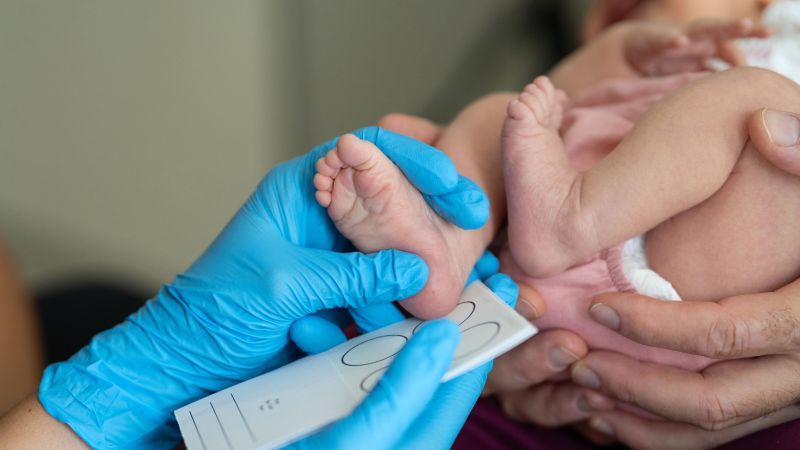
The Trump administration is actively promoting policies aimed at increasing the U.S. birth rate, introducing initiatives such as a proposed baby bonus of $1,000 and improved access to infertility treatments. However, critics argue that these efforts do not address the underlying issues affecting family planning, including cuts to essential federal programs that support women and children.
Maddy Olcott, a junior at the State University of New York-Purchase College, expressed skepticism about the administration’s incentives. “A $1,000 baby bonus? It’s low-key like, what, bro? That wouldn’t even cover my month’s rent,” said the 20-year-old, who plans to pursue a career after graduation instead of starting a family.
In mid-October, the White House unveiled a plan to enhance access to in vitro fertilization (IVF) treatments, with President Donald Trump dubbing himself “the fertilization president.” However, reproductive rights groups such as Population Connection argue that the administration’s broader policies undermine the very support systems necessary for families to thrive.
Critics contend that while the government promotes pro-family initiatives, it simultaneously cuts funding for vital programs like Medicaid and the Children’s Health Insurance Program. These cuts, they argue, hinder access to healthcare and financial support for families. According to the Congressional Budget Office, new Medicaid work requirements introduced by the Republicans’ One Big Beautiful Bill Act could lead to millions losing coverage. This program is crucial, as Medicaid accounts for more than 40% of births in the U.S.
Marian Starkey, a spokesperson for Population Connection, highlighted the risks of the administration’s approach. “The religious right wants more white Christian babies and is trying to curtail women’s reproductive freedom in order to achieve that aim,” she said. Starkey emphasized that the erosion of reproductive rights poses a significant danger to women’s health.
The administration’s focus on boosting birth rates is also reflected in financial initiatives. The proposed “Trump Account” would provide a $1,000 federal deposit for every eligible child, with parents allowed to contribute up to $5,000 annually. This program aims to promote long-term savings for children but has drawn criticism for being insufficient in addressing the high costs associated with raising a family.
Despite the push for increased childbirth, data suggests that the administration’s policies may not yield the desired outcomes. The U.S. birth rate has been on a downward trend since 2007, with the Centers for Disease Control and Prevention reporting an average decline of 2% per year from 2015 to 2020. Other countries with extensive family support programs, such as France and Sweden, have also experienced falling birth rates, suggesting that financial incentives alone may not reverse the trend.
The debate over the administration’s pronatalist policies extends to immigration, with analysts noting that boosting immigration could provide a younger labor force and a stronger tax base. However, the Trump administration’s restrictive immigration policies have led to a decline in the immigrant population, marking the first drop since the 1960s, according to analysis by the Pew Research Center.
Allyson Crays, a public health law analyst, pointed out that the current political rhetoric often overlooks the needs of single mothers and low-income families. “There is a lot of rhetoric about who is worthy of public assistance, and to many policymakers, it’s not the single mother,” she said.
As the Trump administration continues to champion pronatalist policies, many critics remain unconvinced that these measures will provide the necessary support for families. Amy Matsui, vice president of income security and childcare at the National Women’s Law Center, stated, “You’re not seeing policies that support families with children.”
With the administration’s focus on increasing birth rates, the intersection of policy and personal choice remains a contentious issue, as families grapple with the realities of modern life and the rising costs associated with raising children.

South Korea Strengthens FX Oversight in Urgent Market Stabilization

U.S. Climate Stance Sparks Global Call for Action and Tariffs

Cyber Monday Mattress Deals: Save Up to 59% Today Only!

Razorbacks Suffer Defeat Against Duke, Eye Louisville Showdown

Swiss Residents Reject 50% Inheritance Tax on Wealthy Citizens

Texas Oil Firm Fights California to Restart Offshore Platforms

Alexander Skarsgård Celebrates British Cinema at BIFA 2025

GOP Faces Urgent Deadline to Decide on Affordable Care Act Funding

Stay Organized This Holiday Season with the Midea Air Fryer

Urgent Update: Tom Aspinall’s Vision Deteriorates After UFC 321

MIT Scientists Uncover Surprising Genomic Loops During Cell Division

University of Hawaiʻi Joins $25.6M AI Project to Enhance Disaster Monitoring

AI Disruption: AWS Faces Threat as Startups Shift Cloud Focus

Time Crystals Revolutionize Quantum Computing Potential

Honeywell Forecasts Record Business Jet Deliveries Over Next Decade

Discover the Full Map of Pokémon Legends: Z-A’s Lumiose City

GOP Faces Backlash as Protests Surge Against Trump Policies

Parenthood Set to Depart Hulu: What Fans Need to Know
-
 Top Stories1 month ago
Urgent Update: Tom Aspinall’s Vision Deteriorates After UFC 321
-
 Health1 month ago
MIT Scientists Uncover Surprising Genomic Loops During Cell Division
-
Science4 weeks ago
University of Hawaiʻi Joins $25.6M AI Project to Enhance Disaster Monitoring
-
 Top Stories1 month ago
AI Disruption: AWS Faces Threat as Startups Shift Cloud Focus
-
 Science2 months ago
Time Crystals Revolutionize Quantum Computing Potential
-
 World2 months ago
Honeywell Forecasts Record Business Jet Deliveries Over Next Decade
-
 Entertainment1 month ago
Discover the Full Map of Pokémon Legends: Z-A’s Lumiose City
-
 Top Stories1 month ago
GOP Faces Backlash as Protests Surge Against Trump Policies
-
 Entertainment2 months ago
Parenthood Set to Depart Hulu: What Fans Need to Know
-

 Politics2 months ago
Judge Signals Dismissal of Chelsea Housing Case Citing AI Flaws
-

 Sports2 months ago
Yoshinobu Yamamoto Shines in Game 2, Leading Dodgers to Victory
-

 Health2 months ago
Maine Insurers Cut Medicare Advantage Plans Amid Cost Pressures