
Politics
Abbott’s Shift: Supporting Trump’s Expansion of Federal Authority

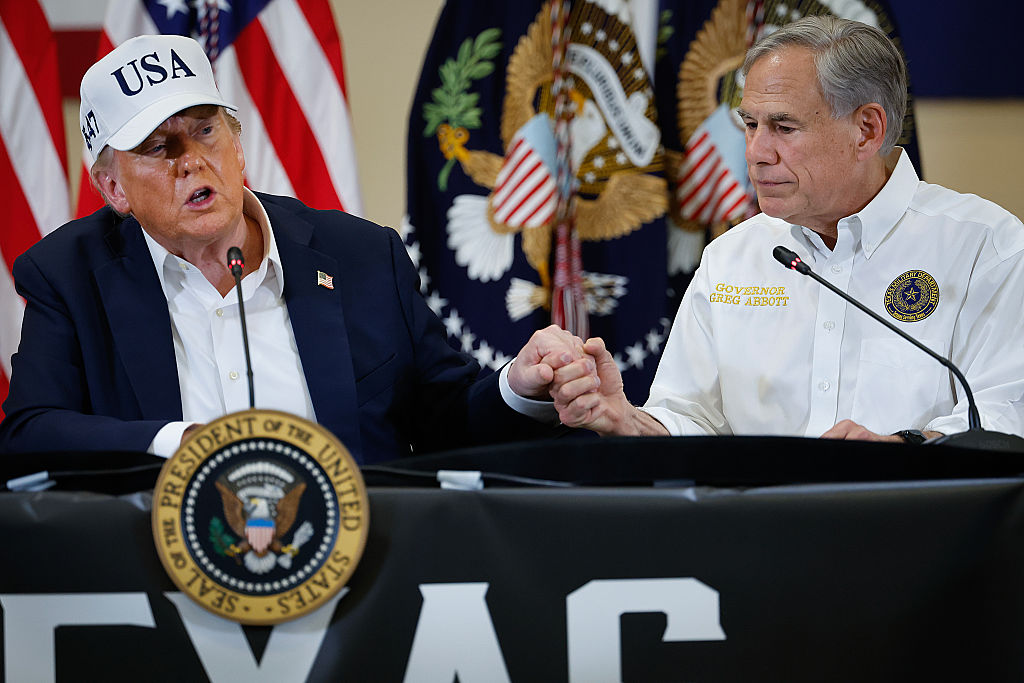
Texas Governor Greg Abbott has shifted his position on federal power, aligning himself with Donald Trump as the president seeks to expand executive authority. In a controversial move, Abbott authorized the deployment of Texas National Guard members to Illinois and Oregon to assist federal law enforcement with immigration enforcement, despite previously criticizing federal overreach.
Abbott’s change of heart marks a significant turnaround from his earlier stance. Last year, he joined a bipartisan group of governors in denouncing a plan from the Biden administration that would have transferred Air National Guard units from six states to the U.S. Space Force. In an open letter to President Biden, Abbott described the plan as an “intolerable threat” to state sovereignty and warned of a “dangerous precedent.”
In contrast, during a recent Fox News appearance, Abbott expressed his backing for Trump’s deployment of Texas troops, stating that the president has the authority to mobilize National Guard members to ensure public safety. “President Trump and I have a good, longstanding working relationship,” Abbott remarked, adding that their goals align on national security matters.
This apparent contradiction has drawn criticism from fellow governors, including Oklahoma Governor Kevin Stitt, who voiced concerns about Abbott’s actions. Stitt emphasized that such deployments contradict the principles of federalism, stating, “We believe in the federalist system—that’s states’ rights.”
Abbott’s support for Trump’s actions reflects a broader trend described by legal scholars as “partisan federalism.” This concept highlights how state leaders’ commitment to defending their sovereignty often fluctuates based on the political affiliation of the sitting president. According to Victoria Nourse, a professor at Georgetown University Law Center, Abbott’s actions set a precarious precedent. “What he’s doing is short-term gain for his political positions, but not for Texas as a state moving forward,” Nourse explained.
The implications of Abbott’s support extend beyond Texas. His recent decisions, including assisting federal immigration enforcement and redrawing legislative boundaries to favor Republican representation, demonstrate a willingness to compromise state authority in favor of federal alignment. According to Jessica Bulman-Pozen, a constitutional law expert at Columbia University, this diminishes governors’ traditional powers over state law enforcement and sets a troubling example for future governance.
Despite multiple requests for comment, Abbott did not respond to inquiries from ProPublica and The Texas Tribune. Supporters of his actions, including representatives from the Texas Public Policy Foundation, argue that Abbott is legally justified in his support of federal authority. They contend that states cannot obstruct the lawful actions of the federal government, framing Abbott’s cooperation as a necessary response to maintain order.
Critics, however, warn that Abbott’s alignment with Trump’s agenda undermines the cooperative spirit that has historically characterized relations between states. Retired law professor Ron Beal criticized Abbott for providing Trump with a pretext to interfere in state matters. “It is simply outrageous that Abbott would participate and cooperate with such activity,” Beal stated.
Abbott’s long-standing advocacy for states’ rights also complicates his current alignment with Trump. In 2016, he authored a comprehensive essay defending state sovereignty against what he characterized as executive overreach by the Obama administration. He argued that the Constitution was designed to empower states to check federal authority. His recent support for federal initiatives contrasts sharply with his previous assertions.
As Abbott pursues re-election, he faces scrutiny over his evolving stance on federal power. His backing of Trump’s redistricting strategy has drawn particular attention, as it breaks from the traditional ten-year cycle of congressional district adjustments to create more favorable conditions for the Republican Party in the upcoming 2026 midterm elections.
In response to the ongoing legal battles surrounding the deployment of Texas National Guard troops, Abbott has expressed his intention to appeal a recent federal court ruling that blocked the deployment. The U.S. Supreme Court has placed the case on its emergency docket, with its decision expected to have implications for the legality of similar actions in the future.
The ongoing situation raises significant questions about the balance of power between state and federal authorities. Legal experts caution that Abbott’s decisions could make it easier for future presidents to assert control over state affairs. As James Gardner, a constitutional law professor, noted, “By altering the Constitution’s contemplated balance of power, it makes it easier for the central government to crush dissenting states.”
In a climate of shifting political alliances and power dynamics, Abbott’s actions serve as a critical case study on the complexities and contradictions of federalism in the United States. The outcome of these developments may have lasting effects on the governance of Texas and the broader relationship between states and the federal government.

South Korea Strengthens FX Oversight in Urgent Market Stabilization

U.S. Climate Stance Sparks Global Call for Action and Tariffs

Cyber Monday Mattress Deals: Save Up to 59% Today Only!

Razorbacks Suffer Defeat Against Duke, Eye Louisville Showdown

Swiss Residents Reject 50% Inheritance Tax on Wealthy Citizens

Texas Oil Firm Fights California to Restart Offshore Platforms

Alexander Skarsgård Celebrates British Cinema at BIFA 2025

GOP Faces Urgent Deadline to Decide on Affordable Care Act Funding

Stay Organized This Holiday Season with the Midea Air Fryer

Urgent Update: Tom Aspinall’s Vision Deteriorates After UFC 321

MIT Scientists Uncover Surprising Genomic Loops During Cell Division

University of Hawaiʻi Joins $25.6M AI Project to Enhance Disaster Monitoring

AI Disruption: AWS Faces Threat as Startups Shift Cloud Focus

Time Crystals Revolutionize Quantum Computing Potential

Honeywell Forecasts Record Business Jet Deliveries Over Next Decade

Discover the Full Map of Pokémon Legends: Z-A’s Lumiose City

GOP Faces Backlash as Protests Surge Against Trump Policies

Parenthood Set to Depart Hulu: What Fans Need to Know
-
 Top Stories1 month ago
Urgent Update: Tom Aspinall’s Vision Deteriorates After UFC 321
-
 Health1 month ago
MIT Scientists Uncover Surprising Genomic Loops During Cell Division
-
Science4 weeks ago
University of Hawaiʻi Joins $25.6M AI Project to Enhance Disaster Monitoring
-
 Top Stories1 month ago
AI Disruption: AWS Faces Threat as Startups Shift Cloud Focus
-
 Science2 months ago
Time Crystals Revolutionize Quantum Computing Potential
-
 World2 months ago
Honeywell Forecasts Record Business Jet Deliveries Over Next Decade
-
 Entertainment1 month ago
Discover the Full Map of Pokémon Legends: Z-A’s Lumiose City
-
 Top Stories1 month ago
GOP Faces Backlash as Protests Surge Against Trump Policies
-
 Entertainment2 months ago
Parenthood Set to Depart Hulu: What Fans Need to Know
-

 Politics2 months ago
Judge Signals Dismissal of Chelsea Housing Case Citing AI Flaws
-

 Sports2 months ago
Yoshinobu Yamamoto Shines in Game 2, Leading Dodgers to Victory
-

 Health2 months ago
Maine Insurers Cut Medicare Advantage Plans Amid Cost Pressures