
Science
Astronomers Unveil the Supermassive Black Hole at Milky Way’s Core

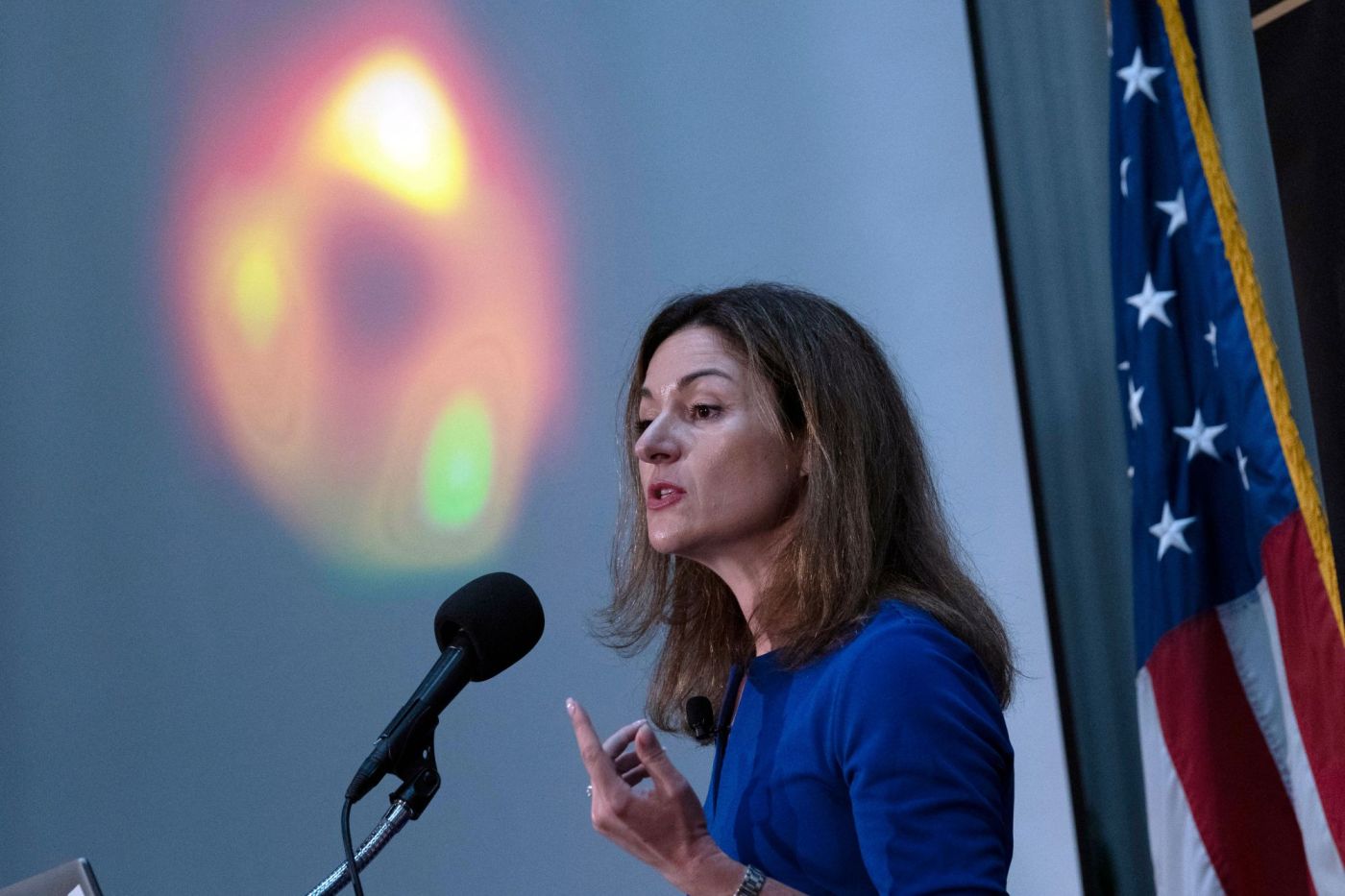
Recent astronomical studies have confirmed the presence of a supermassive black hole at the center of our galaxy, the Milky Way. Known as Sagittarius A* (pronounced “Sagittarius A-star” and abbreviated as Sgr A*), this invisible entity has a mass of approximately 4.3 million solar masses and is located about 26,000 light-years from Earth. The findings are pivotal for our understanding of galactic dynamics and the nature of black holes.
The journey to identify Sgr A* began in the early 20th century. In 1931, radio engineer Karl Jansky detected radio interference from an unknown source while experimenting with antennas. This signal was traced back to the direction of the Milky Way and subsequently designated as Sagittarius A (Sgr A).
Following the trajectory of research into radio astronomy, significant advancements occurred post-World War II. Scientists began to construct radio telescopes capable of mapping celestial bodies at radio frequencies. By 1974, astronomers Bruce Balick and Robert L. Brown utilized the baseline interferometer at the National Radio Astronomy Observatory in Virginia to detect the radio emissions from Sgr A*. They identified it as a compact radio source embedded within a larger, brighter source, Sgr A, which is considered the brightest radio source in the night sky.
The investigation into the vicinity of Sgr A* continued as astronomers observed stars orbiting the black hole. Notably, the star known as S2 provided crucial data that helped determine both the mass and the upper limits of the object’s radius. These measurements strongly indicated that Sgr A* is indeed a supermassive black hole at the center of the Milky Way.
In 2000, the significance of these findings earned Reinhard Genzel and Andrea Ghez a shared Nobel Prize in Physics for their contributions to the understanding of Sgr A*. The other half of the Nobel Prize was awarded to Sir Roger Penrose for his work related to black holes and general relativity.
Supermassive black holes differ significantly from ordinary black holes. While the latter form from the collapse of massive stars, supermassive black holes, like Sgr A*, are believed to have originated in the early universe, potentially at the centers of large galaxies over 12 billion years ago. For instance, the giant elliptical galaxy Messier 87 (M87) features a supermassive black hole estimated at 6.5 billion solar masses, first imaged in 2019.
On May 12, 2022, astronomers unveiled the first image of Sgr A*’s accretion disk, captured using the Event Horizon Telescope, a global network of radio observatories. Although the black hole itself remains hidden, the influence of its immense gravitational force can be observed through the behavior of surrounding gas and dust, which emits radio and infrared energy as it spirals into the black hole.
The study of Sgr A* not only enhances our understanding of black holes but also sheds light on the formation and evolution of galaxies. As scientists continue to explore the cosmos, the insights gained from Sgr A* will undoubtedly pave the way for future discoveries.
As you look up at the constellation Sagittarius on a clear night, remember that just beyond the visible stars lies an invisible powerhouse, a supermassive black hole that plays a crucial role in the structure of our galaxy.

Japan’s PM Takaichi Vows Urgent Fiscal Management Amid Rate Trends

Bitcoin Plummets Below $88K Amid Tether Concerns and Warnings

Tottenville Falls Short in PSAL 4A Title Game Against Erasmus

Shark Teeth Study Reveals Urgent Clues to Prevent Extinction

Church Members Rally Together After Thanksgiving Fire Devastation

U.S. Investment in Canadian Energy Firms Surges Despite Low Oil Prices

Nick Jonas Unveils New Solo Album ‘Sunday Best’ Set for February Release

Researchers Urge Label Changes for Low-Alcohol Drinks to Aid Pregnant Women

Wedding Cookie Table Community Aims for World’s Largest Cookie Exchange

Urgent Update: Tom Aspinall’s Vision Deteriorates After UFC 321

MIT Scientists Uncover Surprising Genomic Loops During Cell Division

University of Hawaiʻi Joins $25.6M AI Project to Enhance Disaster Monitoring

AI Disruption: AWS Faces Threat as Startups Shift Cloud Focus

Time Crystals Revolutionize Quantum Computing Potential

Honeywell Forecasts Record Business Jet Deliveries Over Next Decade

Discover the Full Map of Pokémon Legends: Z-A’s Lumiose City

GOP Faces Backlash as Protests Surge Against Trump Policies

Parenthood Set to Depart Hulu: What Fans Need to Know
-
 Top Stories1 month ago
Urgent Update: Tom Aspinall’s Vision Deteriorates After UFC 321
-
 Health1 month ago
MIT Scientists Uncover Surprising Genomic Loops During Cell Division
-
Science4 weeks ago
University of Hawaiʻi Joins $25.6M AI Project to Enhance Disaster Monitoring
-
 Top Stories1 month ago
AI Disruption: AWS Faces Threat as Startups Shift Cloud Focus
-
 Science2 months ago
Time Crystals Revolutionize Quantum Computing Potential
-
 World2 months ago
Honeywell Forecasts Record Business Jet Deliveries Over Next Decade
-
 Entertainment1 month ago
Discover the Full Map of Pokémon Legends: Z-A’s Lumiose City
-
 Top Stories2 months ago
GOP Faces Backlash as Protests Surge Against Trump Policies
-
 Entertainment2 months ago
Parenthood Set to Depart Hulu: What Fans Need to Know
-

 Politics2 months ago
Judge Signals Dismissal of Chelsea Housing Case Citing AI Flaws
-

 Sports2 months ago
Yoshinobu Yamamoto Shines in Game 2, Leading Dodgers to Victory
-

 Health2 months ago
Maine Insurers Cut Medicare Advantage Plans Amid Cost Pressures