
Science
Einstein’s Predictions: Unraveling Six Missteps in Physics

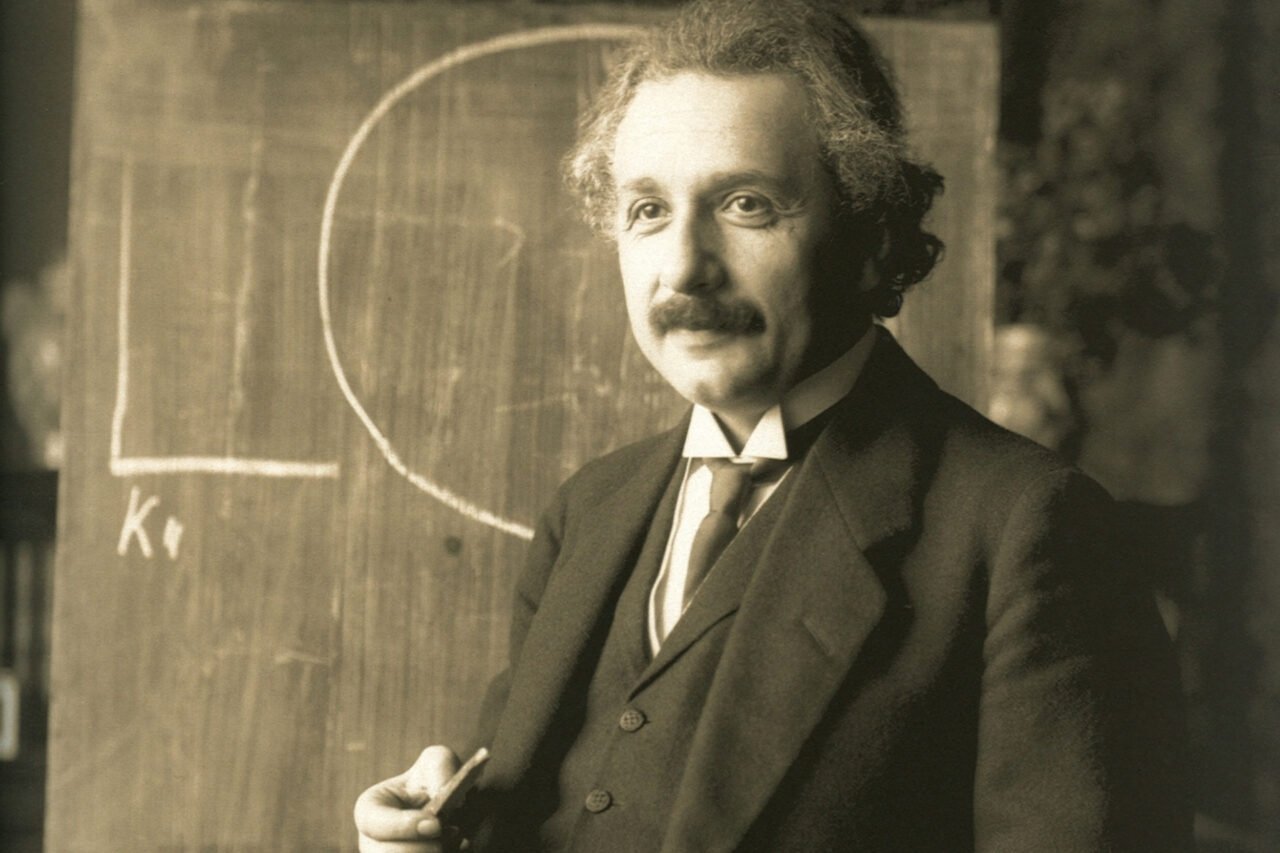
Albert Einstein, a towering figure in the world of physics, made groundbreaking contributions that transformed our understanding of the universe. However, even this legendary scientist had moments where his theories missed the mark. This article explores six significant instances where Einstein’s predictions proved to be incorrect or incomplete, highlighting how these “missteps” ultimately enriched the field of physics.
Gravitational Waves: A Misjudged Prediction
When Einstein published his influential papers on the general theory of relativity in 1916, he predicted the existence of gravitational waves—ripples in spacetime that propagate across the universe. This prediction was confirmed by the LIGO Collaboration in 2015, which detected these waves for the first time. However, by 1936, Einstein, along with collaborator Nathan Rosen, questioned the completeness of his calculations. In a correspondence with physicist Max Born, he claimed, “I arrived at the interesting result that gravitational waves do not exist, though they had been assumed a certainty to the first approximation.” Despite this, Einstein later revised his stance, asserting that gravitational waves might exist but would be too weak to detect. History has shown he was mistaken.
Quantum Entanglement: Doubts and Disputes
Einstein’s complex relationship with quantum mechanics is well-documented. While he acknowledged quantum phenomena, he was skeptical about the theory’s completeness. In his famous 1935 paper, co-authored with Rosen and Boris Podolsky, he introduced the concept of quantum entanglement. This phenomenon suggests that two separated particles can be linked, allowing the state of one to predict the state of the other. Einstein expressed concern that “elements of the physical reality” should be confirmed through experiments, suggesting that a hidden variable must connect the particles. This debate, now known as the EPR Paradox, raised questions that remain unresolved: Can we develop a flawless physical theory of entanglement?
Unifying Forces: A Quest Unfulfilled
For the last three decades of his life, Einstein sought to develop a unified theory that would combine all the forces of nature, particularly gravity and electromagnetism, without relying on quantum mechanics. He humorously referred to his struggle as being akin to an ostrich burying its head in “relativistic sand.” John D. Norton, a historian of science, noted that Einstein’s pursuit established unification as a crucial goal in physics, often referred to as the “holy grail” of modern physics. Despite his relentless efforts, Einstein’s vision of a unified theory never materialized, marking a significant gap in his legacy.
The Static Universe: A Mistaken Belief
Einstein’s initial belief in a static universe led him to introduce the cosmological constant into his equations. This mathematical adjustment suggested a repulsive force counteracting gravity, keeping the universe unchanged. Ironically, after discarding this constant, Einstein would later see it revived in the 1990s as a concept related to dark energy. The contemporary understanding of the universe’s expansion stands in stark contrast to Einstein’s early conviction.
Black Holes: Theoretical Rejection
Einstein’s stance on black holes was clear: he opposed their existence. Despite his theory of general relativity hinting at the possibility of black holes, he rejected the concept in 1939, deeming them incompatible with his theoretical framework. He viewed singularities as problematic, believing their existence nullified the laws of physics. As Norton notes, Einstein preferred consistent mathematical representations of spacetime, finding the concept of singularities to be a significant flaw in his theories.
God and Dice: A Philosophical Stance
Einstein famously stated, “God does not play dice,” revealing his aversion to randomness in physical models. His skepticism towards quantum mechanics and singularities stemmed from a belief that a more profound understanding of reality was yet to be discovered. While general relativity has withstood the test of time, serving as a foundation for modern studies in gravity and cosmology, Einstein’s quest for a deeper, unified theory continues to inspire physicists today.
In retrospect, while Einstein’s predictions may have been flawed or incomplete, they sparked critical dialogues within the scientific community. As Norton reflects, predicting Einstein’s reactions to contemporary physics advancements is challenging, but it is likely he would have engaged deeply with the questions that continue to arise from his work. His legacy is not merely defined by his successes but also by the rich debates his missteps have inspired, underscoring the evolving nature of scientific inquiry.

Philadelphia Parks Launch Free Earth Month Events Starting April 1

Bradford’s Fish Fry Fridays Serve Community with Delicious Dinners

Trump Faces Growing Challenges Amid Rising Tensions with Iran

Scientists Probe the Universe’s Missing Topological Defects

Samsung Galaxy Watch 9 to Feature Larger 435mAh Battery

UConn Huskies Aim to Defend Title in 2026 NCAA Women’s Tournament

U.S. Littoral Combat Ships Dock in Malaysia Amid Regional Tensions

Healthy Choice Wellness Reports Quarterly Earnings, Shares Rise

Urgent News: Charles M. Payment Passes Away at 78 in Duluth

University of Hawaiʻi Joins $25.6M AI Project to Enhance Disaster Monitoring

Major Grant Enhances Cancer Care and Research in Hawaiʻi

Joleen Chaney, Beloved Journalist, Passes Leaving Lasting Legacy

San Francisco’s SFO to Welcome 16 Airlines with Nonstop Flights to Europe in 2026

Goldman Sachs Unveils 2026 Catalyst Playbook for Biotech Investors

Discover Top Business Smartphones for Professionals in 2026

Urgent Update: Tom Aspinall’s Vision Deteriorates After UFC 321

Texas Roadhouse Honors Veterans with Free Meal Vouchers

CD Projekt Red Confirms No Release for The Witcher 4 in 2026
-
Science9 months ago
University of Hawaiʻi Joins $25.6M AI Project to Enhance Disaster Monitoring
-
 Health8 months ago
Major Grant Enhances Cancer Care and Research in Hawaiʻi
-
 Top Stories9 months ago
Joleen Chaney, Beloved Journalist, Passes Leaving Lasting Legacy
-
 World7 months ago
San Francisco’s SFO to Welcome 16 Airlines with Nonstop Flights to Europe in 2026
-
 Business8 months ago
Goldman Sachs Unveils 2026 Catalyst Playbook for Biotech Investors
-
 Business7 months ago
Discover Top Business Smartphones for Professionals in 2026
-
 Top Stories9 months ago
Urgent Update: Tom Aspinall’s Vision Deteriorates After UFC 321
-
 Lifestyle9 months ago
Texas Roadhouse Honors Veterans with Free Meal Vouchers
-
 Entertainment8 months ago
CD Projekt Red Confirms No Release for The Witcher 4 in 2026
-

 Top Stories10 months ago
AI Disruption: AWS Faces Threat as Startups Shift Cloud Focus
-

 Health10 months ago
MIT Scientists Uncover Surprising Genomic Loops During Cell Division
-

 Entertainment10 months ago
Discover the Full Map of Pokémon Legends: Z-A’s Lumiose City