
Science
Discoveries Unfold in Yucatán’s Ancient Submerged Cave System

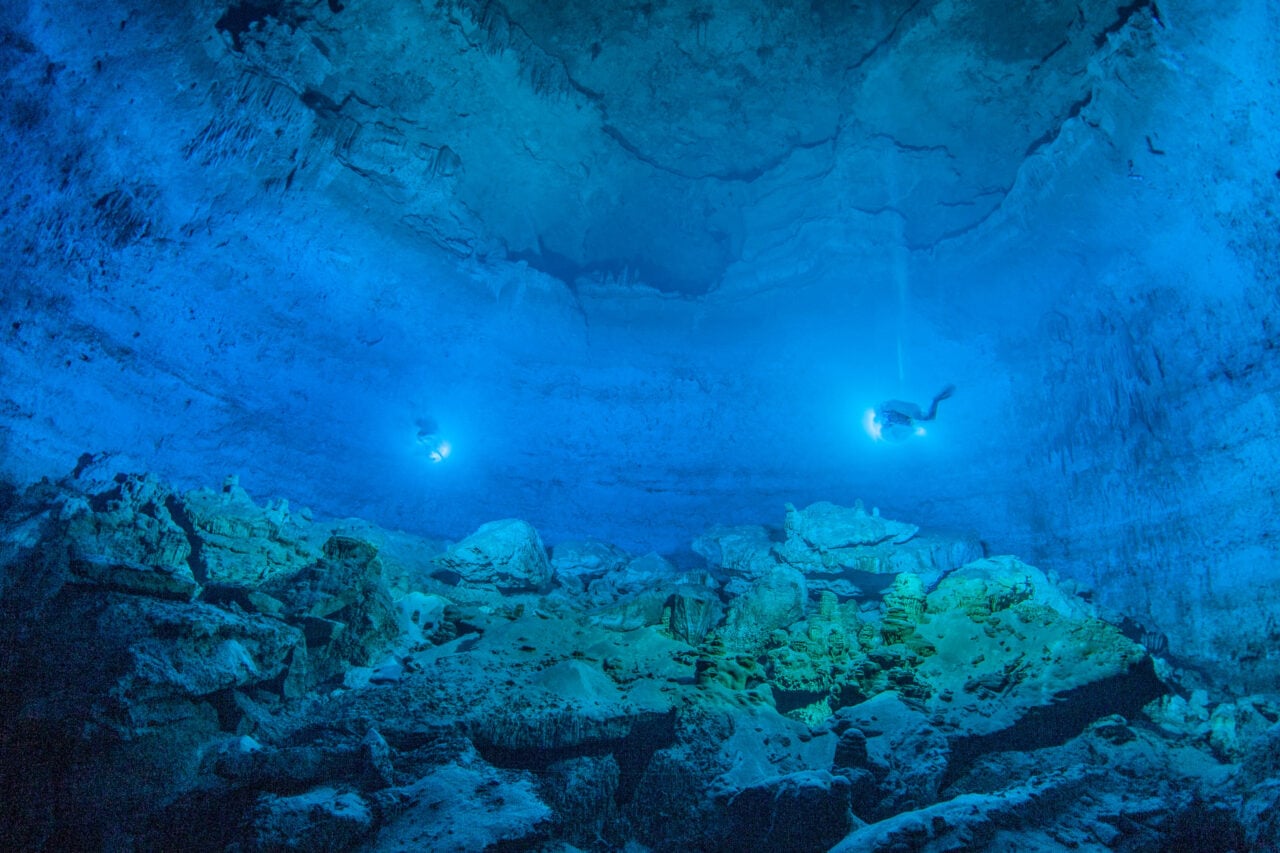
Deep beneath the lush jungles of the Yucatán Peninsula lies an extensive underwater cave system, known as Sac Actun, which has remained largely untouched for thousands of years. The exploration of this submerged realm has revealed significant findings, including the discovery of ancient fossils and human remains, shedding light on life during the Late Pleistocene epoch, which spanned from approximately 126,000 to 11,700 years ago.
One of the most notable sites within this cave system is Hoyo Negro, or “Black Hole,” a vast pit that has garnered international attention since its discovery in 2007. This bell-shaped abyss is located in Quintana Roo, Mexico, and features a depth of nearly 200 feet (60 meters) with a diameter expanding over 203 feet (67 meters) at its base. The cave’s depths have yielded a treasure trove of fossils, including the remains of Naia, one of the three oldest known human skeletons in the Americas, dated to between 12,970 and 12,770 years ago.
Exploration and Discoveries
The Hoyo Negro Underwater Archaeological Project, initiated in 2010 under the guidance of Mexico’s National Institute of Anthropology and History (INAH), has involved a dedicated team of divers and scientists from Mexico, Canada, and the United States. Among the project co-directors is Roberto Chávez Arce, who has been exploring these underwater passages since 2011. His captivating photography has provided crucial insights into the cave’s structure and contents.
Accessing Hoyo Negro requires considerable preparation and skill. Divers must navigate through challenging underwater conditions, often using motorized scooters to traverse the system more efficiently. Initially, reaching the site involved a laborious swim from a cenote located roughly 3,000 feet (914 meters) away, but a newly discovered cenote now allows for a much shorter journey.
The initial mapping of the cave was rudimentary, utilizing basic tools like compasses and tape measures. Now, advanced techniques such as structure-from-motion photogrammetry allow researchers to create detailed three-dimensional models of the cave, making it accessible to scientists unable to dive themselves.
Insights from the Past
The sediment cores and ancient organic deposits examined by the research team indicate that Hoyo Negro was once a dry cave accessible to both humans and animals. Evidence suggests that water levels began rising in the cave system approximately 9,850 years ago, ultimately submerging the entire system around 6,000 years ago.
This rise in water levels would have drawn Pleistocene fauna to the cave, including mammals such as the extinct short-faced bear, Arctotherium wingei, and ground sloths. The fossil record reveals that these species were attracted to the cave, likely seeking fresh water. The remains of Naia, found amidst numerous mammal fossils, provide a poignant reminder of the dangers faced by those who entered the cave.
Naia’s discovery has opened new avenues for understanding early human life in the Americas. Her remains suggest she was a young woman, likely aged between 15 and 17, who suffered a fatal injury after falling into the pit. The analysis of her bones indicates a diet deficient in protein, suggesting she may not have relied on coastal resources despite Hoyo Negro’s proximity to the sea.
Researchers continue to ponder the reasons behind human activity in these caves. The mining of ochre, a pigment used in ancient practices, has been noted in other Yucatán caves, indicating that early humans sought natural resources within these subterranean passages.
The findings from Hoyo Negro and its surrounding tunnels not only enrich our understanding of the Pleistocene era but also provide clues about the migration and adaptation of species across the Americas.
As excavations and research continue, the cave system promises to reveal further discoveries that could reshape our understanding of ancient life. The combination of environmental stability and preservation within the caves allows scientists to study a unique snapshot of the past, offering insights into both extinct species and early human existence.
In summary, the ongoing exploration of Hoyo Negro highlights the importance of this submerged cave system in understanding the complex interplay of life, environment, and adaptation during a pivotal period in Earth’s history.

South Korea Strengthens FX Oversight in Urgent Market Stabilization

U.S. Climate Stance Sparks Global Call for Action and Tariffs

Cyber Monday Mattress Deals: Save Up to 59% Today Only!

Razorbacks Suffer Defeat Against Duke, Eye Louisville Showdown

Swiss Residents Reject 50% Inheritance Tax on Wealthy Citizens

Texas Oil Firm Fights California to Restart Offshore Platforms

Alexander Skarsgård Celebrates British Cinema at BIFA 2025

GOP Faces Urgent Deadline to Decide on Affordable Care Act Funding

Stay Organized This Holiday Season with the Midea Air Fryer

Urgent Update: Tom Aspinall’s Vision Deteriorates After UFC 321

MIT Scientists Uncover Surprising Genomic Loops During Cell Division

University of Hawaiʻi Joins $25.6M AI Project to Enhance Disaster Monitoring

AI Disruption: AWS Faces Threat as Startups Shift Cloud Focus

Time Crystals Revolutionize Quantum Computing Potential

Honeywell Forecasts Record Business Jet Deliveries Over Next Decade

Discover the Full Map of Pokémon Legends: Z-A’s Lumiose City

Parenthood Set to Depart Hulu: What Fans Need to Know

GOP Faces Backlash as Protests Surge Against Trump Policies
-
 Top Stories1 month ago
Urgent Update: Tom Aspinall’s Vision Deteriorates After UFC 321
-
 Health1 month ago
MIT Scientists Uncover Surprising Genomic Loops During Cell Division
-
Science4 weeks ago
University of Hawaiʻi Joins $25.6M AI Project to Enhance Disaster Monitoring
-
 Top Stories1 month ago
AI Disruption: AWS Faces Threat as Startups Shift Cloud Focus
-
 Science2 months ago
Time Crystals Revolutionize Quantum Computing Potential
-
 World2 months ago
Honeywell Forecasts Record Business Jet Deliveries Over Next Decade
-
 Entertainment1 month ago
Discover the Full Map of Pokémon Legends: Z-A’s Lumiose City
-
 Entertainment2 months ago
Parenthood Set to Depart Hulu: What Fans Need to Know
-
 Top Stories1 month ago
GOP Faces Backlash as Protests Surge Against Trump Policies
-

 Politics2 months ago
Judge Signals Dismissal of Chelsea Housing Case Citing AI Flaws
-

 Sports2 months ago
Yoshinobu Yamamoto Shines in Game 2, Leading Dodgers to Victory
-

 Health2 months ago
Maine Insurers Cut Medicare Advantage Plans Amid Cost Pressures