
Science
Euclid Telescope Uncovers How Galaxy Mergers Ignite Black Holes

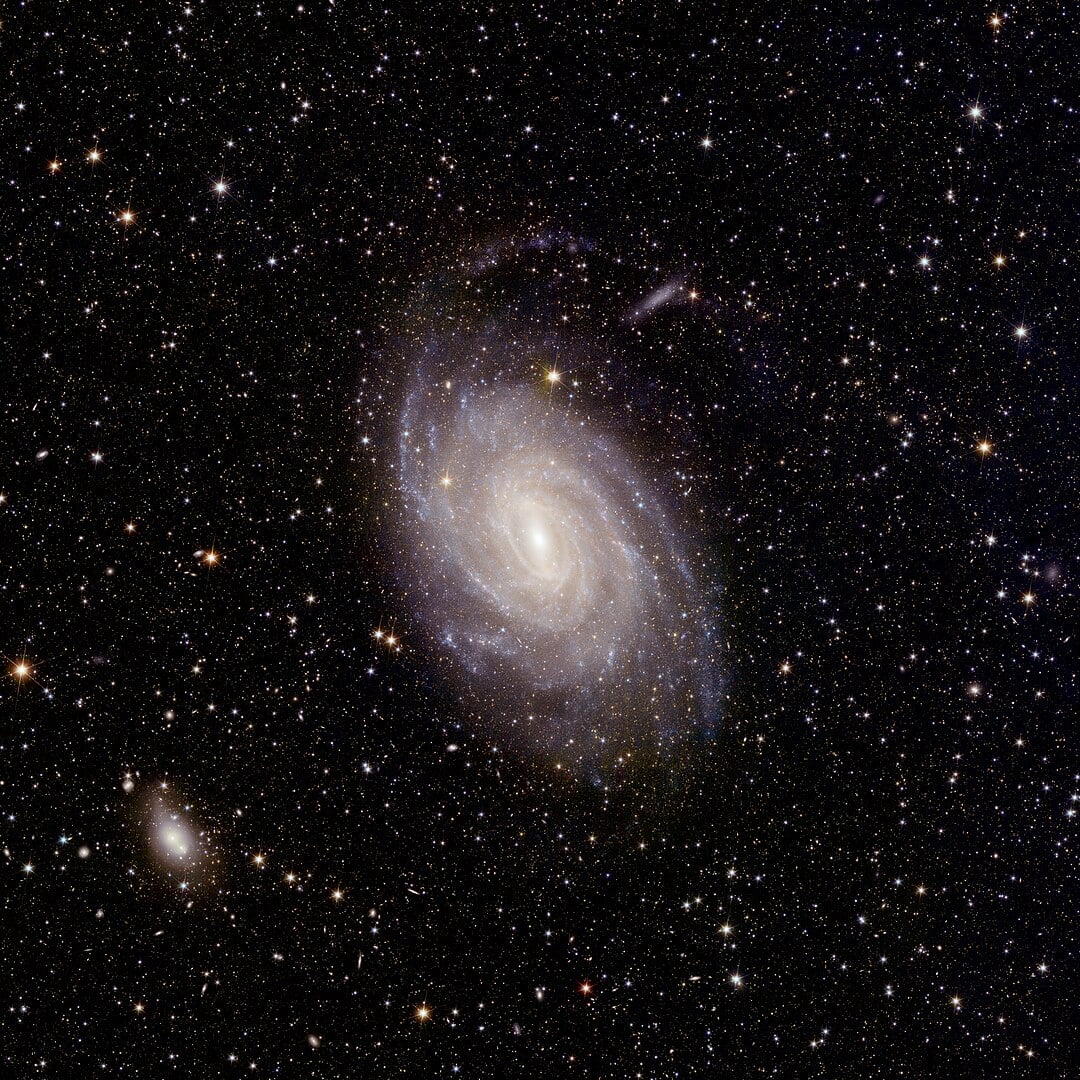
The Euclid Space Telescope has provided groundbreaking insights into the mechanisms that activate dormant supermassive black holes in galaxies. Research indicates that violent collisions between galaxies are the primary drivers behind this phenomenon, leading to the emergence of bright, energetic regions known as active galactic nuclei (AGN). This revelation stems from a new dataset obtained by Euclid, which has expanded the understanding of how these cosmic events unfold.
Most massive galaxies harbor supermassive black holes at their cores, often containing millions to billions of times the mass of the Sun. Typically, these black holes exist in a quiescent state, consuming matter from their surroundings with minimal radiation emission. Yet, a small proportion exhibit intense luminosity as AGN, leading astronomers to question what catalyzes this dramatic transformation.
Significant challenges have long hindered the study of AGN. Previous research efforts suffered from limited sample sizes and inadequate image quality, making it difficult to accurately identify both galaxy mergers and faint AGN. The situation changed with the launch of the Euclid Space Telescope, which has already demonstrated its capability to capture high-quality images across vast areas of the sky.
Transformative Data Collection
In just one week of operations, Euclid managed to cover areas that took the Hubble Space Telescope over three decades to observe. To process this extensive dataset, researchers at the SRON Netherlands Institute for Space Research developed an innovative AI-powered image decomposition tool. This technology enables the identification of AGN that might otherwise go unnoticed, while simultaneously measuring their energy output with remarkable accuracy.
Applying this advanced method to a dataset of one million galaxies, the research team discovered compelling evidence linking galaxy mergers to AGN activity. The findings reveal that merging galaxies possess significantly more AGN compared to isolated galaxies. The degree of this increase varies according to the merger’s stage.
For example, in dynamically young, dust-rich mergers where AGN are only observable in infrared wavelengths, the rate of active black holes is six times higher than in non-merging scenarios. As mergers evolve and settle, the ratio decreases to two times higher in systems where X-rays can escape, suggesting that some seemingly isolated galaxies may actually be post-merger systems.
Active Black Holes and Cosmic Influence
The research also indicates that the most luminous AGN are predominantly found in merging systems. This underscores the idea that while other factors may trigger moderate black hole activity, galaxy collisions are crucial—possibly the sole mechanism—responsible for energizing the universe’s most extreme black holes.
The implications of this study extend beyond the black holes themselves. As galaxies merge throughout cosmic history, their central black holes not only grow in mass but also emit powerful radiation and energetic outflows. These outflows can significantly influence star formation across the merged galaxy system, reshaping the cosmic landscape.
Overall, the latest findings from the Euclid Space Telescope highlight the dynamic interplay between galaxy mergers and black hole activity, providing a clearer picture of how these immense cosmic structures evolve over time. This research not only enhances understanding of supermassive black holes but also sheds light on the broader processes that govern the universe’s evolution.

Oreo to Launch Zero-Sugar Cookies in 2026, Reports Confirm

Munson Holiday Art Market Kicks Off Dec. 11-12 with Festivities

Chico State Students De-Stress with Ramen and Quilt Crafting

ECB Boosts Growth Estimates Amid Concerns Over U.S. Agriculture

Fraser Olender Recovers After Heart Attack Linked to Vaping

Study Reveals Dual Use of Cigarettes and Vapes Aids Quitting

Dagwood’s Iconic Sandwich Recipe Revived: A Culinary Journey

Reddit Users Expose Shocking Industry Secrets Across Professions

Radboud Chemists Innovate with Robots for Bio-Based Material Transition

Urgent Update: Tom Aspinall’s Vision Deteriorates After UFC 321

University of Hawaiʻi Joins $25.6M AI Project to Enhance Disaster Monitoring

MIT Scientists Uncover Surprising Genomic Loops During Cell Division

AI Disruption: AWS Faces Threat as Startups Shift Cloud Focus

Time Crystals Revolutionize Quantum Computing Potential

Discover the Full Map of Pokémon Legends: Z-A’s Lumiose City

Parenthood Set to Depart Hulu: What Fans Need to Know

GOP Faces Backlash as Protests Surge Against Trump Policies

Judge Signals Dismissal of Chelsea Housing Case Citing AI Flaws
-
 Top Stories1 month ago
Urgent Update: Tom Aspinall’s Vision Deteriorates After UFC 321
-
Science1 month ago
University of Hawaiʻi Joins $25.6M AI Project to Enhance Disaster Monitoring
-
 Health2 months ago
MIT Scientists Uncover Surprising Genomic Loops During Cell Division
-
 Top Stories2 months ago
AI Disruption: AWS Faces Threat as Startups Shift Cloud Focus
-
 Science2 months ago
Time Crystals Revolutionize Quantum Computing Potential
-
 Entertainment2 months ago
Discover the Full Map of Pokémon Legends: Z-A’s Lumiose City
-
 Entertainment2 months ago
Parenthood Set to Depart Hulu: What Fans Need to Know
-
 Top Stories2 months ago
GOP Faces Backlash as Protests Surge Against Trump Policies
-
 Politics2 months ago
Judge Signals Dismissal of Chelsea Housing Case Citing AI Flaws
-

 World2 months ago
Honeywell Forecasts Record Business Jet Deliveries Over Next Decade
-

 Health2 months ago
Maine Insurers Cut Medicare Advantage Plans Amid Cost Pressures
-

 Sports2 months ago
Yoshinobu Yamamoto Shines in Game 2, Leading Dodgers to Victory