
World
Netherlands Returns Stolen Ancient Sculpture to Egypt

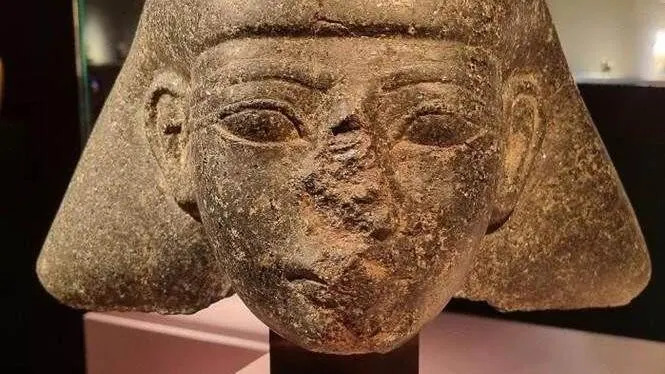
The Netherlands has announced plans to return a stolen ancient sculpture, a stone head over 3,500 years old, to Egypt. This decision comes after the Dutch Information & Heritage Inspectorate confirmed that the artifact, which dates back to the time of the pharaohs, was likely taken during the turmoil of the Arab Spring in either 2011 or 2012. Following its illegal export, the sculpture was discovered at an arts and antiques fair in Maastricht in 2022.
Authorities in the Netherlands acted on an anonymous tip-off that led to the determination that the sculpture had been stolen. The head represents a high-ranking official from the dynasty of Pharaoh Thutmose III, and its return has been characterized as “deeply meaningful to Egypt’s identity” by the Dutch government. Outgoing Prime Minister Dick Schoof made the commitment to return the artifact during the opening ceremony of the new Grand Egyptian Museum in Giza this past weekend.
Significance of the Artifact and the Return Process
The sculpture had been offered for sale at The European Fine Art Foundation fair, but the dealer willingly relinquished it once authorities confirmed its illegal origins. The Dutch government is expected to hand the stone head over to the Egyptian ambassador to the Netherlands by the end of this year. In a statement, the government emphasized its commitment to both national and international efforts to ensure the return of cultural heritage to its rightful owners.
This return coincides with a significant moment for Egypt, which celebrated the opening of the Grand Egyptian Museum, a colossal project that has been in the works since 1992. The museum, which cost approximately $1.2 billion to construct, houses around 100,000 artifacts, including all items from the intact tomb of the boy king Tutankhamun, along with his renowned gold mask.
Broader Context of Cultural Heritage Returns
The inauguration of this museum has heightened expectations among prominent Egyptologists for the return of other significant antiquities held in foreign countries. Among these is the famous Rosetta Stone, which played a crucial role in deciphering hieroglyphics and is currently displayed at the British Museum in London. The return of the sculpture from the Netherlands is seen as a positive step towards reclaiming Egypt’s rich archaeological heritage.
As discussions around cultural heritage and its rightful ownership continue to gain momentum globally, the return of this stone head serves as a reminder of the importance of respecting and preserving the history embedded in such artifacts.

South Korea Strengthens FX Oversight in Urgent Market Stabilization

U.S. Climate Stance Sparks Global Call for Action and Tariffs

Cyber Monday Mattress Deals: Save Up to 59% Today Only!

Razorbacks Suffer Defeat Against Duke, Eye Louisville Showdown

Swiss Residents Reject 50% Inheritance Tax on Wealthy Citizens

Texas Oil Firm Fights California to Restart Offshore Platforms

Alexander Skarsgård Celebrates British Cinema at BIFA 2025

GOP Faces Urgent Deadline to Decide on Affordable Care Act Funding

Stay Organized This Holiday Season with the Midea Air Fryer

Urgent Update: Tom Aspinall’s Vision Deteriorates After UFC 321

MIT Scientists Uncover Surprising Genomic Loops During Cell Division

University of Hawaiʻi Joins $25.6M AI Project to Enhance Disaster Monitoring

AI Disruption: AWS Faces Threat as Startups Shift Cloud Focus

Time Crystals Revolutionize Quantum Computing Potential

Honeywell Forecasts Record Business Jet Deliveries Over Next Decade

Discover the Full Map of Pokémon Legends: Z-A’s Lumiose City

GOP Faces Backlash as Protests Surge Against Trump Policies

Parenthood Set to Depart Hulu: What Fans Need to Know
-
 Top Stories1 month ago
Urgent Update: Tom Aspinall’s Vision Deteriorates After UFC 321
-
 Health1 month ago
MIT Scientists Uncover Surprising Genomic Loops During Cell Division
-
Science4 weeks ago
University of Hawaiʻi Joins $25.6M AI Project to Enhance Disaster Monitoring
-
 Top Stories1 month ago
AI Disruption: AWS Faces Threat as Startups Shift Cloud Focus
-
 Science2 months ago
Time Crystals Revolutionize Quantum Computing Potential
-
 World2 months ago
Honeywell Forecasts Record Business Jet Deliveries Over Next Decade
-
 Entertainment1 month ago
Discover the Full Map of Pokémon Legends: Z-A’s Lumiose City
-
 Top Stories1 month ago
GOP Faces Backlash as Protests Surge Against Trump Policies
-
 Entertainment2 months ago
Parenthood Set to Depart Hulu: What Fans Need to Know
-

 Politics2 months ago
Judge Signals Dismissal of Chelsea Housing Case Citing AI Flaws
-

 Sports2 months ago
Yoshinobu Yamamoto Shines in Game 2, Leading Dodgers to Victory
-

 Health2 months ago
Maine Insurers Cut Medicare Advantage Plans Amid Cost Pressures