
Science
Groundbreaking Discoveries: Neanderthals, Orcas, and Cosmic Events

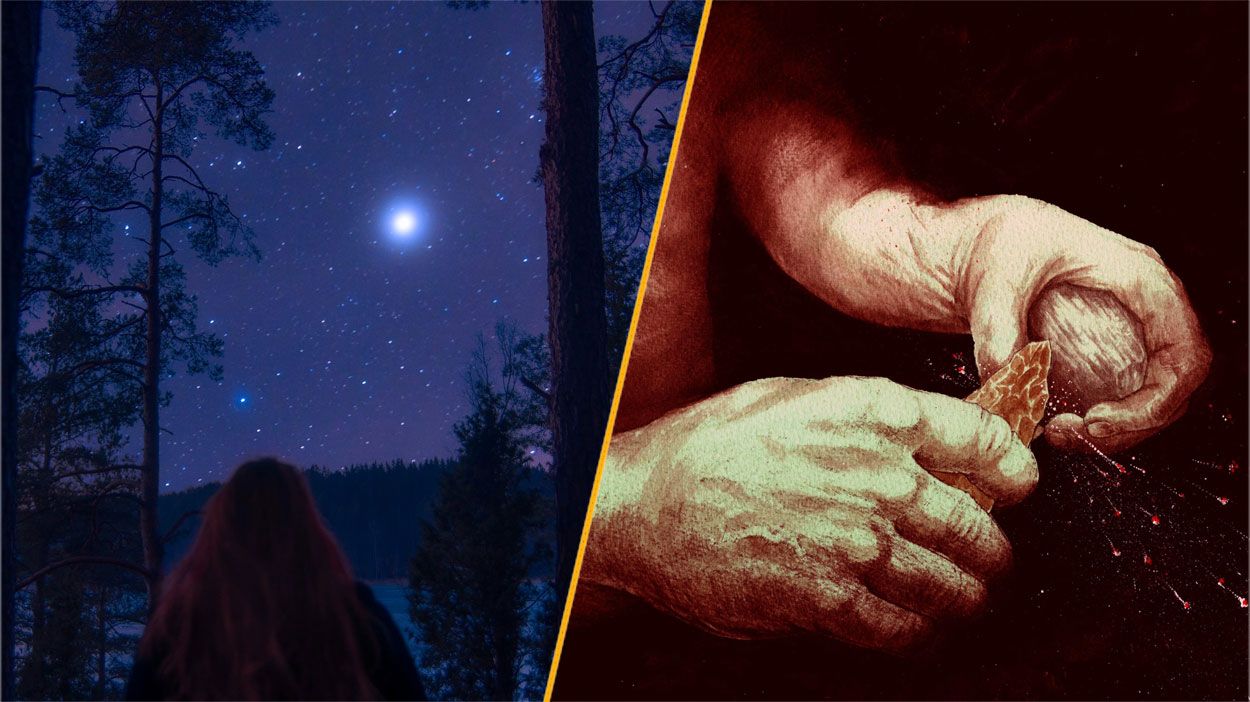
A series of significant discoveries this week has advanced our understanding of human evolution, animal behavior, and cosmic phenomena. From the revelation of Neanderthals’ early use of fire to orcas collaborating with dolphins, and even insights into a binary star system, the breadth of scientific exploration continues to captivate.
Neanderthals and Their Command of Fire
A recent study has uncovered evidence that Neanderthals were able to control fire as far back as 400,000 years ago in Suffolk, England. This finding pushes back previous estimates by approximately 350,000 years, highlighting the importance of controlled fire in human evolution. Archaeologists discovered pyrite, a mineral known for producing sparks when struck against flint, suggesting that Neanderthals intentionally transported it to create fire. This revelation adds depth to the ongoing debate regarding the social and cultural practices of Neanderthals.
In addition, the implications of this discovery challenge long-held perceptions of Neanderthals as primitive. The ability to control fire is a key moment in human evolution, serving as a vital tool for survival and socialization.
Orcas and Dolphins: A Unique Partnership
In British Columbia, researchers have documented an unusual collaboration between orcas and Pacific white-sided dolphins. The study reveals that these marine mammals have been observed cooperating during salmon hunts and sharing their catch. This behavior is notable, given that orcas typically prey on dolphins in other regions.
The authors of the study argue that this is the first documented instance of cooperative hunting and prey-sharing between these two species. However, some experts contend that the behavior may reflect kleptoparasitism, where one species steals food from another rather than a true partnership.
Cosmic Events Brighten the Skies
In astronomical news, a binary star system known as V Sagittae is expected to become a spectacular sight within the next century as it approaches a supernova phase. The system is currently emitting brilliant flares that may be visible to the naked eye, both day and night. Skywatchers have much to anticipate as these flares intensify, illuminating the night sky with the brightness of thousands of suns.
Furthermore, astronomers have detected a mysterious X-ray signal believed to be the remnants of a star being consumed by two black holes. These findings contribute to our understanding of the dynamic and often violent processes that occur in the universe.
In a more whimsical connection to the cosmos, this month will see Jupiter shining brightly, prompting some to speculate whether it could be associated with the biblical Star of Bethlehem. While the link remains purely hypothetical, it adds an intriguing layer to the month’s astronomical events.
As researchers continue to explore these multifaceted topics, the intersection of past and present reveals the complexity of life on Earth and beyond. New insights into Neanderthal behavior, marine mammal cooperation, and cosmic phenomena demonstrate the richness of scientific inquiry and the unending quest for knowledge.

Aimee Semple McPherson’s Legacy Celebrated in Red Bluff Today

Denver Pioneers Host CSU Fullerton Following Wysocki’s 32-Point Surge

Oreo Launches Zero-Sugar Cookies in the U.S. Market

Jewish Federation of Cleveland Raises Record $39 Million for Community

Athletic Directors Explore Collective Bargaining for College Sports

Neanderthals Controlled Fire 400,000 Years Ago; Orcas Team Up with Dolphins

South Carolina Gamecocks Show Depth in Women’s Basketball Season

Air Force Advances Delivery of New Presidential Jets to 2028

House Democrats Unveil Epstein Photos of Trump, Clinton, Andrew

Urgent Update: Tom Aspinall’s Vision Deteriorates After UFC 321

University of Hawaiʻi Joins $25.6M AI Project to Enhance Disaster Monitoring

MIT Scientists Uncover Surprising Genomic Loops During Cell Division

AI Disruption: AWS Faces Threat as Startups Shift Cloud Focus

Time Crystals Revolutionize Quantum Computing Potential

Discover the Full Map of Pokémon Legends: Z-A’s Lumiose City

Parenthood Set to Depart Hulu: What Fans Need to Know

GOP Faces Backlash as Protests Surge Against Trump Policies

Judge Signals Dismissal of Chelsea Housing Case Citing AI Flaws
-
 Top Stories2 months ago
Urgent Update: Tom Aspinall’s Vision Deteriorates After UFC 321
-
Science1 month ago
University of Hawaiʻi Joins $25.6M AI Project to Enhance Disaster Monitoring
-
 Health2 months ago
MIT Scientists Uncover Surprising Genomic Loops During Cell Division
-
 Top Stories2 months ago
AI Disruption: AWS Faces Threat as Startups Shift Cloud Focus
-
 Science2 months ago
Time Crystals Revolutionize Quantum Computing Potential
-
 Entertainment2 months ago
Discover the Full Map of Pokémon Legends: Z-A’s Lumiose City
-
 Entertainment2 months ago
Parenthood Set to Depart Hulu: What Fans Need to Know
-
 Top Stories2 months ago
GOP Faces Backlash as Protests Surge Against Trump Policies
-
 Politics2 months ago
Judge Signals Dismissal of Chelsea Housing Case Citing AI Flaws
-

 World2 months ago
Honeywell Forecasts Record Business Jet Deliveries Over Next Decade
-

 Sports2 months ago
Yoshinobu Yamamoto Shines in Game 2, Leading Dodgers to Victory
-

 Health2 months ago
Maine Insurers Cut Medicare Advantage Plans Amid Cost Pressures