
Science
Neanderthals Controlled Fire 400,000 Years Ago; Orcas Team Up with Dolphins

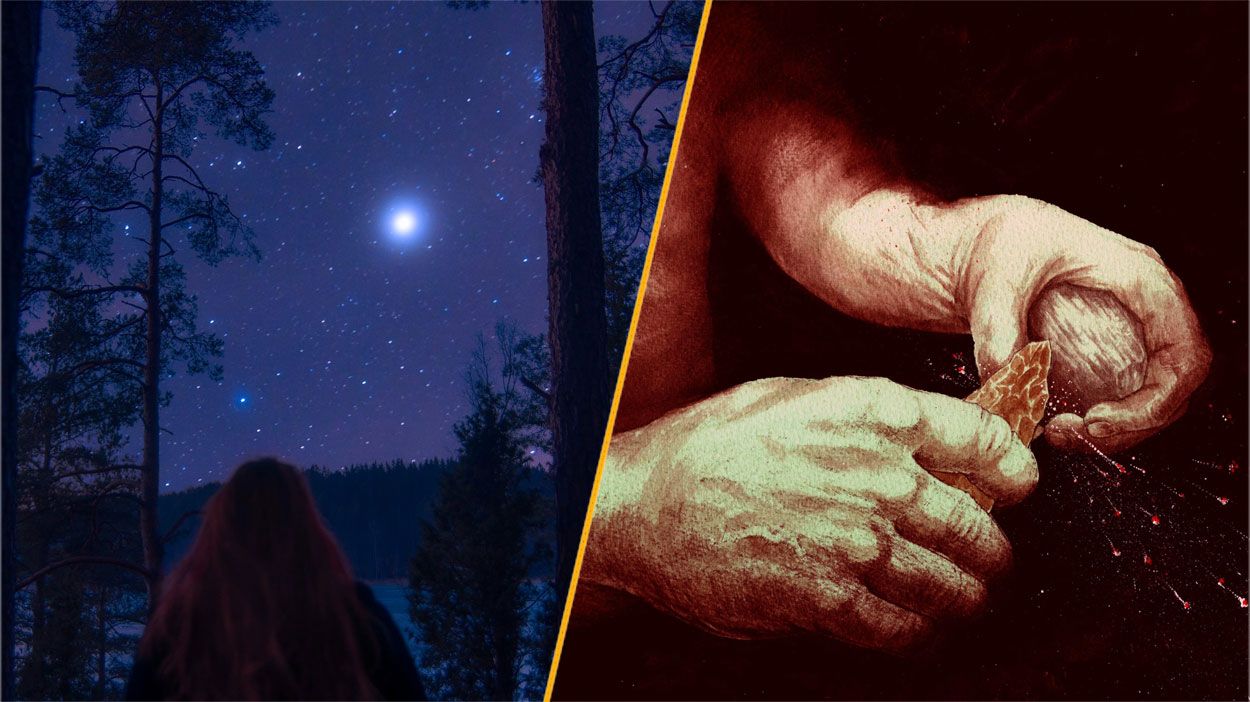
Recent discoveries have significantly advanced our understanding of human evolution and animal behavior. Notably, researchers have confirmed that Neanderthals were able to control fire as early as **400,000 years ago**. In a separate study, orcas off the coast of British Columbia have been observed cooperating with Pacific white-sided dolphins during hunts, a behavior that has sparked debate among scientists. Meanwhile, astronomical events have drawn attention, with the binary star system **V Sagittae** set to produce spectacular flares over the next century.
Neanderthals and the Discovery of Early Fire Use
The use of fire has long been considered a pivotal moment in the evolution of hominins. A new study published this week reveals that Neanderthals were using fire far earlier than previously thought. Archaeological findings at a site in Suffolk, England, indicate that these early humans were capable of creating fire around **400,000 years ago**.
Researchers discovered **pyrite**, known colloquially as fool’s gold, at the site. When struck against flint, pyrite produces sparks that can ignite fire. The presence of this mineral, which is rare in the area, suggests it was intentionally transported there for fire-starting purposes. This discovery challenges earlier estimates that suggested Neanderthals first controlled fire only **50,000 years ago**. The implications of this research contribute to ongoing discussions about the social and cultural practices of Neanderthals.
Orcas and Dolphins: A Cooperative Hunting Strategy
In an intriguing development in animal behavior, orcas in British Columbia have been seen hunting alongside Pacific white-sided dolphins. A study released this week highlights that these two species frequently collaborate during salmon hunts, sharing portions of their catch. This is particularly noteworthy as orcas typically prey on dolphins in other regions, making this cooperative behavior unusual.
The study’s authors assert that this is the first documented instance of cooperative hunting and prey-sharing between these two species. However, some experts question whether this behavior represents true cooperation or is more a case of kleptoparasitism, where one species steals food from another.
Astronomical Highlights and Historical Speculations
In addition to developments in human and animal studies, the astronomical community is abuzz with exciting discoveries. The binary star system **V Sagittae** is expected to become visible to the naked eye in the coming century, producing brilliant flares reminiscent of thousands of suns. This phenomenon will provide a visual spectacle for skywatchers, occurring both day and night.
Furthermore, a mysterious X-ray signal detected in deep space may indicate the final moments of a star being torn apart by two black holes. These findings have piqued interest in the ongoing exploration of our universe.
Also capturing public imagination is the potential connection between astronomical events and historical narratives. Jupiter, which will be particularly bright in the night sky this month, has led some to speculate if it could be linked to the **Star of Bethlehem** mentioned in biblical texts.
Revisiting Historical Frontiers
Archaeological insights continue to reshape our understanding of historical contexts. Recent discoveries at **Hadrian’s Wall**, the northern frontier of the Roman Empire, have revealed new information about life at this ancient border. The site of **Vindolanda**, a Roman fort, has yielded artifacts that suggest a vibrant community existed there, challenging the notion of a desolate outpost.
Such findings illustrate that the Roman frontier was more complex than previously imagined, offering insights into the diverse demographics that characterized the region during its occupation.
Overall, this week in science has provided a wealth of information that enhances our understanding of both the past and the present, from the depths of human evolution to the vastness of space. As research continues to unfold, the connections between species and the cosmos will undoubtedly lead to further revelations.

EU Freezes Russian Assets Indefinitely, Sports and Health Updates

Astronomers Uncover Largest Rotating Cosmic Structure Yet

Broncos and Packers Clash in High-Stakes Sunday Showdown

Flooding Exacerbates Crisis for Over One Million Gazans

CCC Intelligent Solutions Announces $500 Million Buyback Plan

Dick Van Dyke Celebrates 100 Years of Comedy Genius Today

New Lenox Library Launches Urgent Care Cabinet with Free Narcan

Putin Expands Air Defenses: 20 Systems Guard Family Fortress

Urgent Donations Needed for Empty Stocking Fund by Dec. 12

Urgent Update: Tom Aspinall’s Vision Deteriorates After UFC 321

University of Hawaiʻi Joins $25.6M AI Project to Enhance Disaster Monitoring

MIT Scientists Uncover Surprising Genomic Loops During Cell Division

AI Disruption: AWS Faces Threat as Startups Shift Cloud Focus

Time Crystals Revolutionize Quantum Computing Potential

Discover the Full Map of Pokémon Legends: Z-A’s Lumiose City

Parenthood Set to Depart Hulu: What Fans Need to Know

GOP Faces Backlash as Protests Surge Against Trump Policies

Judge Signals Dismissal of Chelsea Housing Case Citing AI Flaws
-
 Top Stories2 months ago
Urgent Update: Tom Aspinall’s Vision Deteriorates After UFC 321
-
Science1 month ago
University of Hawaiʻi Joins $25.6M AI Project to Enhance Disaster Monitoring
-
 Health2 months ago
MIT Scientists Uncover Surprising Genomic Loops During Cell Division
-
 Top Stories2 months ago
AI Disruption: AWS Faces Threat as Startups Shift Cloud Focus
-
 Science2 months ago
Time Crystals Revolutionize Quantum Computing Potential
-
 Entertainment2 months ago
Discover the Full Map of Pokémon Legends: Z-A’s Lumiose City
-
 Entertainment2 months ago
Parenthood Set to Depart Hulu: What Fans Need to Know
-
 Top Stories2 months ago
GOP Faces Backlash as Protests Surge Against Trump Policies
-
 Politics2 months ago
Judge Signals Dismissal of Chelsea Housing Case Citing AI Flaws
-

 World2 months ago
Honeywell Forecasts Record Business Jet Deliveries Over Next Decade
-

 Sports2 months ago
Yoshinobu Yamamoto Shines in Game 2, Leading Dodgers to Victory
-

 Health2 months ago
Maine Insurers Cut Medicare Advantage Plans Amid Cost Pressures