
Business
Global Debate Intensifies Over Deep-Sea Mining Practices

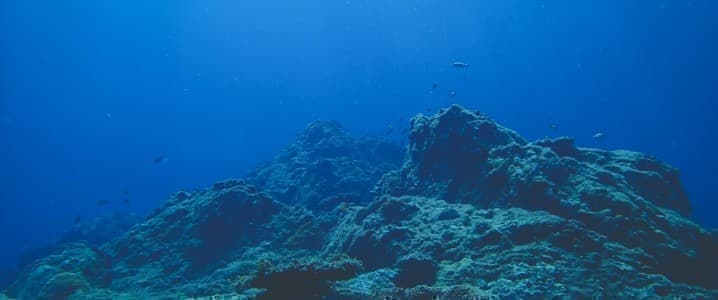
The burgeoning demand for critical minerals has ignited a heated debate over the viability of deep-sea mining. As governments worldwide seek innovative ways to access these resources, environmental concerns have delayed substantial exploration efforts. Recent studies indicate that the potential damage to marine ecosystems could lead to a significant reconsideration of mining initiatives.
A study published in December 2023, funded by The Metals Company, aimed at becoming the first firm to conduct commercial seabed mining, revealed alarming data regarding the impact of mining on marine life. Researchers from London’s Natural History Museum analysed samples from the seafloor before and after a mining test conducted at a depth of 4,000 metres in the Clarion-Clipperton Zone, located in the Pacific Ocean between Hawaii and Mexico. Their findings showed a striking 37 percent reduction in the number of worms, crustaceans, and other small marine organisms directly affected by mining operations, alongside a 32 percent decrease in species diversity.
The Clarion-Clipperton Zone is rich in potato-sized nodules containing nickel, cobalt, copper, and manganese, making it a prime target for mining companies. To date, the UN International Seabed Authority has issued 31 licenses for exploration, though commercial mining has yet to be approved. The Metals Company has invested $250 million in environmental studies, which will inform the required environmental impact statement for regulatory approval.
Despite the concerning findings, The Metals Company remains optimistic. They noted that the observed reduction in marine life was lower than expected and anticipate that populations will recover over time. The company also plans to leave approximately 10 percent of the nodules untouched during extraction.
Recent research has challenged previous assumptions about deep-sea life, revealing a rich biodiversity. The December study identified 788 species of macrofauna in the Clarion-Clipperton Zone. Lead author Eva Stewart emphasized the vast unexplored nature of the deep sea, suggesting there may be thousands of undiscovered species.
Concerns persist, particularly regarding the sediment released during mining operations, which may disrupt the food supply for zooplankton and small squid, potentially jeopardizing the entire marine food web. To mitigate this, The Metals Company stated it could adapt its operations to release excess sediment at depths of 800 metres, thereby avoiding areas populated by abundant zooplankton.
The implications of these findings have attracted attention from environmental experts. Patrick Schröder, a senior research fellow at the Environment and Society Centre at Chatham House, remarked, “I think the study shows that current technologies for harvesting are too damaging to permit large-scale commercial exploration. These were only tests, and the impact was significant. If they did that at large scale, it would be even more damaging.”
Further compounding the controversy, a separate study assessing a 44-year-old deep-sea mining test site indicated that biodiversity losses can linger for decades. Approximately 30 percent of small seabed animals rely on mineral-rich nodules for survival, raising alarms about the long-term ecological consequences of mining.
Despite these challenges, some nations regard deep-sea mining as an essential opportunity. Currently, 37 countries support a temporary ban on seabed mining, and Norway recently postponed its own mining plans, particularly in the Arctic region. Nevertheless, in April 2023, U.S. President Donald Trump announced an initiative to expedite domestic and international mining projects to strengthen the country’s critical mineral supply chain. In an executive order, he highlighted the potential of offshore seabed areas to bolster the economy and reduce reliance on foreign suppliers.
As new findings emerge, the debate over deep-sea mining continues to intensify. Some countries may reconsider their positions in light of the ecological risks, while others remain committed to advancing seabed projects viewed as vital for securing a stable supply of critical minerals. The discussion encapsulates a broader conflict between economic interests and environmental stewardship, as scientists and activists work to raise awareness of the potentially devastating impacts on marine ecosystems.

Philadelphia Parks Launch Free Earth Month Events Starting April 1

Bradford’s Fish Fry Fridays Serve Community with Delicious Dinners

Trump Faces Growing Challenges Amid Rising Tensions with Iran

Scientists Probe the Universe’s Missing Topological Defects

Samsung Galaxy Watch 9 to Feature Larger 435mAh Battery

UConn Huskies Aim to Defend Title in 2026 NCAA Women’s Tournament

U.S. Littoral Combat Ships Dock in Malaysia Amid Regional Tensions

Healthy Choice Wellness Reports Quarterly Earnings, Shares Rise

Urgent News: Charles M. Payment Passes Away at 78 in Duluth

University of Hawaiʻi Joins $25.6M AI Project to Enhance Disaster Monitoring

Major Grant Enhances Cancer Care and Research in Hawaiʻi

Joleen Chaney, Beloved Journalist, Passes Leaving Lasting Legacy

San Francisco’s SFO to Welcome 16 Airlines with Nonstop Flights to Europe in 2026

Goldman Sachs Unveils 2026 Catalyst Playbook for Biotech Investors

Discover Top Business Smartphones for Professionals in 2026

Urgent Update: Tom Aspinall’s Vision Deteriorates After UFC 321

Texas Roadhouse Honors Veterans with Free Meal Vouchers

CD Projekt Red Confirms No Release for The Witcher 4 in 2026
-
Science9 months ago
University of Hawaiʻi Joins $25.6M AI Project to Enhance Disaster Monitoring
-
 Health8 months ago
Major Grant Enhances Cancer Care and Research in Hawaiʻi
-
 Top Stories9 months ago
Joleen Chaney, Beloved Journalist, Passes Leaving Lasting Legacy
-
 World7 months ago
San Francisco’s SFO to Welcome 16 Airlines with Nonstop Flights to Europe in 2026
-
 Business8 months ago
Goldman Sachs Unveils 2026 Catalyst Playbook for Biotech Investors
-
 Business8 months ago
Discover Top Business Smartphones for Professionals in 2026
-
 Top Stories10 months ago
Urgent Update: Tom Aspinall’s Vision Deteriorates After UFC 321
-
 Lifestyle9 months ago
Texas Roadhouse Honors Veterans with Free Meal Vouchers
-
 Entertainment8 months ago
CD Projekt Red Confirms No Release for The Witcher 4 in 2026
-

 Top Stories10 months ago
AI Disruption: AWS Faces Threat as Startups Shift Cloud Focus
-

 Health10 months ago
MIT Scientists Uncover Surprising Genomic Loops During Cell Division
-

 Entertainment10 months ago
Discover the Full Map of Pokémon Legends: Z-A’s Lumiose City