
Science
Scientists Probe the Universe’s Missing Topological Defects

Recent investigations into the early universe’s structure have raised significant questions, particularly regarding the existence of topological defects. These imperfections were expected to arise from the phase transitions that occurred shortly after the Big Bang. Yet, despite theoretical predictions, evidence of such defects remains elusive.
Mathematical topology suggests that the early universe was fundamentally chaotic, filled with defects akin to knots in the fabric of space-time. According to physicists, these defects should have formed during the cooling phase following the Big Bang, implying a universe rich with cosmic strings and monopoles. Instead, observations reveal a remarkably clean sky, devoid of the expected signs of these phenomena.
Theoretical models indicate that cosmic strings, which are essentially one-dimensional cracks in the vacuum of space, should exert a significant gravitational influence. These strings are theorized to be incredibly thin—thinner than a proton yet possessing a mass greater than that of a mountain range for every kilometer of their length. If these strings were present, the universe would exhibit a chaotic tapestry of gravitational waves, detectable by sensitive instruments such as LIGO and NanoGRAV. Yet, current observations have yielded no evidence of the anticipated vibrations from cosmic strings.
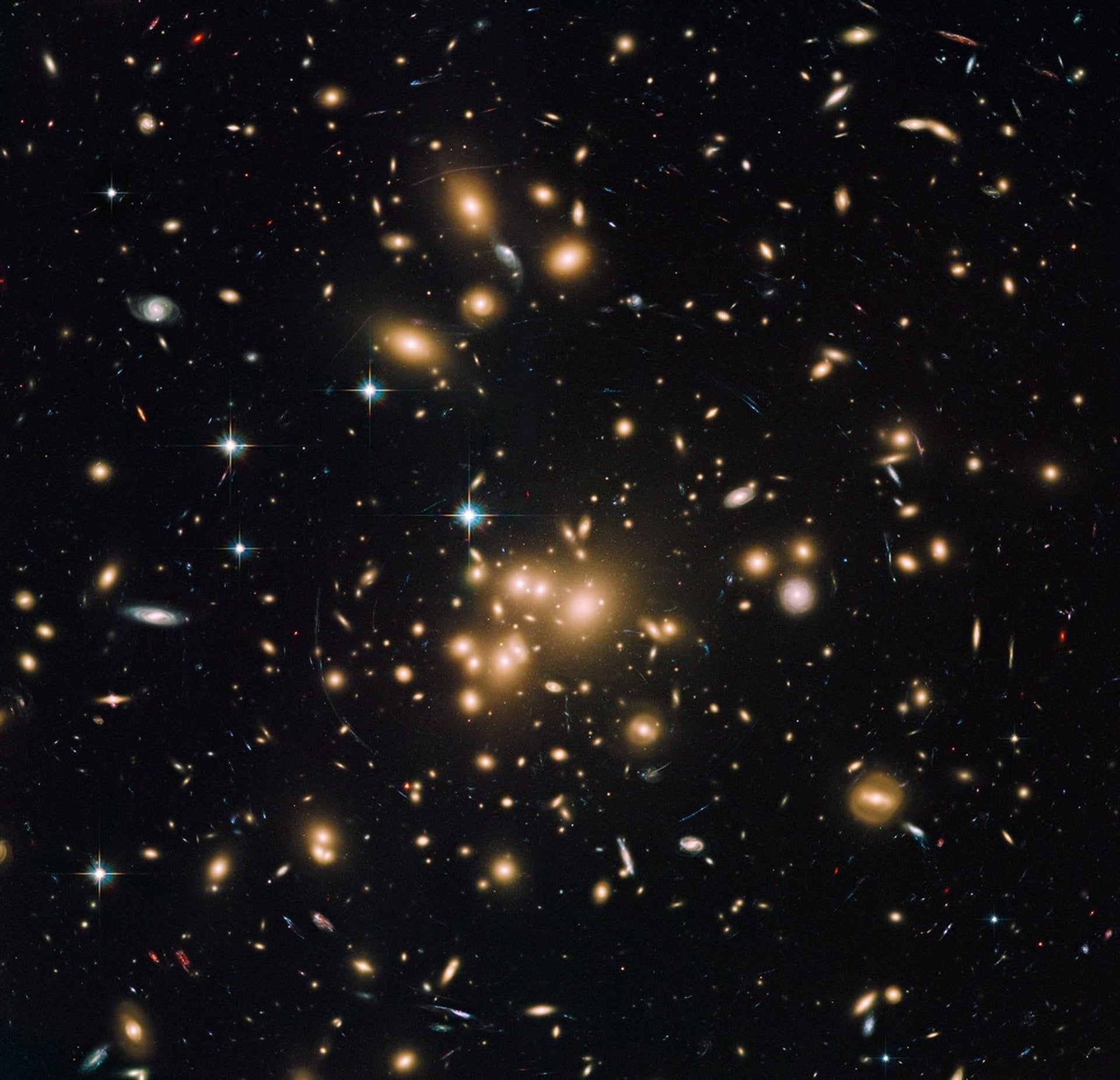
One striking aspect of this mystery involves the phenomenon of gravitational lensing. If a cosmic string were to pass between Earth and a distant galaxy, it would warp space-time significantly enough to create multiple images of the same galaxy. While astronomers have observed lensing effects caused by dark matter, they have not detected the distinct signature indicative of cosmic strings.
The search for magnetic monopoles presents a similar conundrum. In 1982, physicist Blas Cabrera reported a potential monopole detection, but subsequent efforts to find additional evidence have yielded no further results. This raises questions about the predicted abundance of monopoles; if they existed as theorized, their cumulative mass could have been so great that the universe would have collapsed into a “Big Crunch” before the formation of the first stars.
This discrepancy has led scientists to reconsider the implications of cosmic inflation. If defects formed before or during the inflationary period, the rapid expansion of the universe could have diluted their density to the extent that only a single monopole remains within the observable horizon. While this explanation is appealing, it does not fully account for the absence of any residual signs of these topological defects.
There is a possibility that researchers have been searching for the wrong manifestations of these defects. Rather than vanishing entirely during inflation, certain defects may have transformed into forms that do not interact with light. This theory suggests that dark matter itself could be composed of tiny, invisible knots that have persisted through cosmic history.
The concept of “vortons” emerges from this line of thought. Vortons are theorized to be stable loops of cosmic strings that could account for the unexplained gravitational effects attributed to dark matter. If these defects exist in a form that does not emit light, they could remain undetected while influencing the structure of the universe.
The ongoing search for evidence of topological defects continues to challenge our understanding of cosmology. As scientists refine their techniques and theories, new insights may yet illuminate the mysteries surrounding the early universe and its fundamental structure. The quest to understand these elusive cosmic phenomena remains vital to unraveling the true nature of the universe.

Philadelphia Parks Launch Free Earth Month Events Starting April 1

Bradford’s Fish Fry Fridays Serve Community with Delicious Dinners

Trump Faces Growing Challenges Amid Rising Tensions with Iran

Scientists Probe the Universe’s Missing Topological Defects

Samsung Galaxy Watch 9 to Feature Larger 435mAh Battery

UConn Huskies Aim to Defend Title in 2026 NCAA Women’s Tournament

U.S. Littoral Combat Ships Dock in Malaysia Amid Regional Tensions

Healthy Choice Wellness Reports Quarterly Earnings, Shares Rise

Urgent News: Charles M. Payment Passes Away at 78 in Duluth

University of Hawaiʻi Joins $25.6M AI Project to Enhance Disaster Monitoring

Major Grant Enhances Cancer Care and Research in Hawaiʻi

Joleen Chaney, Beloved Journalist, Passes Leaving Lasting Legacy

San Francisco’s SFO to Welcome 16 Airlines with Nonstop Flights to Europe in 2026

Discover Top Business Smartphones for Professionals in 2026

Goldman Sachs Unveils 2026 Catalyst Playbook for Biotech Investors

Texas Roadhouse Honors Veterans with Free Meal Vouchers

Urgent Update: Tom Aspinall’s Vision Deteriorates After UFC 321

AI Disruption: AWS Faces Threat as Startups Shift Cloud Focus
-
Science9 months ago
University of Hawaiʻi Joins $25.6M AI Project to Enhance Disaster Monitoring
-
 Health7 months ago
Major Grant Enhances Cancer Care and Research in Hawaiʻi
-
 Top Stories9 months ago
Joleen Chaney, Beloved Journalist, Passes Leaving Lasting Legacy
-
 World6 months ago
San Francisco’s SFO to Welcome 16 Airlines with Nonstop Flights to Europe in 2026
-
 Business7 months ago
Discover Top Business Smartphones for Professionals in 2026
-
 Business7 months ago
Goldman Sachs Unveils 2026 Catalyst Playbook for Biotech Investors
-
 Lifestyle8 months ago
Texas Roadhouse Honors Veterans with Free Meal Vouchers
-
 Top Stories9 months ago
Urgent Update: Tom Aspinall’s Vision Deteriorates After UFC 321
-
 Top Stories9 months ago
AI Disruption: AWS Faces Threat as Startups Shift Cloud Focus
-

 Health9 months ago
MIT Scientists Uncover Surprising Genomic Loops During Cell Division
-

 Entertainment9 months ago
Discover the Full Map of Pokémon Legends: Z-A’s Lumiose City
-

 Business9 months ago
Trulioo Introduces KYA to Revolutionize Digital Verification