
Politics
Russia Allegedly Developing New Weapon to Target Starlink Satellites

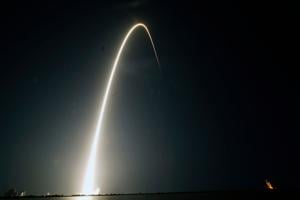
Western intelligence agencies are raising concerns that Russia is developing a new anti-satellite weapon aimed at disrupting Elon Musk’s Starlink satellite constellation. Intelligence reports reviewed by The Associated Press indicate that this weapon, referred to as the “zone-effect” system, could release clouds of high-density pellets into Starlink’s orbit. Such a strategy aims to undermine Western space capabilities, particularly those that have aided Ukraine during its ongoing conflict with Russia.
The intelligence findings suggest that the proposed weapon could deploy hundreds of thousands of small projectiles, potentially disabling multiple satellites simultaneously. However, analysts express skepticism regarding the feasibility of such a weapon, highlighting the risk of catastrophic collateral damage to other satellite systems operating in similar orbits.
Victoria Samson, a space-security expert at the Secure World Foundation, indicated her doubts about the practicality of the concept. “I don’t buy it. Like, I really don’t,” she remarked, adding that the implications of such a weapon could lead to chaos in space for all nations reliant on satellite technology, including Russia and its ally, China.
Conversely, Brig. Gen. Christopher Horner, commander of the Canadian military’s Space Division, stated that while he has not been briefed on this particular system, it cannot be dismissed outright. “If the reporting on the nuclear weapons system is accurate… it wouldn’t strike me as shocking that something just short of that, but equally damaging, is within their wheelhouse of development,” he noted.
The Kremlin has not issued a response to the claims concerning the weapon, and Dmitry Peskov, the Kremlin spokesperson, did not return inquiries from the Associated Press. Historically, Russia has advocated for international agreements to prevent the militarization of space, with President Vladimir Putin asserting that Moscow has no plans to deploy nuclear weapons in space.
The intelligence reports did not specify when Russia might be ready to use such a weapon, nor did they provide details on whether it has undergone testing. An official familiar with the findings, who requested anonymity, noted that the research is ongoing and that the timeline for potential deployment remains sensitive information.
Starlink satellites, which orbit approximately 550 kilometers (about 340 miles) above Earth, have proven essential for Ukraine, providing high-speed internet for military communications, weapon targeting, and civilian use in areas affected by Russian strikes. The intelligence findings suggest that Russia views Starlink as a significant threat, with Russian officials previously warning that commercial satellites employed by Ukrainian forces could become legitimate military targets.
This month, Russia announced the deployment of a new ground-based missile system, the S-500, capable of hitting low-orbit targets. In contrast to a missile tested in 2021 that destroyed an obsolete satellite, this new system could potentially target multiple Starlink satellites at once, releasing pellets from yet-to-be-launched small satellite formations.
Horner cautioned against underestimating the dangers of such a weapon. “You blow up a box full of BBs,” he explained, suggesting that the resulting debris could blanket an entire orbital regime, impacting not just Starlink satellites but also others in similar orbits. He emphasized that the collateral damage from such an attack could spiral out of control rapidly.
Analysts also noted that the pellets, which would measure only a few millimeters in diameter, could evade detection by existing ground and space-based tracking systems. This lack of traceability could complicate efforts to attribute any damage to Russia, as Clayton Swope, a space security specialist at the Center for Strategic and International Studies, observed: “If satellites start winking out with damage, I guess you could put two and two together.”
The potential destruction caused by these miniature projectiles remains uncertain. In November, a small piece of debris was implicated in damaging a Chinese spacecraft intended for returning astronauts to Earth. Swope remarked that solar panels, often the most fragile components of satellites, would likely sustain the most damage from such an attack, potentially rendering them inoperable.
Following such an incident, the pellets and debris would eventually descend back toward Earth, posing additional risks to other satellites and space systems. As Swope pointed out, both the International Space Station and China’s Tiangong space station operate at lower altitudes and would be vulnerable to debris from a potential attack.
The chaos that could ensue from deploying such a weapon might provide Russia with a means of intimidation against its adversaries, allowing it to threaten Western interests without direct confrontation. Samson suggested that the Russian approach might reflect a broader strategy to elicit a global response, potentially justifying increased military spending by other nations.
She cautioned, “I wouldn’t put it past some scientists… to build out something like this because it’s an interesting thought-experiment.” Yet, she also acknowledged the risks associated with such indiscriminate weaponry, stating that it could ultimately undermine Russia’s own space capabilities: “They’ve invested a huge amount of time and money… Using such a weapon would effectively cut off space for them as well.”
As tensions continue to rise, the implications of this potential Russian weapon development remain a significant concern for global security and the future of space operations.

Philadelphia Parks Launch Free Earth Month Events Starting April 1

Bradford’s Fish Fry Fridays Serve Community with Delicious Dinners

Trump Faces Growing Challenges Amid Rising Tensions with Iran

Scientists Probe the Universe’s Missing Topological Defects

Samsung Galaxy Watch 9 to Feature Larger 435mAh Battery

UConn Huskies Aim to Defend Title in 2026 NCAA Women’s Tournament

U.S. Littoral Combat Ships Dock in Malaysia Amid Regional Tensions

Healthy Choice Wellness Reports Quarterly Earnings, Shares Rise

Urgent News: Charles M. Payment Passes Away at 78 in Duluth

University of Hawaiʻi Joins $25.6M AI Project to Enhance Disaster Monitoring

Major Grant Enhances Cancer Care and Research in Hawaiʻi

Joleen Chaney, Beloved Journalist, Passes Leaving Lasting Legacy

San Francisco’s SFO to Welcome 16 Airlines with Nonstop Flights to Europe in 2026

Goldman Sachs Unveils 2026 Catalyst Playbook for Biotech Investors

Discover Top Business Smartphones for Professionals in 2026

Urgent Update: Tom Aspinall’s Vision Deteriorates After UFC 321

Texas Roadhouse Honors Veterans with Free Meal Vouchers

CD Projekt Red Confirms No Release for The Witcher 4 in 2026
-
Science9 months ago
University of Hawaiʻi Joins $25.6M AI Project to Enhance Disaster Monitoring
-
 Health8 months ago
Major Grant Enhances Cancer Care and Research in Hawaiʻi
-
 Top Stories9 months ago
Joleen Chaney, Beloved Journalist, Passes Leaving Lasting Legacy
-
 World7 months ago
San Francisco’s SFO to Welcome 16 Airlines with Nonstop Flights to Europe in 2026
-
 Business8 months ago
Goldman Sachs Unveils 2026 Catalyst Playbook for Biotech Investors
-
 Business8 months ago
Discover Top Business Smartphones for Professionals in 2026
-
 Top Stories10 months ago
Urgent Update: Tom Aspinall’s Vision Deteriorates After UFC 321
-
 Lifestyle9 months ago
Texas Roadhouse Honors Veterans with Free Meal Vouchers
-
 Entertainment8 months ago
CD Projekt Red Confirms No Release for The Witcher 4 in 2026
-

 Top Stories10 months ago
AI Disruption: AWS Faces Threat as Startups Shift Cloud Focus
-

 Health10 months ago
MIT Scientists Uncover Surprising Genomic Loops During Cell Division
-

 Entertainment10 months ago
Discover the Full Map of Pokémon Legends: Z-A’s Lumiose City