
Sports
Minnesota’s Rabbits Thrive as Wildlife Populations Flourish

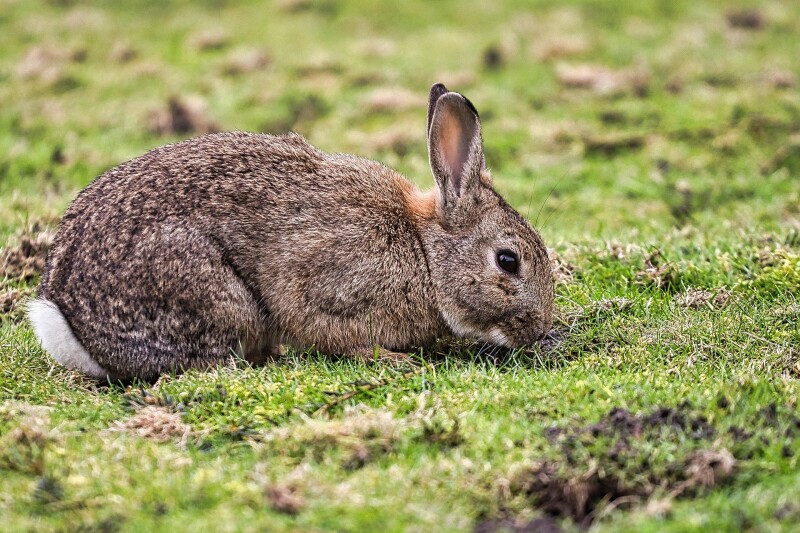
Wildlife populations in Minnesota have seen a notable increase over the past 25 years, particularly in the Bemidji area. Among the species that have flourished are the cottontail rabbit, white-tailed jackrabbit, and the snowshoe hare. These three rabbit-like species are becoming more prevalent across the state’s diverse habitats, including prairies, woodlands, and forests.
The cottontail rabbit is the only true rabbit among these species, characterized by its distinctive white cotton-ball tail. While cottontails have always been present in some urban regions, their numbers have expanded significantly into rural areas. This growth mirrors trends seen in other wildlife, such as the black bear and wild turkey, which have also become more common in the Northland.
Understanding the Differences Between Rabbits and Hares
Rabbits and hares differ in several important ways. Cottontail rabbits are classified as altricial, meaning they are born naked, blind, and helpless. In contrast, hares, including the white-tailed jackrabbit and snowshoe hare, are precocial, emerging from the nest fully furred and capable of movement within hours of birth.
Physically, rabbits have shorter ears compared to hares, and their legs are proportionately smaller. Notably, during the harsh Minnesota winters, snowshoe hares and white-tailed jackrabbits develop white fur coats to blend into their snowy surroundings, while cottontails maintain their brownish coloration with white underbellies.
Cottontail rabbits measure approximately 30 to 40 centimeters in length and weigh between one to one and a half kilograms, making them the smallest of the three species. Their impressive agility allows them to navigate their territories effectively, which is crucial for evading predators.
Predatory Defense Mechanisms
All three species employ various strategies to outsmart potential threats. Their primary defense tactics include running and leaping, often in a zigzag pattern to confuse predators. Interestingly, they can also remain motionless, making them difficult to spot even when they are nearby.
Cottontail rabbits can sprint at speeds of up to 32 kilometers per hour, while jackrabbits can reach an astonishing 72 kilometers per hour and leap as far as six meters. Snowshoe hares, benefiting from their large furry feet, can traverse deep snow effectively, enhancing their ability to evade capture.
In addition to physical adaptations, these animals possess acute vision and hearing. Their bulging eyes allow them to detect danger from nearly all angles, while their long ears amplify sounds, alerting them to approaching risks. During warm months, these ears also help regulate body temperature.
Diet and Nutritional Strategies
Rabbits and hares are strict herbivores, foraging for a diverse range of plant materials, including leaves, seeds, shrubs, and tree bark. A unique aspect of their feeding behavior is coprophagy, the practice of consuming their own droppings to maximize nutrient intake. This behavior enables them to recycle essential nutrients and beneficial bacteria, enhancing their digestive efficiency.
In many backyards across Minnesota, cottontail rabbits can be as common as squirrels, often visiting bird feeding stations. The less frequently seen snowshoe hares and white-tailed jackrabbits are also likely residing nearby.
As winter approaches, outdoor enthusiasts in Minnesota are encouraged to observe the movements and signs of these fascinating creatures in the snow. The presence of cottontail rabbits, white-tailed jackrabbits, and snowshoe hares not only enriches the ecosystem but also offers an opportunity for residents and visitors alike to connect with the natural beauty of the Northland.

Philadelphia Parks Launch Free Earth Month Events Starting April 1

Bradford’s Fish Fry Fridays Serve Community with Delicious Dinners

Trump Faces Growing Challenges Amid Rising Tensions with Iran

Scientists Probe the Universe’s Missing Topological Defects

Samsung Galaxy Watch 9 to Feature Larger 435mAh Battery

UConn Huskies Aim to Defend Title in 2026 NCAA Women’s Tournament

U.S. Littoral Combat Ships Dock in Malaysia Amid Regional Tensions

Healthy Choice Wellness Reports Quarterly Earnings, Shares Rise

Urgent News: Charles M. Payment Passes Away at 78 in Duluth

University of Hawaiʻi Joins $25.6M AI Project to Enhance Disaster Monitoring

Major Grant Enhances Cancer Care and Research in Hawaiʻi

Joleen Chaney, Beloved Journalist, Passes Leaving Lasting Legacy

San Francisco’s SFO to Welcome 16 Airlines with Nonstop Flights to Europe in 2026

Goldman Sachs Unveils 2026 Catalyst Playbook for Biotech Investors

Discover Top Business Smartphones for Professionals in 2026

Urgent Update: Tom Aspinall’s Vision Deteriorates After UFC 321

Texas Roadhouse Honors Veterans with Free Meal Vouchers

CD Projekt Red Confirms No Release for The Witcher 4 in 2026
-
Science9 months ago
University of Hawaiʻi Joins $25.6M AI Project to Enhance Disaster Monitoring
-
 Health8 months ago
Major Grant Enhances Cancer Care and Research in Hawaiʻi
-
 Top Stories9 months ago
Joleen Chaney, Beloved Journalist, Passes Leaving Lasting Legacy
-
 World7 months ago
San Francisco’s SFO to Welcome 16 Airlines with Nonstop Flights to Europe in 2026
-
 Business8 months ago
Goldman Sachs Unveils 2026 Catalyst Playbook for Biotech Investors
-
 Business7 months ago
Discover Top Business Smartphones for Professionals in 2026
-
 Top Stories9 months ago
Urgent Update: Tom Aspinall’s Vision Deteriorates After UFC 321
-
 Lifestyle9 months ago
Texas Roadhouse Honors Veterans with Free Meal Vouchers
-
 Entertainment8 months ago
CD Projekt Red Confirms No Release for The Witcher 4 in 2026
-

 Top Stories10 months ago
AI Disruption: AWS Faces Threat as Startups Shift Cloud Focus
-

 Health10 months ago
MIT Scientists Uncover Surprising Genomic Loops During Cell Division
-

 Entertainment10 months ago
Discover the Full Map of Pokémon Legends: Z-A’s Lumiose City