
Politics
Federal Judges in Minnesota Reject Arrest Warrants for Protesters

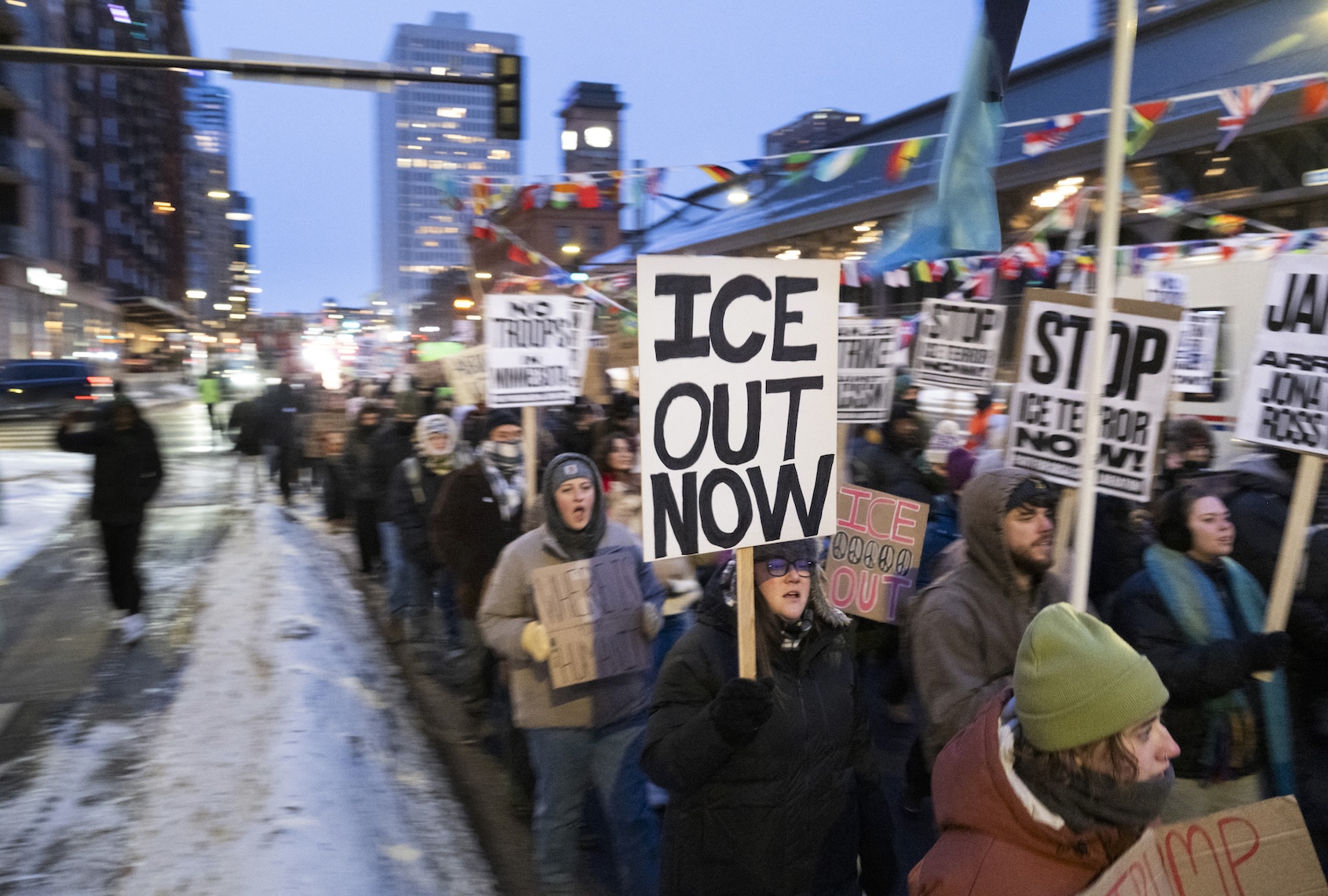
Federal judges in Minnesota have consistently rejected arrest warrants sought by federal prosecutors against protesters opposing the presence of Immigration and Customs Enforcement (ICE) officers. This trend highlights a growing tension between law enforcement and judicial oversight, as judges cite insufficient evidence to justify the warrants.
The warrants, which allege that some protesters engaged in assaults and other criminal activities during demonstrations in Minneapolis, have not met the required legal standards. In a notable case, a federal judge dismissed a warrant against a protester accused of throwing an egg at a law enforcement vehicle. This decision reflects a rare instance where judges have declined to issue warrants despite claims of potential criminal behavior.
In another significant case, Magistrate Judge Douglas Micko rejected a request to arrest Chauntyll Louisa Allen, a school board member in St. Paul. Prosecutors aimed to charge her with threatening or intimidating individuals attending a church where an ICE official also serves as a pastor. Judge Micko did approve a lesser charge of conspiracy to make threats against her.
The judicial reluctance to issue these warrants has drawn criticism from law enforcement officials. Gregory Bovino, commander of Customs and Border Protection (CBP), expressed his frustration during a press conference. “We work very hard with the Department of Justice, with the courts, to gather and obtain those warrants,” he stated. “We’re going to continue to work with judges and the courts to obtain these warrants with those judges.”
The situation underscores the challenges faced by federal authorities in managing protests that have intensified in recent years, particularly in response to ICE’s activities. The judges’ decisions may signal a broader judicial pushback against what some perceive as overreach by federal law enforcement.
As protests continue, the implications of these rulings will likely affect future interactions between local communities and federal agencies. The decisions made by the courts may also influence how law enforcement approaches similar situations in the future, balancing the need for public safety with the rights of individuals to express dissent.
The ongoing developments in Minnesota are part of a larger national conversation about immigration policy, law enforcement practices, and civil liberties. Protests against ICE have become common in many areas, reflecting deep-seated concerns about immigration enforcement and its impact on communities.
With the legal landscape evolving, both protesters and law enforcement are navigating a complex environment where the rules governing public demonstrations and federal authority are continuously tested. The outcomes of these legal battles may set important precedents for how such protests are handled in the future.

Philadelphia Parks Launch Free Earth Month Events Starting April 1

Bradford’s Fish Fry Fridays Serve Community with Delicious Dinners

Trump Faces Growing Challenges Amid Rising Tensions with Iran

Scientists Probe the Universe’s Missing Topological Defects

Samsung Galaxy Watch 9 to Feature Larger 435mAh Battery

UConn Huskies Aim to Defend Title in 2026 NCAA Women’s Tournament

U.S. Littoral Combat Ships Dock in Malaysia Amid Regional Tensions

Healthy Choice Wellness Reports Quarterly Earnings, Shares Rise

Urgent News: Charles M. Payment Passes Away at 78 in Duluth

University of Hawaiʻi Joins $25.6M AI Project to Enhance Disaster Monitoring

Major Grant Enhances Cancer Care and Research in Hawaiʻi

Joleen Chaney, Beloved Journalist, Passes Leaving Lasting Legacy

San Francisco’s SFO to Welcome 16 Airlines with Nonstop Flights to Europe in 2026

Goldman Sachs Unveils 2026 Catalyst Playbook for Biotech Investors

Discover Top Business Smartphones for Professionals in 2026

Urgent Update: Tom Aspinall’s Vision Deteriorates After UFC 321

Texas Roadhouse Honors Veterans with Free Meal Vouchers

CD Projekt Red Confirms No Release for The Witcher 4 in 2026
-
Science9 months ago
University of Hawaiʻi Joins $25.6M AI Project to Enhance Disaster Monitoring
-
 Health8 months ago
Major Grant Enhances Cancer Care and Research in Hawaiʻi
-
 Top Stories9 months ago
Joleen Chaney, Beloved Journalist, Passes Leaving Lasting Legacy
-
 World7 months ago
San Francisco’s SFO to Welcome 16 Airlines with Nonstop Flights to Europe in 2026
-
 Business8 months ago
Goldman Sachs Unveils 2026 Catalyst Playbook for Biotech Investors
-
 Business8 months ago
Discover Top Business Smartphones for Professionals in 2026
-
 Top Stories9 months ago
Urgent Update: Tom Aspinall’s Vision Deteriorates After UFC 321
-
 Lifestyle9 months ago
Texas Roadhouse Honors Veterans with Free Meal Vouchers
-
 Entertainment8 months ago
CD Projekt Red Confirms No Release for The Witcher 4 in 2026
-

 Top Stories10 months ago
AI Disruption: AWS Faces Threat as Startups Shift Cloud Focus
-

 Health10 months ago
MIT Scientists Uncover Surprising Genomic Loops During Cell Division
-

 Entertainment10 months ago
Discover the Full Map of Pokémon Legends: Z-A’s Lumiose City