
Science
Astronomers Unravel Mysteries of Unique ‘Inside-Out’ Solar System

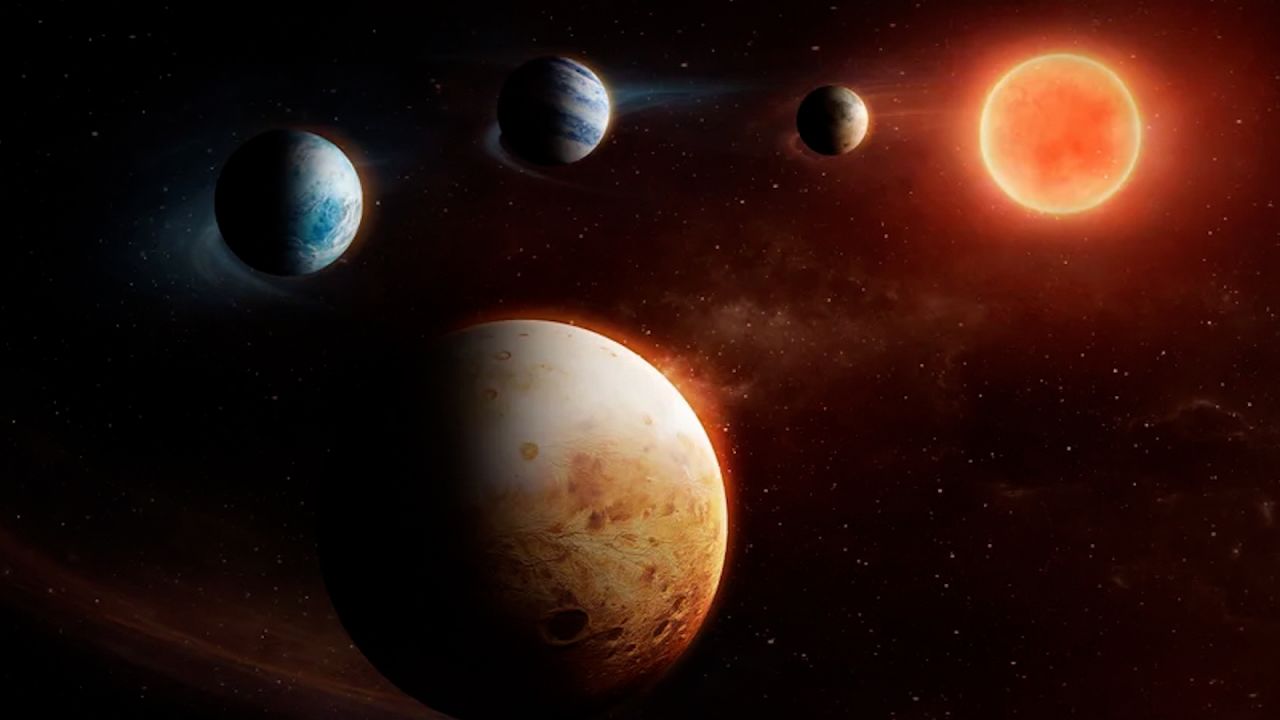
A team of astronomers has identified a peculiar planetary system that challenges existing astronomical theories. Dubbed an “inside-out” solar system, this unique configuration features planets orbiting in a manner that defies the conventional arrangement observed in other systems.
The discovery, announced by researchers from the University of California, Berkeley, has sparked widespread intrigue within the scientific community. Unlike typical solar systems where smaller, rocky planets are located closer to the star and larger, gas giants are found further out, this new system exhibits an unusual reversal in this pattern.
Unraveling the Anomaly
The system in question is located approximately 40 light-years away from Earth and is home to several exoplanets, including a notable candidate known as TRAPPIST-1. These planets are composed of different materials than what scientists would expect based on their distance from the host star. The inner planets, typically expected to be rocky, are instead gaseous, while the outer planets maintain a rocky composition.
According to findings released by NASA, this anomaly raises complex questions about the processes involved in planetary formation. The research team used advanced observational techniques to analyze the system’s characteristics, revealing that the planets’ compositions do not align with traditional models of planetary development.
Implications for Future Research
The implications of this finding could be profound for the field of astronomy. Scientists are now considering how this inside-out arrangement could reshape understanding of planetary systems and their evolution. “This discovery challenges our assumptions about how planets form and evolve,” said Dr. Jennifer Johnson, an astronomer involved in the research.
This unexpected arrangement may suggest that factors influencing planetary formation are more varied than previously thought. The study is likely to prompt further investigations into other planetary systems to identify whether similar structures exist elsewhere in the universe.
As researchers continue to analyze data from this fascinating system, it is clear that the universe still holds many secrets. The ongoing exploration of exoplanets is crucial, as it not only deepens our understanding of the cosmos but also refines the criteria for identifying potentially habitable worlds.
In summary, the discovery of this inside-out solar system presents both a challenge and an opportunity for astronomers. By continuing to study these anomalies, scientists hope to uncover new insights into the formation and dynamics of planetary systems, ultimately contributing to the broader understanding of our universe.

Philadelphia Parks Launch Free Earth Month Events Starting April 1

Bradford’s Fish Fry Fridays Serve Community with Delicious Dinners

Trump Faces Growing Challenges Amid Rising Tensions with Iran

Scientists Probe the Universe’s Missing Topological Defects

Samsung Galaxy Watch 9 to Feature Larger 435mAh Battery

UConn Huskies Aim to Defend Title in 2026 NCAA Women’s Tournament

U.S. Littoral Combat Ships Dock in Malaysia Amid Regional Tensions

Healthy Choice Wellness Reports Quarterly Earnings, Shares Rise

Urgent News: Charles M. Payment Passes Away at 78 in Duluth

University of Hawaiʻi Joins $25.6M AI Project to Enhance Disaster Monitoring

Major Grant Enhances Cancer Care and Research in Hawaiʻi

Joleen Chaney, Beloved Journalist, Passes Leaving Lasting Legacy

San Francisco’s SFO to Welcome 16 Airlines with Nonstop Flights to Europe in 2026

Goldman Sachs Unveils 2026 Catalyst Playbook for Biotech Investors

Discover Top Business Smartphones for Professionals in 2026

Urgent Update: Tom Aspinall’s Vision Deteriorates After UFC 321

Texas Roadhouse Honors Veterans with Free Meal Vouchers

CD Projekt Red Confirms No Release for The Witcher 4 in 2026
-
Science9 months ago
University of Hawaiʻi Joins $25.6M AI Project to Enhance Disaster Monitoring
-
 Health8 months ago
Major Grant Enhances Cancer Care and Research in Hawaiʻi
-
 Top Stories9 months ago
Joleen Chaney, Beloved Journalist, Passes Leaving Lasting Legacy
-
 World7 months ago
San Francisco’s SFO to Welcome 16 Airlines with Nonstop Flights to Europe in 2026
-
 Business8 months ago
Goldman Sachs Unveils 2026 Catalyst Playbook for Biotech Investors
-
 Business7 months ago
Discover Top Business Smartphones for Professionals in 2026
-
 Top Stories9 months ago
Urgent Update: Tom Aspinall’s Vision Deteriorates After UFC 321
-
 Lifestyle9 months ago
Texas Roadhouse Honors Veterans with Free Meal Vouchers
-
 Entertainment8 months ago
CD Projekt Red Confirms No Release for The Witcher 4 in 2026
-

 Top Stories10 months ago
AI Disruption: AWS Faces Threat as Startups Shift Cloud Focus
-

 Health10 months ago
MIT Scientists Uncover Surprising Genomic Loops During Cell Division
-

 Entertainment10 months ago
Discover the Full Map of Pokémon Legends: Z-A’s Lumiose City