
Politics
Confronting America’s Racial Legacy: A Call to Action

In March 2026, as the United States observes Black History Month, a significant discourse has emerged around the efforts to address the contributions of people of color in shaping the nation. Some factions advocating for a “great America” are perceived to be actively diminishing the historical impact of slavery and the ongoing racial inequalities that extend from it. This situation raises critical questions about how a nation can claim greatness while ignoring its past injustices.
The comparison to Germany’s approach to its own historical transgressions is striking. Modern Germany has confronted the legacy of Nazism with transparency, ensuring that the horrors of this period are not forgotten. The nation has enacted laws that prohibit the denial or downplaying of the Holocaust, while memorials like the Memorial of the Murdered Jews of Europe serve as constant reminders of this dark chapter. Furthermore, extensive education on the Holocaust is integrated into school curricula, fostering an understanding of the dangers posed by extremist ideologies.
In stark contrast, the United States grapples with its own historical contradictions. The nation’s founding principles emphasize freedom, yet this freedom was long denied to African Americans and other marginalized groups. The legacy of slavery, which endured for centuries and was only abolished after a devastating civil war, continues to affect the socio-economic landscape. Current statistics reveal significant disparities in health care, housing, income, and education between racial groups. These inequalities highlight the ongoing impact of slavery and underscore the challenges that impede the country’s path to true greatness.
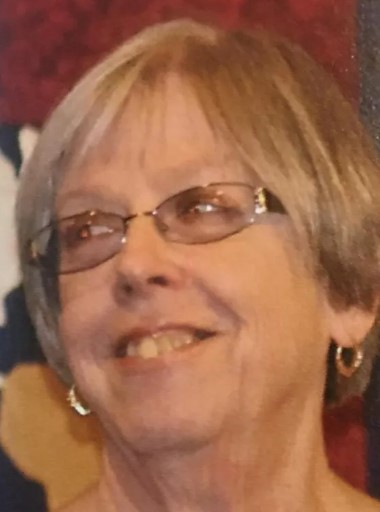
Nancy Flood-Golembeck, a retired teacher and member of the Baha’i faith, emphasizes that achieving greatness requires acknowledging and addressing these longstanding racial issues. In her view, the principles of the Baha’i faith advocate for the United States to lead spiritually rather than materially, which necessitates confronting its historical injustices. She notes that both white and Black Americans are affected by systemic racism, as articulated by the Baha’i National governing body in “The Vision of Race Unity: America’s Most Challenging Issue.”
Flood-Golembeck argues that reconciliation is possible only through honest engagement with history. She cites writer Thomas Chatterton Williams, who believes that the narrative surrounding slavery and its abolition is one of “irrepressible human dignity.” By properly addressing this history, the nation can foster reconciliation and work towards preventing future injustices.
Rather than attempting to erase or downplay the past, Flood-Golembeck calls for a collective effort to dismantle racism. This proactive stance aligns with the U.S. motto “e pluribus unum” – out of many, one – suggesting that unity among diverse communities is essential for true national greatness. The challenges posed by racial disparity can also present opportunities for moral growth and leadership in addressing these issues.
As the nation reflects on its history during this Black History Month, the imperative to engage with the past is clearer than ever. Acknowledging the contributions and suffering of people of color is not just a moral responsibility; it is a vital step toward achieving a more equitable and just society. The path to greatness lies in unity, understanding, and a commitment to overcoming the legacy of racism that has long hindered the nation’s progress.
In the coming years, it will be crucial for Americans to confront their history openly and honestly, fostering an environment where diversity is celebrated rather than seen as a barrier. Only through such efforts can the United States hope to live up to its ideals and truly embody its national motto.

Philadelphia Parks Launch Free Earth Month Events Starting April 1

Bradford’s Fish Fry Fridays Serve Community with Delicious Dinners

Trump Faces Growing Challenges Amid Rising Tensions with Iran

Scientists Probe the Universe’s Missing Topological Defects

Samsung Galaxy Watch 9 to Feature Larger 435mAh Battery

UConn Huskies Aim to Defend Title in 2026 NCAA Women’s Tournament

U.S. Littoral Combat Ships Dock in Malaysia Amid Regional Tensions

Healthy Choice Wellness Reports Quarterly Earnings, Shares Rise

Urgent News: Charles M. Payment Passes Away at 78 in Duluth

University of Hawaiʻi Joins $25.6M AI Project to Enhance Disaster Monitoring

Major Grant Enhances Cancer Care and Research in Hawaiʻi

Joleen Chaney, Beloved Journalist, Passes Leaving Lasting Legacy

San Francisco’s SFO to Welcome 16 Airlines with Nonstop Flights to Europe in 2026

Goldman Sachs Unveils 2026 Catalyst Playbook for Biotech Investors

Discover Top Business Smartphones for Professionals in 2026

Urgent Update: Tom Aspinall’s Vision Deteriorates After UFC 321

Texas Roadhouse Honors Veterans with Free Meal Vouchers

CD Projekt Red Confirms No Release for The Witcher 4 in 2026
-
Science9 months ago
University of Hawaiʻi Joins $25.6M AI Project to Enhance Disaster Monitoring
-
 Health8 months ago
Major Grant Enhances Cancer Care and Research in Hawaiʻi
-
 Top Stories9 months ago
Joleen Chaney, Beloved Journalist, Passes Leaving Lasting Legacy
-
 World7 months ago
San Francisco’s SFO to Welcome 16 Airlines with Nonstop Flights to Europe in 2026
-
 Business8 months ago
Goldman Sachs Unveils 2026 Catalyst Playbook for Biotech Investors
-
 Business7 months ago
Discover Top Business Smartphones for Professionals in 2026
-
 Top Stories9 months ago
Urgent Update: Tom Aspinall’s Vision Deteriorates After UFC 321
-
 Lifestyle9 months ago
Texas Roadhouse Honors Veterans with Free Meal Vouchers
-
 Entertainment8 months ago
CD Projekt Red Confirms No Release for The Witcher 4 in 2026
-

 Top Stories10 months ago
AI Disruption: AWS Faces Threat as Startups Shift Cloud Focus
-

 Health10 months ago
MIT Scientists Uncover Surprising Genomic Loops During Cell Division
-

 Entertainment10 months ago
Discover the Full Map of Pokémon Legends: Z-A’s Lumiose City