
Lifestyle
Judy Baca Faces Criticism Over Management of Great Wall Project

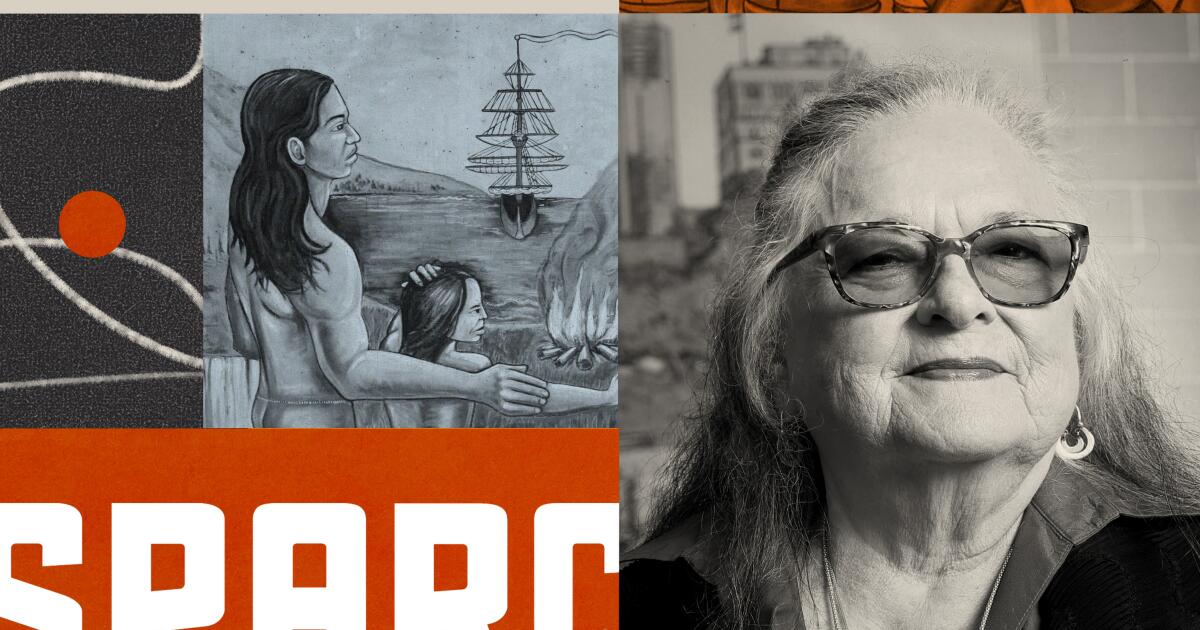
At the center of a growing controversy, artist Judy Baca has been accused by former colleagues of mismanaging funds linked to her iconic mural, “The Great Wall of Los Angeles.” This significant work, completed between 1974 and 1984, stretches over 2,700 feet and is celebrated for its portrayal of Southern California’s history through the lens of women and minorities. Baca’s leadership of the mural project has cemented her status as a pivotal figure in L.A.’s art scene.
Baca co-founded the Social and Public Art Resource Center (SPARC), a nonprofit devoted to community murals, and has received numerous accolades, including a National Medal of Arts. However, recent interviews with ten former SPARC employees, including two managers, have raised serious concerns about her management practices. They allege that Baca has blurred the lines between her nonprofit work and her private art business, Judy Baca Inc. The allegations include claims that Baca improperly benefited from a $5 million grant from the Andrew W. Mellon Foundation aimed at expanding the mural.
The accusations center around Baca’s plans to expand “The Great Wall” to include new imagery reflecting history from the 1960s to the present. This initiative received financial support through a grant established as part of the Mellon Foundation’s $250 million Monuments Project, designed to highlight underrepresented narratives. However, former employees allege that Baca diverted some of the grant’s funds for personal gain.
In interviews, Pete Galindo, former director of the Great Wall of Los Angeles Institute, and Carmen Garcia, who briefly served as SPARC’s executive director, expressed their concerns. They claimed that Baca required SPARC employees to perform tasks for her private business, which led to Garcia resigning after raising concerns about the misuse of grant funds. She described being “forcefully” removed from the building after calling for an investigation.
Baca and SPARC’s board chair, Zojeila Flores, firmly deny any wrongdoing. They assert that the grant funds have been used appropriately and that Baca has a mutually beneficial profit-sharing agreement with SPARC. Baca attributes the criticism to disgruntled former staff members and expressed her desire for SPARC to complete the mural expansion, which is scheduled for completion by 2028.
The controversy intensified following Baca’s announcement in 2017 regarding the mural’s expansion. The project aims to add interpretive stations and illuminate the mural, enhancing public access and appreciation. Baca’s efforts gained momentum with the Mellon Foundation’s grant, which is set to conclude in 2024.
Former employees have questioned Baca’s handling of the grant and her rising salary. According to reports, Baca earned $215,000 the year after SPARC received the Mellon grant, a significant increase from previous years. The board justified this hike as a means to align her salary with what she earned as a retired professor at UCLA. In 2023, her salary was reported at $236,149.
Baca’s supporters maintain that she remains a vital figure in promoting art for marginalized communities. Kelly Watts, who painted “The Great Wall” as a teenager, describes Baca as a mentor who positively influenced her artistic journey.
The sale of the mural’s archives to the Lucas Museum of Narrative Art in 2021 for a reported $1.5 million has also drawn scrutiny. Critics argue that profiting from a community project undermines the collaborative spirit that birthed the mural. Baca has defended her ownership of the archives, stating that she donated $521,000 to SPARC following the sale.
Concerns have also been raised regarding SPARC’s use of its facilities, with allegations that some board members have benefited financially from subleasing agreements. SPARC operates from a former police station, with a lease allowing it to utilize the building for nonprofit activities. While Baca and Flores affirm that all activities align with SPARC’s mission, critics argue that personal art practices should not occur within a nonprofit framework.
As the controversy unfolds, the future of “The Great Wall of Los Angeles” remains uncertain. The mural, which began as a community-driven initiative, now faces scrutiny over its management and the ethics of profit distribution. Baca’s response to these challenges will likely shape both her legacy and the future of public art in Los Angeles.

Philadelphia Parks Launch Free Earth Month Events Starting April 1

Bradford’s Fish Fry Fridays Serve Community with Delicious Dinners

Trump Faces Growing Challenges Amid Rising Tensions with Iran

Scientists Probe the Universe’s Missing Topological Defects

Samsung Galaxy Watch 9 to Feature Larger 435mAh Battery

UConn Huskies Aim to Defend Title in 2026 NCAA Women’s Tournament

U.S. Littoral Combat Ships Dock in Malaysia Amid Regional Tensions

Healthy Choice Wellness Reports Quarterly Earnings, Shares Rise

Urgent News: Charles M. Payment Passes Away at 78 in Duluth

University of Hawaiʻi Joins $25.6M AI Project to Enhance Disaster Monitoring

Major Grant Enhances Cancer Care and Research in Hawaiʻi

Joleen Chaney, Beloved Journalist, Passes Leaving Lasting Legacy

San Francisco’s SFO to Welcome 16 Airlines with Nonstop Flights to Europe in 2026

Goldman Sachs Unveils 2026 Catalyst Playbook for Biotech Investors

Discover Top Business Smartphones for Professionals in 2026

Urgent Update: Tom Aspinall’s Vision Deteriorates After UFC 321

Texas Roadhouse Honors Veterans with Free Meal Vouchers

CD Projekt Red Confirms No Release for The Witcher 4 in 2026
-
Science9 months ago
University of Hawaiʻi Joins $25.6M AI Project to Enhance Disaster Monitoring
-
 Health8 months ago
Major Grant Enhances Cancer Care and Research in Hawaiʻi
-
 Top Stories9 months ago
Joleen Chaney, Beloved Journalist, Passes Leaving Lasting Legacy
-
 World7 months ago
San Francisco’s SFO to Welcome 16 Airlines with Nonstop Flights to Europe in 2026
-
 Business8 months ago
Goldman Sachs Unveils 2026 Catalyst Playbook for Biotech Investors
-
 Business7 months ago
Discover Top Business Smartphones for Professionals in 2026
-
 Top Stories9 months ago
Urgent Update: Tom Aspinall’s Vision Deteriorates After UFC 321
-
 Lifestyle9 months ago
Texas Roadhouse Honors Veterans with Free Meal Vouchers
-
 Entertainment8 months ago
CD Projekt Red Confirms No Release for The Witcher 4 in 2026
-

 Top Stories10 months ago
AI Disruption: AWS Faces Threat as Startups Shift Cloud Focus
-

 Health10 months ago
MIT Scientists Uncover Surprising Genomic Loops During Cell Division
-

 Entertainment10 months ago
Discover the Full Map of Pokémon Legends: Z-A’s Lumiose City