
World
Congress Avoids Vote on War Powers Resolution Amid Iran Tensions

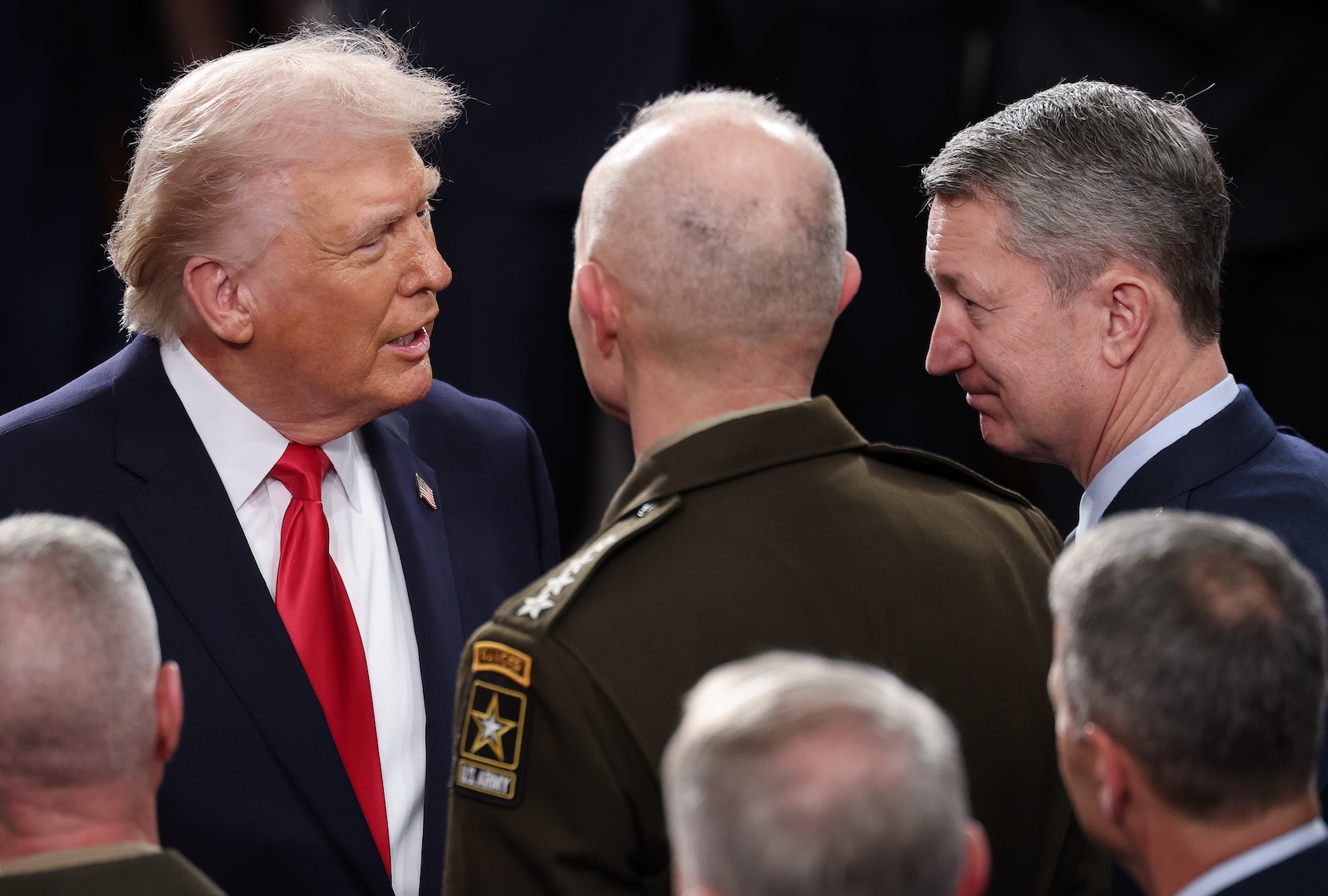
Tensions are escalating as the Trump administration has deployed warships to the region surrounding Iran, an action reminiscent of military build-ups prior to the Iraq invasion. In response, a bipartisan coalition within Congress has sought to sidestep a vote on a war powers resolution, a legislative measure that would legally require President Donald Trump to obtain congressional approval before engaging in military action against Iran. This avoidance appears to stem from a reluctance among lawmakers to publicly express their support for military intervention, fearing potential political repercussions.
On March 1, 2024, Rep. Ro Khanna, a Democrat from California, and Rep. Thomas Massie, a Republican from Kentucky, introduced the resolution aimed at reaffirming Congress’s constitutional authority over matters of war. Despite this constitutional mandate, Congress has not formally voted on a war since 1942, raising questions about its current role and responsibilities.
Opposition to the resolution emerged swiftly. Representatives Mike Lawler of New York and Josh Gottheimer of New Jersey issued a joint statement emphasizing the need for “flexibility” in responding to perceived threats. They argued that voting on the resolution could be interpreted as a weakness during a critical time. “We respect and defend Congress’s constitutional role in matters of war. However, this resolution would restrict the flexibility needed to respond to real and evolving threats,” they stated.
Political analysts suggest that lawmakers’ hesitance to vote may reflect a broader alignment with military interests within both major political parties. Corbin Trent, a Democratic strategist, noted that the current Democratic leadership has maintained a strong relationship with defense contractors and other military interests, which has influenced their stance on military intervention. “The Democratic Party that exists now in Congress is very much a party that’s aligned with the war machine, and has been for decades,” he stated.
Further complicating the situation, reports indicate that some Democratic leaders are deliberately working to delay or sideline the resolution. A senior Democratic staffer mentioned that leadership typically avoids outright opposition to such votes, opting instead for procedural delays to keep members from publicly recording their positions. “Instead, you see process concerns, timing objections, and caucus-unity arguments used to slow things down,” the staffer explained.
The political climate has been heavily influenced by the legacy of the Iraq War, where lawmakers who supported military action faced significant backlash. Saikat Chakrabarti, a political strategist and congressional candidate, pointed out that the fear of being held accountable for supporting a war has led many legislators to abstain from making a public commitment. “They don’t want to go on the record supporting a war with Iran because they saw what happened to pretty much everyone who went on the record supporting a war with Iraq,” he said.
Democratic leaders in Congress have been cautious in their public statements regarding potential military action. Sen. Chuck Schumer of New York called for the administration to provide a clear justification for any military engagement. “This is serious, and the administration has to make its case to the American people,” he stated following a briefing on the escalating situation. Similarly, House Minority Leader Hakeem Jeffries also urged the administration to explain the necessity of military action, particularly in light of previous claims that past military actions had effectively neutralized Iran’s nuclear capabilities.
The reluctance to address the war powers resolution raises significant concerns about the accountability of Congress in matters of military engagement. As discussions continue, the interplay between political strategy and national security remains at the forefront of this developing story.

Philadelphia Parks Launch Free Earth Month Events Starting April 1

Bradford’s Fish Fry Fridays Serve Community with Delicious Dinners

Trump Faces Growing Challenges Amid Rising Tensions with Iran

Scientists Probe the Universe’s Missing Topological Defects

Samsung Galaxy Watch 9 to Feature Larger 435mAh Battery

UConn Huskies Aim to Defend Title in 2026 NCAA Women’s Tournament

U.S. Littoral Combat Ships Dock in Malaysia Amid Regional Tensions

Healthy Choice Wellness Reports Quarterly Earnings, Shares Rise

Urgent News: Charles M. Payment Passes Away at 78 in Duluth

University of Hawaiʻi Joins $25.6M AI Project to Enhance Disaster Monitoring

Major Grant Enhances Cancer Care and Research in Hawaiʻi

Joleen Chaney, Beloved Journalist, Passes Leaving Lasting Legacy

San Francisco’s SFO to Welcome 16 Airlines with Nonstop Flights to Europe in 2026

Goldman Sachs Unveils 2026 Catalyst Playbook for Biotech Investors

Discover Top Business Smartphones for Professionals in 2026

Urgent Update: Tom Aspinall’s Vision Deteriorates After UFC 321

Texas Roadhouse Honors Veterans with Free Meal Vouchers

CD Projekt Red Confirms No Release for The Witcher 4 in 2026
-
Science9 months ago
University of Hawaiʻi Joins $25.6M AI Project to Enhance Disaster Monitoring
-
 Health8 months ago
Major Grant Enhances Cancer Care and Research in Hawaiʻi
-
 Top Stories9 months ago
Joleen Chaney, Beloved Journalist, Passes Leaving Lasting Legacy
-
 World7 months ago
San Francisco’s SFO to Welcome 16 Airlines with Nonstop Flights to Europe in 2026
-
 Business8 months ago
Goldman Sachs Unveils 2026 Catalyst Playbook for Biotech Investors
-
 Business8 months ago
Discover Top Business Smartphones for Professionals in 2026
-
 Top Stories10 months ago
Urgent Update: Tom Aspinall’s Vision Deteriorates After UFC 321
-
 Lifestyle9 months ago
Texas Roadhouse Honors Veterans with Free Meal Vouchers
-
 Entertainment8 months ago
CD Projekt Red Confirms No Release for The Witcher 4 in 2026
-

 Top Stories10 months ago
AI Disruption: AWS Faces Threat as Startups Shift Cloud Focus
-

 Health10 months ago
MIT Scientists Uncover Surprising Genomic Loops During Cell Division
-

 Entertainment10 months ago
Discover the Full Map of Pokémon Legends: Z-A’s Lumiose City