
Top Stories
Korean Scientists Unveil Groundbreaking 4D Printing Tech Using Sulfur Waste

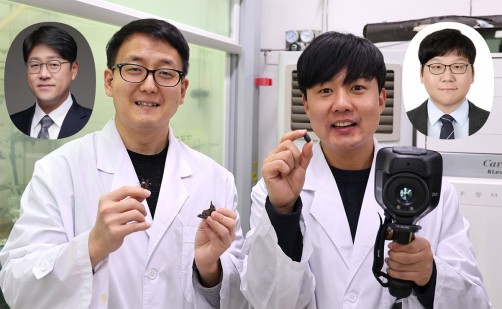
BREAKING NEWS: A team of Korean researchers has just unveiled a revolutionary 4D printing technology that utilizes waste sulfur from petroleum refining to create self-actuating, recyclable structures. This innovative approach, developed by the Korea Research Institute of Chemical Technology (KRICT) and leading universities, marks a significant leap forward in sustainable materials and robotics.
Led by Dr. Dong-Gyun Kim from KRICT, along with Professor Jeong Jae Wie of Hanyang University and Professor Yong Seok Kim of Sejong University, this new technology transforms sulfur, a by-product of petroleum refining, into advanced materials capable of responding to heat, light, and magnetic fields. In 2024, global sulfur production reached a staggering 85 million tons, highlighting the urgent need to convert this industrial waste into valuable resources.
The researchers engineered a unique polymer network that allows sulfur plastics to be easily extruded into complex 3D shapes. By precisely adjusting the sulfur content and cross-linking structures, they created materials that can change shape autonomously in response to environmental factors. For instance, applying a near-infrared (NIR) laser for just eight seconds initiates a chemical welding process, enabling components to bond without adhesives, similar to assembling LEGO blocks.
The implications of this technology are profound. The ability to create soft robots—smaller than 1 cm—that move autonomously without external power sources could revolutionize various industries. These robots can perform complex movements guided by external magnetic fields, thanks to the incorporation of magnetic particles into the sulfur polymer.
Moreover, this closed-loop manufacturing process ensures that once these 4D structures have served their purpose, they can be melted down and reused. This means that the materials can be recycled completely, establishing a 100% recycling rate and promoting a circular economy.
Dr. Kim emphasized the significance of this breakthrough: “This study represents the first example of upcycling industrial sulfur waste into advanced robotic materials. Smart materials that can move autonomously and be recycled are expected to become key drivers of future soft robotics and automation technologies.”
This research was published in the journal Advanced Materials and is supported by the KRICT core research program, the Korean Ministry of Science and ICT, and the U.S. Army International Technology Center. With this advancement, KRICT is positioning itself at the forefront of chemical technology innovation, addressing critical environmental challenges while paving the way for new robotic applications.
As this technology gains attention, experts are closely monitoring its potential impact on industries such as manufacturing, medical robotics, and environmental sustainability.
Stay tuned for further updates on this groundbreaking development that could reshape the future of soft robotics and materials science.

Philadelphia Parks Launch Free Earth Month Events Starting April 1

Bradford’s Fish Fry Fridays Serve Community with Delicious Dinners

Trump Faces Growing Challenges Amid Rising Tensions with Iran

Scientists Probe the Universe’s Missing Topological Defects

Samsung Galaxy Watch 9 to Feature Larger 435mAh Battery

UConn Huskies Aim to Defend Title in 2026 NCAA Women’s Tournament

U.S. Littoral Combat Ships Dock in Malaysia Amid Regional Tensions

Healthy Choice Wellness Reports Quarterly Earnings, Shares Rise

Urgent News: Charles M. Payment Passes Away at 78 in Duluth

University of Hawaiʻi Joins $25.6M AI Project to Enhance Disaster Monitoring

Major Grant Enhances Cancer Care and Research in Hawaiʻi

Joleen Chaney, Beloved Journalist, Passes Leaving Lasting Legacy

San Francisco’s SFO to Welcome 16 Airlines with Nonstop Flights to Europe in 2026

Goldman Sachs Unveils 2026 Catalyst Playbook for Biotech Investors

Discover Top Business Smartphones for Professionals in 2026

Urgent Update: Tom Aspinall’s Vision Deteriorates After UFC 321

Texas Roadhouse Honors Veterans with Free Meal Vouchers

CD Projekt Red Confirms No Release for The Witcher 4 in 2026
-
Science9 months ago
University of Hawaiʻi Joins $25.6M AI Project to Enhance Disaster Monitoring
-
 Health8 months ago
Major Grant Enhances Cancer Care and Research in Hawaiʻi
-
 Top Stories9 months ago
Joleen Chaney, Beloved Journalist, Passes Leaving Lasting Legacy
-
 World7 months ago
San Francisco’s SFO to Welcome 16 Airlines with Nonstop Flights to Europe in 2026
-
 Business8 months ago
Goldman Sachs Unveils 2026 Catalyst Playbook for Biotech Investors
-
 Business7 months ago
Discover Top Business Smartphones for Professionals in 2026
-
 Top Stories9 months ago
Urgent Update: Tom Aspinall’s Vision Deteriorates After UFC 321
-
 Lifestyle9 months ago
Texas Roadhouse Honors Veterans with Free Meal Vouchers
-
 Entertainment8 months ago
CD Projekt Red Confirms No Release for The Witcher 4 in 2026
-

 Top Stories10 months ago
AI Disruption: AWS Faces Threat as Startups Shift Cloud Focus
-

 Health10 months ago
MIT Scientists Uncover Surprising Genomic Loops During Cell Division
-

 Entertainment10 months ago
Discover the Full Map of Pokémon Legends: Z-A’s Lumiose City