
Business
Bay Area Commuters Face Fare and Toll Increases Starting January 1

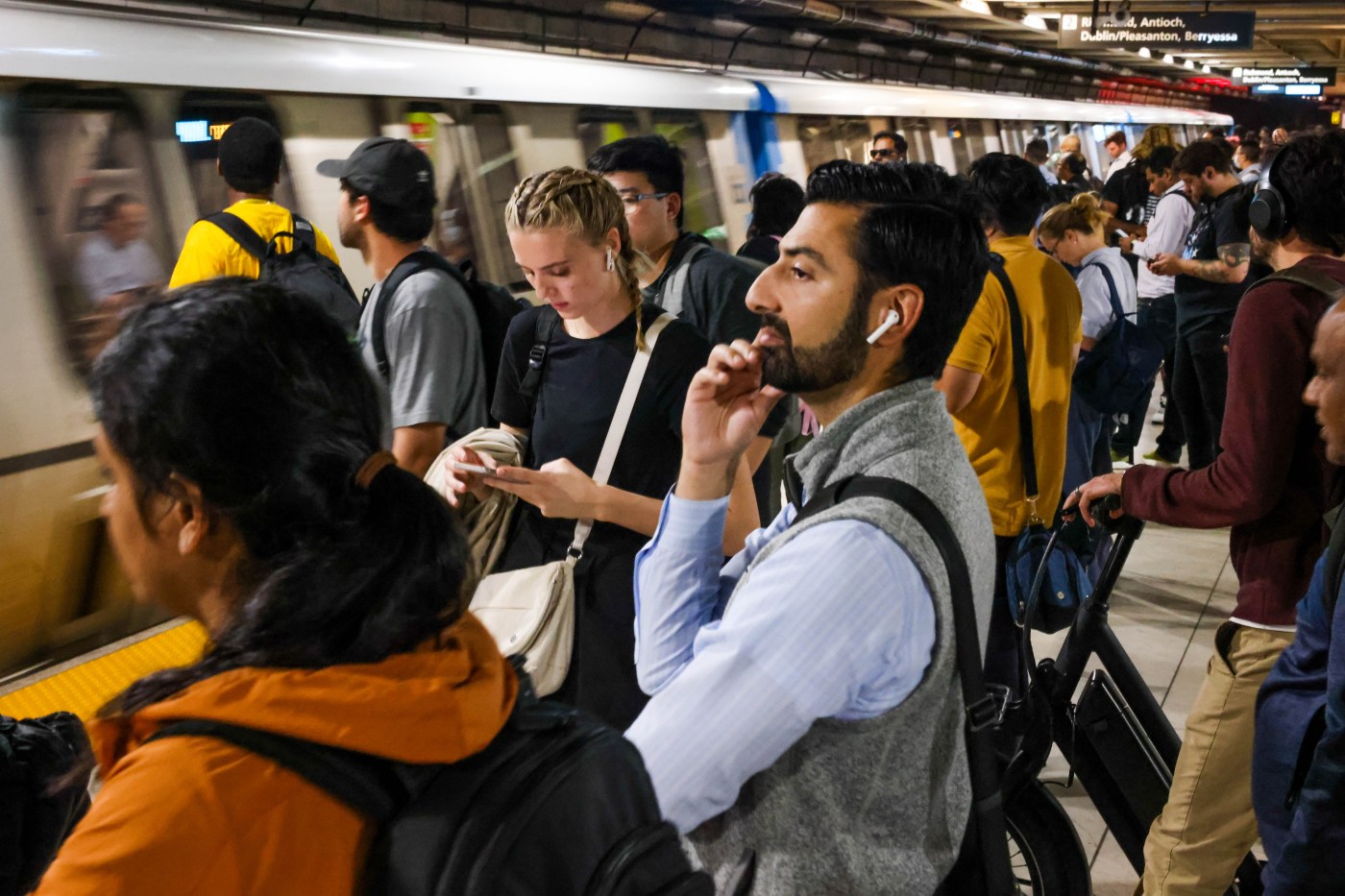
Bay Area commuters will experience increased costs as BART fares and bridge tolls rise on January 1, 2024. BART will implement a fare hike of 6.2% to address a projected budget deficit of $376 million by 2027, alongside higher parking rates at numerous stations. Tolls will also increase by 50 cents on seven state-owned bridges in the Bay Area.
Recent statistics show that BART continues to see a rise in ridership, with over 51.7 million total rides recorded last year. The system peaked in October 2023, registering over 5 million paid exits. This increase in riders comes despite various service disruptions linked to aging infrastructure and power failures throughout 2025.
Fare and Parking Adjustments
BART officials have stated that these fare increases are essential for maintaining services, keeping pace with inflation, and stabilizing financial operations. On average, fares will increase by 30 cents, moving from $4.88 to $5.18. Short trips, like those from Downtown Berkeley to 19th St./Oakland, will see a rise of 15 cents, while longer journeys, such as from Antioch to Montgomery, will increase by 55 cents.
Daily parking rates will also see a hike, with most stations increasing prices by 40 cents. High-demand locations, including Glen Park, MacArthur, Rockridge, and Walnut Creek, will see parking rates jump by 30%. Monthly parking rates are projected to rise by over $30 at key hubs like Millbrae, San Bruno, and Walnut Creek, while lower-demand stations will see decreases of over $11.
Mark Foley, BART Board President, emphasized that these increases are crucial for the agency to enhance and maintain services amid a challenging financial landscape. “As we ask the region for greater investments and support for BART while also making internal cuts to reduce costs, we must ask our riders to contribute more towards their trips,” Foley stated.
Financial Challenges and Future Strategies
BART has faced significant hurdles in 2025, including multiple service disruptions caused by power issues and fires. To address its financial challenges, the agency plans to implement cost-saving measures totaling $108 million in 2024 while maintaining current service levels. Strategies include running shorter trains to reduce energy costs, adjusting service schedules to better align with ridership patterns, and instituting a hiring freeze.
Failing to address the budget shortfall could lead to drastic cuts in train services. Potential reductions could include decreased trip frequencies, earlier closures, and possible service halts. BART’s situation highlights a broader concern within the region, as similar warnings have emerged from other transit systems, including Caltrain, which has indicated potential service cuts if budgetary issues are not resolved by 2027.
In an effort to secure additional funding, California Governor Gavin Newsom signed Senate Bill 63 in October, allowing a regional transit sales tax measure to be considered for the November 2026 ballot. If approved, the measure could generate approximately $1 billion annually for Bay Area transit agencies, with BART anticipated to receive around $330 million by 2031, according to the Metropolitan Transportation Commission (MTC).
The proposed tax would levy a half-cent sales tax in most counties and a full-cent tax in San Francisco, benefiting various transit systems across Alameda, Contra Costa, San Francisco, San Mateo, and Santa Clara counties.
As for bridge tolls, increases will affect the San Francisco-Oakland Bay Bridge, Antioch, Benicia-Martinez, Carquinez, Dumbarton, Richmond-San Rafael, and San Mateo-Hayward bridges. Two-axle vehicles will see their tolls rise to $8.50, up from $8, while larger commercial vehicles may face increases of up to $3.50, depending on the number of axles. Meanwhile, carpools during peak hours will increase by 25 cents, raising the cost to $4.25. Tolls for the Golden Gate Bridge, which operates under a separate jurisdiction, are not included in this increase.
For more detailed information regarding fare changes, parking rates, and toll adjustments, commuters are encouraged to visit the official BART and Bay Area FasTrak websites.

Philadelphia Parks Launch Free Earth Month Events Starting April 1

Bradford’s Fish Fry Fridays Serve Community with Delicious Dinners

Trump Faces Growing Challenges Amid Rising Tensions with Iran

Scientists Probe the Universe’s Missing Topological Defects

Samsung Galaxy Watch 9 to Feature Larger 435mAh Battery

UConn Huskies Aim to Defend Title in 2026 NCAA Women’s Tournament

U.S. Littoral Combat Ships Dock in Malaysia Amid Regional Tensions

Healthy Choice Wellness Reports Quarterly Earnings, Shares Rise

Urgent News: Charles M. Payment Passes Away at 78 in Duluth

University of Hawaiʻi Joins $25.6M AI Project to Enhance Disaster Monitoring

Major Grant Enhances Cancer Care and Research in Hawaiʻi

Joleen Chaney, Beloved Journalist, Passes Leaving Lasting Legacy

San Francisco’s SFO to Welcome 16 Airlines with Nonstop Flights to Europe in 2026

Goldman Sachs Unveils 2026 Catalyst Playbook for Biotech Investors

Discover Top Business Smartphones for Professionals in 2026

Urgent Update: Tom Aspinall’s Vision Deteriorates After UFC 321

Texas Roadhouse Honors Veterans with Free Meal Vouchers

CD Projekt Red Confirms No Release for The Witcher 4 in 2026
-
Science9 months ago
University of Hawaiʻi Joins $25.6M AI Project to Enhance Disaster Monitoring
-
 Health8 months ago
Major Grant Enhances Cancer Care and Research in Hawaiʻi
-
 Top Stories9 months ago
Joleen Chaney, Beloved Journalist, Passes Leaving Lasting Legacy
-
 World7 months ago
San Francisco’s SFO to Welcome 16 Airlines with Nonstop Flights to Europe in 2026
-
 Business8 months ago
Goldman Sachs Unveils 2026 Catalyst Playbook for Biotech Investors
-
 Business8 months ago
Discover Top Business Smartphones for Professionals in 2026
-
 Top Stories10 months ago
Urgent Update: Tom Aspinall’s Vision Deteriorates After UFC 321
-
 Lifestyle9 months ago
Texas Roadhouse Honors Veterans with Free Meal Vouchers
-
 Entertainment8 months ago
CD Projekt Red Confirms No Release for The Witcher 4 in 2026
-

 Top Stories10 months ago
AI Disruption: AWS Faces Threat as Startups Shift Cloud Focus
-

 Health10 months ago
MIT Scientists Uncover Surprising Genomic Loops During Cell Division
-

 Entertainment10 months ago
Discover the Full Map of Pokémon Legends: Z-A’s Lumiose City