
Business
FinCEN Grants Exceptive Relief Order for Financial Institutions

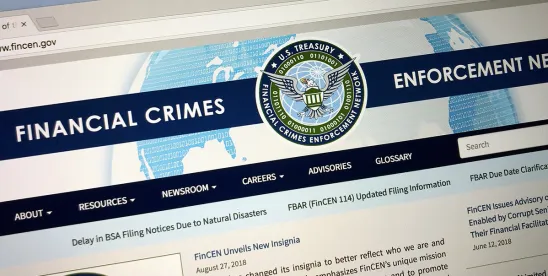
The Financial Crimes Enforcement Network (FinCEN) issued a noteworthy order on February 13, 2026, providing exceptive relief to covered financial institutions regarding the identification and verification of beneficial owners of legal entity customers. This order, designated as FIN-2026-R001, signifies a significant shift in regulatory expectations but does not imply a relaxation of anti-money laundering (AML) and Bank Secrecy Act (BSA) compliance efforts.
Understanding the Exceptive Relief Order
The new order alleviates financial institutions from the stringent Customer Due Diligence (CDD) Rule established in 2016, which mandated the identification and verification of beneficial owners at every new account opening. Previously, institutions had to perform this verification for every account, even if a customer had completed the process shortly before. Under the current relief, institutions can now limit the verification of beneficial owners to specific scenarios.
These scenarios include instances when an institution’s risk-based procedures indicate the need for re-verification. In such cases, institutions may rely on previously collected ownership information, as long as the customer certifies that this information remains accurate and up to date. Institutions are required to maintain a record of such certifications.
The Rationale Behind FinCEN’s Decision
FinCEN’s decision responds to ongoing concerns voiced by financial institutions and industry associations about the burdensome nature of the account-by-account verification requirement. Many large corporate clients that frequently open new accounts faced redundant certification processes, leading to increased compliance costs without significant benefits to financial crime prevention.
This order also aligns with Executive Order 14192, issued on January 31, 2025, which aims to reduce unnecessary regulatory burdens while ensuring the essential protections of the U.S. financial system are upheld.
While the order introduces flexibility, it is crucial to recognize what it does not alter. Covered financial institutions must continue to adhere to all other applicable AML and financial crime regulations under the BSA.
Compliance remains a critical component, requiring institutions to maintain comprehensive procedures for identifying and verifying beneficial owners. Ongoing due diligence, monitoring of suspicious transactions, and adherence to all reporting requirements under the BSA remain mandatory. Institutions must keep thorough records of customer certifications regarding beneficial ownership information.
Maintaining Vigilance and Adapting Practices
FinCEN emphasizes a risk-based approach to AML compliance, stating that the new order does not discourage institutions from exceeding minimum compliance requirements if such actions align with their risk profile. This means institutions retain the discretion to continue existing due diligence practices when appropriate for their specific risk environments.
Despite the new relief, recent enforcement actions serve as a reminder of the critical importance of compliance. Regulatory bodies continue to scrutinize institutions of all sizes. For example, the Office of the Comptroller of the Currency (OCC) recently took action against Clear Fork Bank for BSA/AML deficiencies, proving that no institution is immune to regulatory oversight. Additionally, TD Bank faced a historic settlement of $3.1 billion for money laundering violations, underscoring the severe consequences of compliance failures.
The message from FinCEN is clear: While regulatory streamlining is beneficial, it does not substitute for a robust and effective compliance program. Institutions that perceive this relief as an opportunity to reduce compliance investments risk significant repercussions.
Practical Steps for Financial Institutions
As financial institutions assess how to integrate this exceptive relief into their operations, several key actions are advisable:
1. **Review Current CDD Procedures:** Consider how existing beneficial ownership verification procedures can be modified in light of the new order.
2. **Update Policies and Training:** Ensure that policies, procedures, and staff training materials are aligned with the new framework, detailing when verification is still required.
3. **Document Risk-Based Decisions:** If relying on previously obtained ownership information, maintain robust processes for documenting customer certifications and circumstances necessitating re-verification.
4. **Preserve Effective Practices:** Evaluate whether existing practices contribute to legitimate risk management beyond mere compliance, and assess the impact of eliminating them.
5. **Stay Informed on Future Developments:** FinCEN has indicated that further changes to the CDD Rule are expected, making it essential for institutions to monitor these developments.
In conclusion, while FinCEN’s exceptive relief order represents a step toward a more efficient, risk-based approach to customer due diligence, it is imperative for financial institutions to understand that foundational BSA requirements remain intact. Regulatory relief should not be interpreted as permission to relax compliance efforts. Upholding a strong culture of compliance is essential for protecting institutions, customers, and the integrity of the financial system.

Philadelphia Parks Launch Free Earth Month Events Starting April 1

Bradford’s Fish Fry Fridays Serve Community with Delicious Dinners

Trump Faces Growing Challenges Amid Rising Tensions with Iran

Scientists Probe the Universe’s Missing Topological Defects

Samsung Galaxy Watch 9 to Feature Larger 435mAh Battery

UConn Huskies Aim to Defend Title in 2026 NCAA Women’s Tournament

U.S. Littoral Combat Ships Dock in Malaysia Amid Regional Tensions

Healthy Choice Wellness Reports Quarterly Earnings, Shares Rise

Urgent News: Charles M. Payment Passes Away at 78 in Duluth

University of Hawaiʻi Joins $25.6M AI Project to Enhance Disaster Monitoring

Major Grant Enhances Cancer Care and Research in Hawaiʻi

Joleen Chaney, Beloved Journalist, Passes Leaving Lasting Legacy

San Francisco’s SFO to Welcome 16 Airlines with Nonstop Flights to Europe in 2026

Goldman Sachs Unveils 2026 Catalyst Playbook for Biotech Investors

Discover Top Business Smartphones for Professionals in 2026

Urgent Update: Tom Aspinall’s Vision Deteriorates After UFC 321

Texas Roadhouse Honors Veterans with Free Meal Vouchers

CD Projekt Red Confirms No Release for The Witcher 4 in 2026
-
Science9 months ago
University of Hawaiʻi Joins $25.6M AI Project to Enhance Disaster Monitoring
-
 Health8 months ago
Major Grant Enhances Cancer Care and Research in Hawaiʻi
-
 Top Stories9 months ago
Joleen Chaney, Beloved Journalist, Passes Leaving Lasting Legacy
-
 World7 months ago
San Francisco’s SFO to Welcome 16 Airlines with Nonstop Flights to Europe in 2026
-
 Business8 months ago
Goldman Sachs Unveils 2026 Catalyst Playbook for Biotech Investors
-
 Business7 months ago
Discover Top Business Smartphones for Professionals in 2026
-
 Top Stories9 months ago
Urgent Update: Tom Aspinall’s Vision Deteriorates After UFC 321
-
 Lifestyle9 months ago
Texas Roadhouse Honors Veterans with Free Meal Vouchers
-
 Entertainment8 months ago
CD Projekt Red Confirms No Release for The Witcher 4 in 2026
-

 Top Stories10 months ago
AI Disruption: AWS Faces Threat as Startups Shift Cloud Focus
-

 Health10 months ago
MIT Scientists Uncover Surprising Genomic Loops During Cell Division
-

 Entertainment10 months ago
Discover the Full Map of Pokémon Legends: Z-A’s Lumiose City