
Business
New White House Ballroom Sparks Debate Over Size and Funding

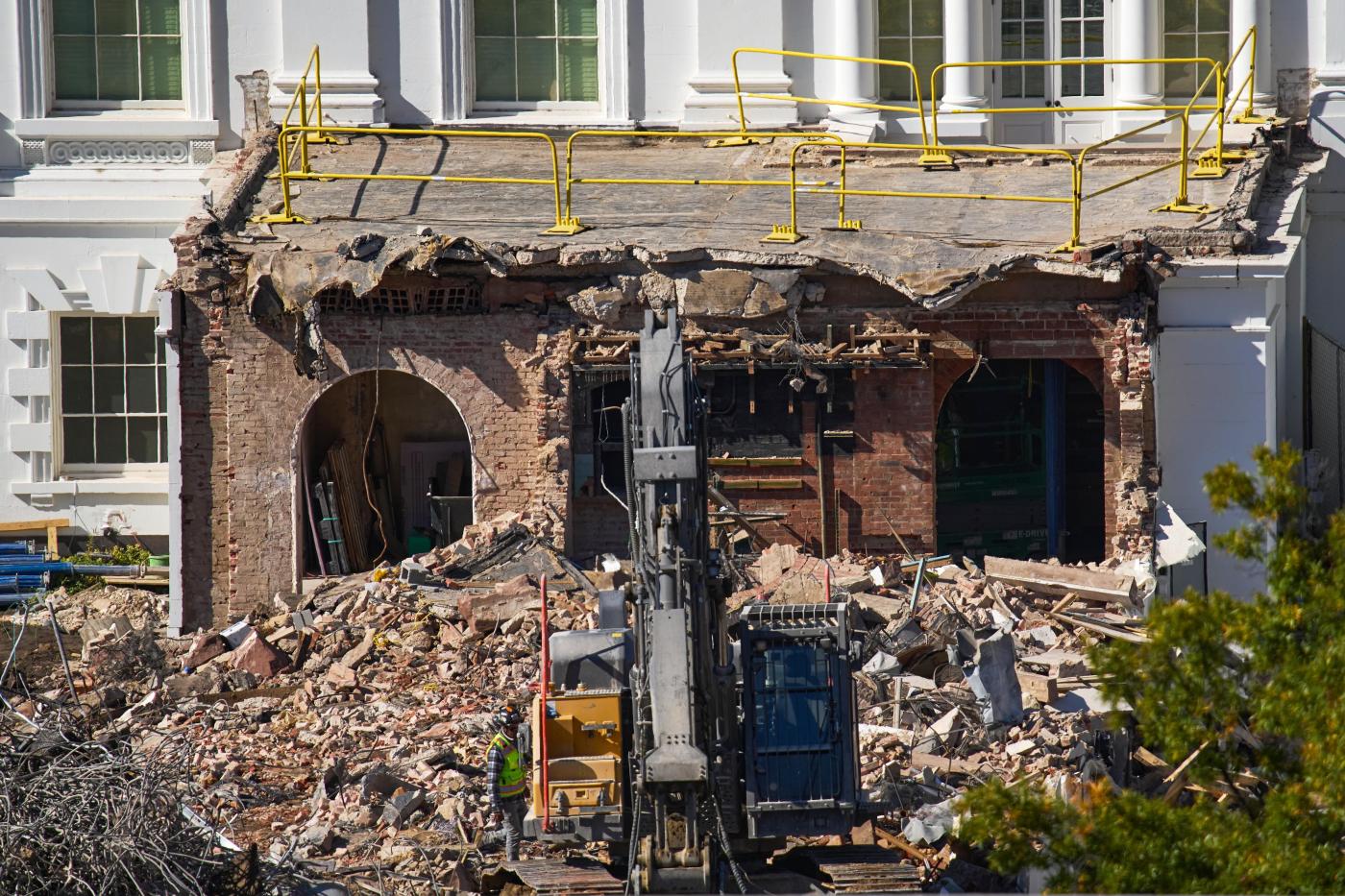
Construction has officially commenced on a new ballroom at the White House, a project that has generated significant discussion regarding its scale and funding. The ballroom, set to span an impressive 90,000 square feet, is designed to accommodate grand events and state visits, fulfilling a longstanding aspiration of U.S. presidents over the past 150 years.
The current White House covers approximately 55,000 square feet, while the combined space of its east and west wings totals around 12,000 square feet. Comparatively, the new ballroom will be larger than 32 standard doubles tennis courts, each measuring 2,808 square feet. This raises questions about the necessity of a space that is around 35% larger than the existing structure. Alfred Sasiadek of Lauderhill expressed his concerns, asking if anyone needs a room of such vast proportions added to their home.
On the other hand, supporters of the project, such as Paul Bacon from Hallandale Beach, highlight the ballroom’s potential to host significant gatherings in a more beautiful setting. The funding for the ballroom comes from private donations, including contributions from American citizens and corporations, as well as from President Donald Trump himself. Bacon anticipates that the facility will serve its purpose for generations to come.
In a related note, tensions surrounding sportsmanship and civic values have surfaced following a decision by authorities in Birmingham, England, to ban Israeli soccer fans from attending an upcoming match. The action has drawn criticism for undermining the principles of sportsmanship that the country is known for. Commentators like Neil Kay from Sunrise have expressed concern that this decision reflects a troubling shift in English culture, contrasting sharply with the values historically shared with the United States.
In a separate issue, Bob Goldberg from Hollywood has proposed a solution to the ongoing federal government shutdown. He suggests that Congress members should face the same financial consequences as federal employees who fail to report for work. This approach, he believes, could expedite the resolution of the shutdown.
Finally, transportation concerns also emerged from Bernard M. Cassidy in Fort Lauderdale, who expressed frustration over the planned express lanes on I-95. After years of anticipation, he noted that the only northbound exit leading to downtown Fort Lauderdale is five miles away, which he views as an oversight detrimental to the city’s connectivity.
As these discussions unfold, they reflect broader themes of community priorities, fiscal responsibility, and the evolving landscape of civic engagement across different regions.

Philadelphia Parks Launch Free Earth Month Events Starting April 1

Bradford’s Fish Fry Fridays Serve Community with Delicious Dinners

Trump Faces Growing Challenges Amid Rising Tensions with Iran

Scientists Probe the Universe’s Missing Topological Defects

Samsung Galaxy Watch 9 to Feature Larger 435mAh Battery

UConn Huskies Aim to Defend Title in 2026 NCAA Women’s Tournament

U.S. Littoral Combat Ships Dock in Malaysia Amid Regional Tensions

Healthy Choice Wellness Reports Quarterly Earnings, Shares Rise

Urgent News: Charles M. Payment Passes Away at 78 in Duluth

University of Hawaiʻi Joins $25.6M AI Project to Enhance Disaster Monitoring

Major Grant Enhances Cancer Care and Research in Hawaiʻi

Joleen Chaney, Beloved Journalist, Passes Leaving Lasting Legacy

San Francisco’s SFO to Welcome 16 Airlines with Nonstop Flights to Europe in 2026

Goldman Sachs Unveils 2026 Catalyst Playbook for Biotech Investors

Discover Top Business Smartphones for Professionals in 2026

Urgent Update: Tom Aspinall’s Vision Deteriorates After UFC 321

Texas Roadhouse Honors Veterans with Free Meal Vouchers

CD Projekt Red Confirms No Release for The Witcher 4 in 2026
-
Science9 months ago
University of Hawaiʻi Joins $25.6M AI Project to Enhance Disaster Monitoring
-
 Health8 months ago
Major Grant Enhances Cancer Care and Research in Hawaiʻi
-
 Top Stories9 months ago
Joleen Chaney, Beloved Journalist, Passes Leaving Lasting Legacy
-
 World7 months ago
San Francisco’s SFO to Welcome 16 Airlines with Nonstop Flights to Europe in 2026
-
 Business8 months ago
Goldman Sachs Unveils 2026 Catalyst Playbook for Biotech Investors
-
 Business7 months ago
Discover Top Business Smartphones for Professionals in 2026
-
 Top Stories9 months ago
Urgent Update: Tom Aspinall’s Vision Deteriorates After UFC 321
-
 Lifestyle9 months ago
Texas Roadhouse Honors Veterans with Free Meal Vouchers
-
 Entertainment8 months ago
CD Projekt Red Confirms No Release for The Witcher 4 in 2026
-

 Top Stories10 months ago
AI Disruption: AWS Faces Threat as Startups Shift Cloud Focus
-

 Health10 months ago
MIT Scientists Uncover Surprising Genomic Loops During Cell Division
-

 Entertainment10 months ago
Discover the Full Map of Pokémon Legends: Z-A’s Lumiose City