
Business
TAZARA Railway Marks 50 Years Amid Challenges and Investment

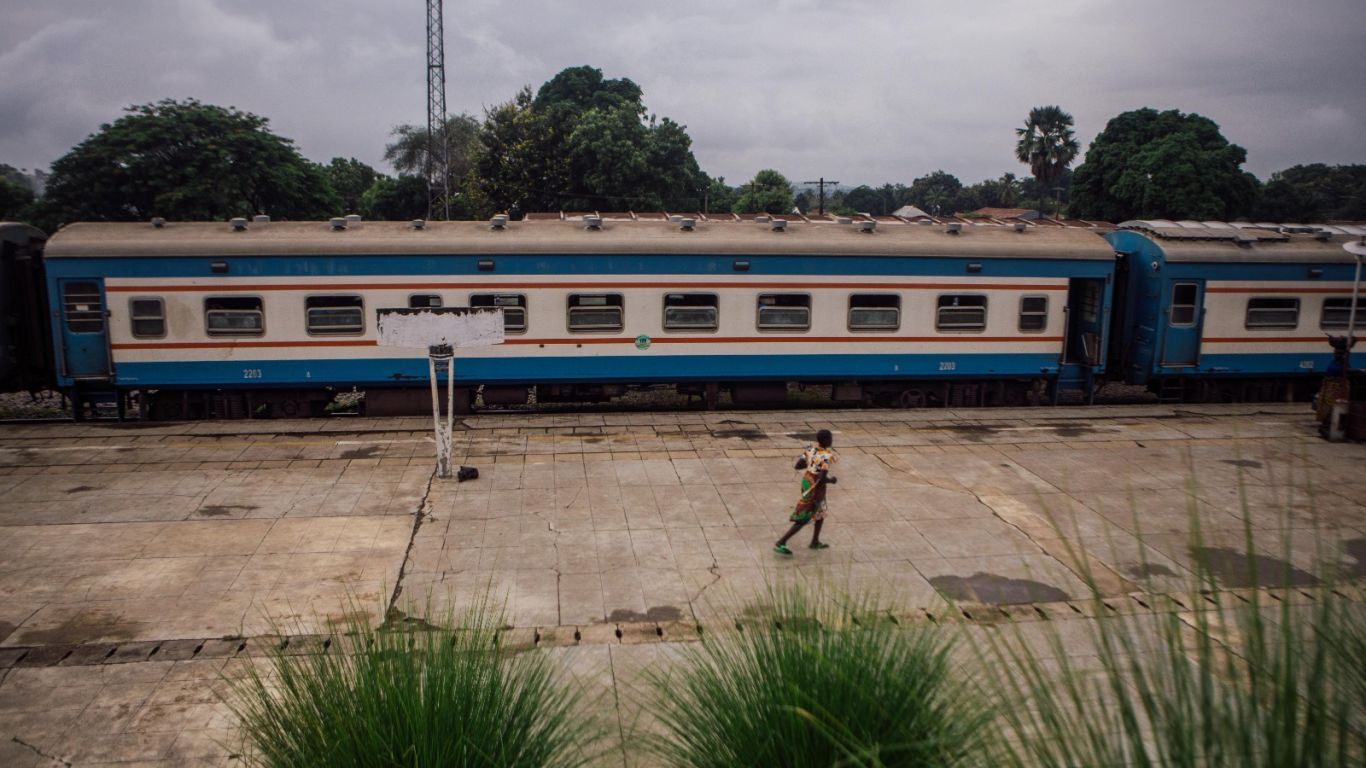
The Tanzania-Zambia Railway Authority (TAZARA) recently celebrated its 50th anniversary, marking a significant milestone for a railway that has faced numerous challenges throughout its existence. Spanning from Dar es Salaam in Tanzania to Kapiri Mposhi in Zambia, the railway has been essential for connecting two nations, yet it has struggled with reliability and safety issues over the years.
Passengers at the Dar es Salaam train station prepared for a scheduled departure on the TAZARA Mukuba Express. However, the anticipated journey of 1,860 kilometres (1,156 miles) faced a familiar hurdle: a two-hour delay. For many passengers, this was an expected inconvenience, given the railway’s historical reputation for unreliable service. The journey, which ideally takes around 40 hours, has become synonymous with unpredictability, a scenario not uncommon in the region’s transport systems.
Infrastructure Challenges and Safety Concerns
Over its half-century of operation, TAZARA has often needed foreign investment to maintain its infrastructure. The railway’s cars and tracks have deteriorated significantly, resulting in frequent delays and safety incidents. In April 2025, a tragic derailment killed two drivers, highlighting the urgent need for an overhaul of both infrastructure and safety management. Two months later, in June, a train collision in Zambia resulted in one death and multiple injuries, as a rescue train struck a derailed train.
In early September 2025, passenger services were temporarily halted due to “unexpected operational challenges,” further underscoring the operational difficulties faced by TAZARA. A fire had damaged one of the numerous bridges along the route, limiting the few operational locomotives available. Yet, there is hope on the horizon for TAZARA, driven by a substantial investment from the China Civil Engineering Construction Corporation (CCECC).
CCECC has committed $1.4 billion to refurbish TAZARA over the next three years. Most of this funding will focus on rehabilitating tracks, while approximately $400 million will be allocated for new locomotives and freight wagons. This investment aims to significantly enhance freight and passenger capacity, and in return, CCECC will be granted a 30-year concession to manage the railway.
Economic Impact and Passenger Experience
For many passengers, the TAZARA remains a vital link for both business and leisure. Regular travelers appreciate the affordability of the service; a first-class sleeper cabin to Mbeya costs just over $20. For residents like Jonathan Ngondo, riding the train facilitates business operations, allowing him to transport goods from his rice farm. “Using the train is economical and more enjoyable than a bus,” he noted.
On board, the atmosphere can vary significantly from one car to another. While some passengers enjoy lively music and camaraderie in the dining car, others prefer the quieter environment of sleeper cabins. Many travelers, such as Ousmane, a university student, choose the train for its affordability and comfort compared to buses that often operate recklessly.
As the train journey progresses, passengers witness the diverse landscapes of Tanzania, from bustling industrial areas to serene rural settings. However, the aging infrastructure is evident, with worn-out seating and deteriorating facilities. The railway’s history dates back to the 1970s when Chinese investments aimed to foster goodwill and development in post-colonial Africa. Today, the focus is more on economic returns, particularly as Zambia’s copper resources become increasingly vital for global markets.
Despite the railway’s struggles, TAZARA continues to be a lifeline for many. Passengers appreciate the opportunity to transport goods and connect with family, particularly in Zambia, where bus travel is often perceived as unsafe. For individuals like Agnes, a single mother studying nursing, the railway is a practical choice for visiting family while managing her responsibilities.
As TAZARA embarks on this new chapter with Chinese investment, the future of the railway remains uncertain. While improvements are expected, the primary goal appears to be enhancing copper transport from Zambia to the port in Dar es Salaam, which may overshadow passenger service needs. Nonetheless, representatives from China, Tanzania, and Zambia recently inaugurated the refurbishment project, promising a revitalized TAZARA that could serve the communities along its length more effectively.
The revitalization efforts have already begun at Kapiri Mposhi, with work crews actively rehabilitating tracks and infrastructure. As Zambian President Hakainde Hichilema emphasized during a recent meeting, the railway is a communal asset that should be protected and nurtured by those living along its route.
In summary, while TAZARA has faced significant challenges over its 50 years, the investment from CCECC offers a glimmer of hope for improved service. The railway remains an essential corridor for trade and travel in the region, and its future is closely tied to the economic aspirations of both countries.

Philadelphia Parks Launch Free Earth Month Events Starting April 1

Bradford’s Fish Fry Fridays Serve Community with Delicious Dinners

Trump Faces Growing Challenges Amid Rising Tensions with Iran

Scientists Probe the Universe’s Missing Topological Defects

Samsung Galaxy Watch 9 to Feature Larger 435mAh Battery

UConn Huskies Aim to Defend Title in 2026 NCAA Women’s Tournament

U.S. Littoral Combat Ships Dock in Malaysia Amid Regional Tensions

Healthy Choice Wellness Reports Quarterly Earnings, Shares Rise

Urgent News: Charles M. Payment Passes Away at 78 in Duluth

University of Hawaiʻi Joins $25.6M AI Project to Enhance Disaster Monitoring

Major Grant Enhances Cancer Care and Research in Hawaiʻi

Joleen Chaney, Beloved Journalist, Passes Leaving Lasting Legacy

San Francisco’s SFO to Welcome 16 Airlines with Nonstop Flights to Europe in 2026

Goldman Sachs Unveils 2026 Catalyst Playbook for Biotech Investors

Discover Top Business Smartphones for Professionals in 2026

Urgent Update: Tom Aspinall’s Vision Deteriorates After UFC 321

Texas Roadhouse Honors Veterans with Free Meal Vouchers

CD Projekt Red Confirms No Release for The Witcher 4 in 2026
-
Science9 months ago
University of Hawaiʻi Joins $25.6M AI Project to Enhance Disaster Monitoring
-
 Health8 months ago
Major Grant Enhances Cancer Care and Research in Hawaiʻi
-
 Top Stories9 months ago
Joleen Chaney, Beloved Journalist, Passes Leaving Lasting Legacy
-
 World7 months ago
San Francisco’s SFO to Welcome 16 Airlines with Nonstop Flights to Europe in 2026
-
 Business8 months ago
Goldman Sachs Unveils 2026 Catalyst Playbook for Biotech Investors
-
 Business8 months ago
Discover Top Business Smartphones for Professionals in 2026
-
 Top Stories10 months ago
Urgent Update: Tom Aspinall’s Vision Deteriorates After UFC 321
-
 Lifestyle9 months ago
Texas Roadhouse Honors Veterans with Free Meal Vouchers
-
 Entertainment8 months ago
CD Projekt Red Confirms No Release for The Witcher 4 in 2026
-

 Top Stories10 months ago
AI Disruption: AWS Faces Threat as Startups Shift Cloud Focus
-

 Health10 months ago
MIT Scientists Uncover Surprising Genomic Loops During Cell Division
-

 Entertainment10 months ago
Discover the Full Map of Pokémon Legends: Z-A’s Lumiose City