
Health
Americans Envy Global Customs That Enhance Daily Life

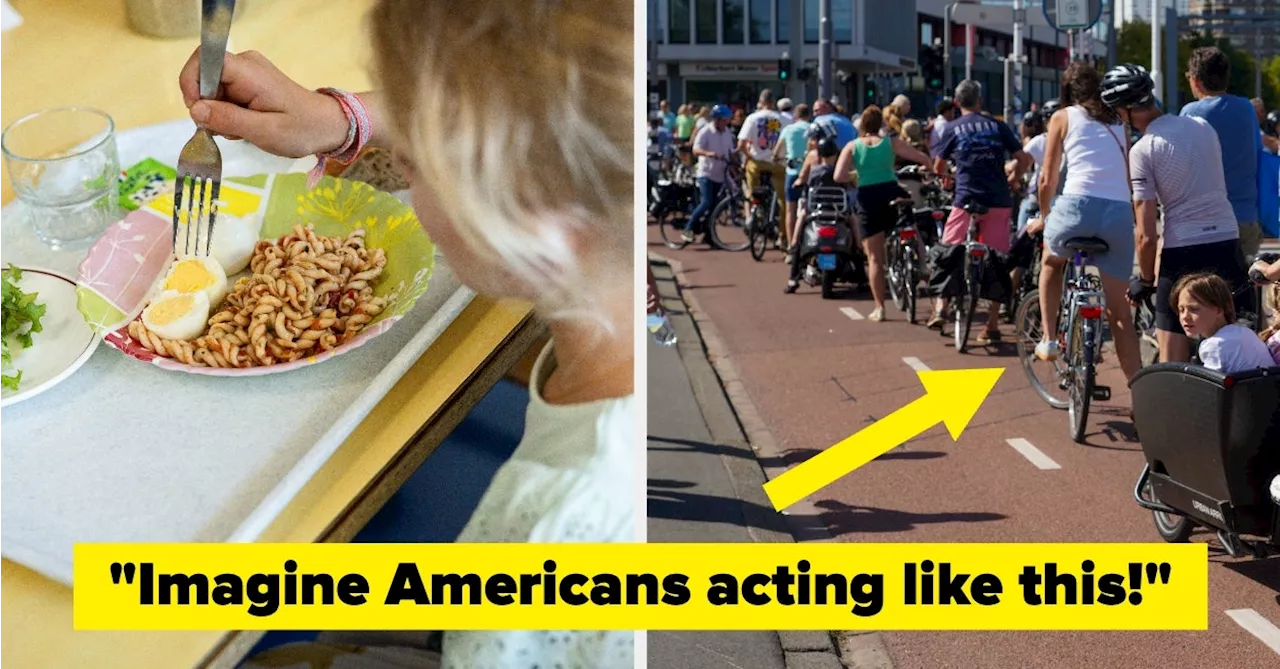
Travel often reveals practices in other countries that spark admiration and inspire thoughts on how life could be improved back home. Many Americans have taken to social media to share customs from their travels that they wish could be adopted in the United States. These insights highlight differences in healthcare, education, and social interactions among various cultures.
One notable observation comes from a former member of the US Navy, who lived in Naples, Italy. They noted that Italy, despite not being as wealthy as the United States, offers a multi-tiered healthcare system. Wealthy individuals can opt for private medical care, while others receive hospital services at little to no cost. This model has prompted discussions about the accessibility of healthcare in the US and alternative approaches to health services.
Food culture is another area where Americans see potential for improvement. A traveler recalled watching a documentary about French elementary schools, where children enjoy restaurant-quality meals served with real silverware. This contrasts sharply with the typical school lunches in Texas, often consisting of processed foods served on trays. The emphasis on nutritious meals in France raises questions about dietary practices in American schools.
Recycling is a prominent topic as well. A resident of Texas expressed confusion over the lack of comprehensive recycling programs. Drawing from their experience in Germany, where recycling is second nature, they lamented having to drive to another town to dispose of glass and other materials. In Germany, effective waste management practices have contributed to significantly reduced waste output, demonstrating a model that could benefit communities in the US.
Social interactions also differ remarkably abroad. In Australia, it is common for strangers to share tables at busy bars and restaurants, fostering a sense of community. This contrasts with the more individualistic dining culture often observed in the United States, where such practices are rare. The openness of Australians to share space illustrates a cultural norm that could enhance social bonds in American cities.
Cleanliness standards also receive attention, particularly from those who have visited Switzerland. Observers noted that, despite high smoking rates in the early 2000s, public spaces were remarkably clean, with little litter visible. This commitment to maintaining clean environments stands in stark contrast to many American urban areas, where litter and waste can be more common.
Cultural practices around alcohol consumption during work hours were highlighted by an American who visited a French nuclear plant, where colleagues casually enjoyed drinks during lunch. The stark difference in workplace policies regarding alcohol consumption between France and the United States raised eyebrows. The individual recalled being told by coworkers that, unlike in the US, there was no stigma attached to enjoying a drink during the workday.
Vacation practices also present a cultural divide. A former educator discussed the disparity in vacation time between the US and Europe. While European clients took extended breaks of up to four weeks, many Americans are fortunate to receive even a week off. This difference in work-life balance leads to burnout and highlights the challenges many face in prioritizing personal time.
Fast food quality emerged as another surprising point of discussion. Travelers noted that fast food outlets in India and the Middle East often offer higher quality food than their American counterparts. This revelation has prompted conversations about dietary standards and the expectations placed on fast food in different regions.
As these customs gain visibility, the question arises: what can Americans learn from these global practices? The experiences shared by travelers serve as a reminder that cultural norms can significantly influence quality of life. Many individuals are eager to explore which customs could be embraced to foster a more communal, health-conscious, and enjoyable lifestyle in the United States.
As these perspectives continue to circulate, readers are encouraged to reflect on their own experiences abroad and consider which customs they would like to see adopted in their communities.

Philadelphia Parks Launch Free Earth Month Events Starting April 1

Bradford’s Fish Fry Fridays Serve Community with Delicious Dinners

Trump Faces Growing Challenges Amid Rising Tensions with Iran

Scientists Probe the Universe’s Missing Topological Defects

Samsung Galaxy Watch 9 to Feature Larger 435mAh Battery

UConn Huskies Aim to Defend Title in 2026 NCAA Women’s Tournament

U.S. Littoral Combat Ships Dock in Malaysia Amid Regional Tensions

Healthy Choice Wellness Reports Quarterly Earnings, Shares Rise

Urgent News: Charles M. Payment Passes Away at 78 in Duluth

University of Hawaiʻi Joins $25.6M AI Project to Enhance Disaster Monitoring

Major Grant Enhances Cancer Care and Research in Hawaiʻi

Joleen Chaney, Beloved Journalist, Passes Leaving Lasting Legacy

San Francisco’s SFO to Welcome 16 Airlines with Nonstop Flights to Europe in 2026

Goldman Sachs Unveils 2026 Catalyst Playbook for Biotech Investors

Discover Top Business Smartphones for Professionals in 2026

Urgent Update: Tom Aspinall’s Vision Deteriorates After UFC 321

Texas Roadhouse Honors Veterans with Free Meal Vouchers

CD Projekt Red Confirms No Release for The Witcher 4 in 2026
-
Science9 months ago
University of Hawaiʻi Joins $25.6M AI Project to Enhance Disaster Monitoring
-
 Health8 months ago
Major Grant Enhances Cancer Care and Research in Hawaiʻi
-
 Top Stories9 months ago
Joleen Chaney, Beloved Journalist, Passes Leaving Lasting Legacy
-
 World7 months ago
San Francisco’s SFO to Welcome 16 Airlines with Nonstop Flights to Europe in 2026
-
 Business8 months ago
Goldman Sachs Unveils 2026 Catalyst Playbook for Biotech Investors
-
 Business8 months ago
Discover Top Business Smartphones for Professionals in 2026
-
 Top Stories10 months ago
Urgent Update: Tom Aspinall’s Vision Deteriorates After UFC 321
-
 Lifestyle9 months ago
Texas Roadhouse Honors Veterans with Free Meal Vouchers
-
 Entertainment8 months ago
CD Projekt Red Confirms No Release for The Witcher 4 in 2026
-

 Top Stories10 months ago
AI Disruption: AWS Faces Threat as Startups Shift Cloud Focus
-

 Health10 months ago
MIT Scientists Uncover Surprising Genomic Loops During Cell Division
-

 Entertainment10 months ago
Discover the Full Map of Pokémon Legends: Z-A’s Lumiose City