
Health
Chronic Inflammation Linked to Rising Rates of Colorectal Cancer in Younger Adults

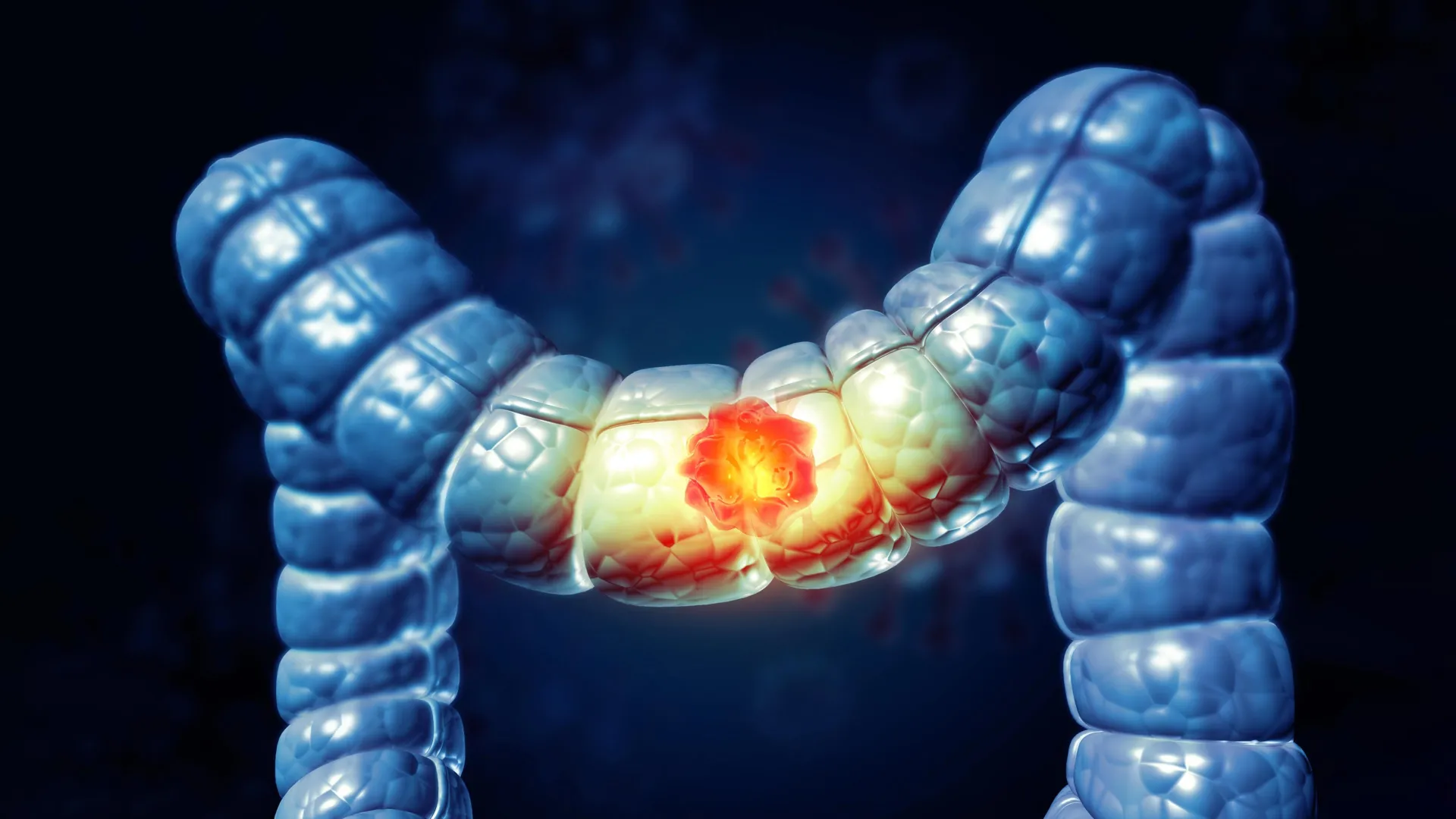
A recent study indicates that chronic inflammation may be contributing to the rising incidence of early-onset colorectal cancer (CRC) among younger adults. Researchers from UT Southwestern Medical Center discovered that colon tissue in patients under 50 years old exhibited increased stiffness, even in areas that appeared healthy. These findings suggest that changes in the colon could occur prior to the development of cancer, raising significant concerns about the condition’s growing prevalence.
The study, published in the journal Advanced Science, highlights how long-term inflammation can physically alter the colon, creating an environment conducive to the onset and progression of CRC. Researchers found that the stiffer colon tissue is closely linked to chronic inflammation, which may facilitate cancer development. As noted by Emina Huang, M.D., M.B.A., a leader in the study and Professor of Surgery at UT Southwestern, this research marks a pivotal step toward identifying individuals at risk for early-onset CRC and exploring new treatment avenues.
Understanding the Link Between Inflammation and Cancer
In contrast to average-onset CRC, which typically affects individuals over the age of 50, early-onset CRC diagnoses have surged, accounting for approximately 12% of all CRC cases in the United States since 2020. While rates of average-onset CRC have declined over the past 30 years, the reasons behind this alarming trend among younger individuals remain unclear. Past studies have primarily focused on lifestyle factors and environmental exposures that contribute to chronic intestinal inflammation. However, the biological mechanisms linking inflammation to early-onset CRC have not been well understood until now.
Dr. Huang explained that ongoing inflammation can lead to scarring, which gradually alters the structure of colon tissue and increases its stiffness. Similar processes are known to play a role in the development of cancers in other organs, such as the breast and pancreas. To further investigate these changes, Dr. Huang and her team analyzed colon tissue samples from patients who underwent tumor removal surgery at William P. Clements University Hospital and Parkland Health. The study included 19 samples from patients with average-onset CRC and 14 from individuals diagnosed with early-onset CRC.
The analysis revealed that colon tissue from early-onset CRC patients was significantly stiffer than that from older patients. Notably, this increased stiffness was observed not only in tumor tissue but also in surrounding healthy areas, suggesting that these changes may take place before cancer fully develops.
Collagen and Stiffness: Key Indicators of Cancer Risk
To understand the causes of this rigidity, the research team examined collagen, a structural protein that plays a critical role in tissue integrity. Their findings indicated that colon tissue from early-onset CRC patients contained collagen that was denser, longer, and more uniformly aligned compared to samples from average-onset cases, indicating substantial scarring. Genetic analysis further revealed heightened expression of genes associated with collagen metabolism, blood vessel formation, and inflammation in early-onset CRC samples.
The study also highlighted increased activity in pathways related to mechanotransduction, which is how cells sense and respond to physical forces. This suggests that cancer cells in early-onset CRC may adapt their behavior based on the stiffness of their environment. Laboratory experiments reinforced this hypothesis, showing that colorectal cancer cells cultured on stiffer surfaces proliferated more quickly and further increased tissue rigidity. Additionally, three-dimensional organoid models derived from CRC cells grew larger and faster when placed in stiffer environments.
The implications of these findings are significant. Dr. Huang noted that a rigid colon environment could trigger and accelerate colorectal cancer in younger patients. Moreover, targeting mechanotransduction pathways may offer new strategies for slowing or halting cancer progression, an approach already being explored in other types of cancer.
Dr. Huang emphasized the potential for diagnostic tools designed to measure intestinal stiffness to help identify individuals at higher risk for early-onset CRC in the future. This method could serve a similar purpose to colonoscopies, which are currently used to screen for average-onset CRC.
The study received funding from the National Institutes of Health and various other organizations, including The University of Texas at Dallas and the Burroughs-Wellcome Trust. As researchers continue to investigate the relationship between chronic inflammation and colorectal cancer, these findings pave the way for improved detection and treatment strategies for this increasingly prevalent disease.

Philadelphia Parks Launch Free Earth Month Events Starting April 1

Bradford’s Fish Fry Fridays Serve Community with Delicious Dinners

Trump Faces Growing Challenges Amid Rising Tensions with Iran

Scientists Probe the Universe’s Missing Topological Defects

Samsung Galaxy Watch 9 to Feature Larger 435mAh Battery

UConn Huskies Aim to Defend Title in 2026 NCAA Women’s Tournament

U.S. Littoral Combat Ships Dock in Malaysia Amid Regional Tensions

Healthy Choice Wellness Reports Quarterly Earnings, Shares Rise

Urgent News: Charles M. Payment Passes Away at 78 in Duluth

University of Hawaiʻi Joins $25.6M AI Project to Enhance Disaster Monitoring

Major Grant Enhances Cancer Care and Research in Hawaiʻi

Joleen Chaney, Beloved Journalist, Passes Leaving Lasting Legacy

San Francisco’s SFO to Welcome 16 Airlines with Nonstop Flights to Europe in 2026

Goldman Sachs Unveils 2026 Catalyst Playbook for Biotech Investors

Discover Top Business Smartphones for Professionals in 2026

Urgent Update: Tom Aspinall’s Vision Deteriorates After UFC 321

Texas Roadhouse Honors Veterans with Free Meal Vouchers

CD Projekt Red Confirms No Release for The Witcher 4 in 2026
-
Science9 months ago
University of Hawaiʻi Joins $25.6M AI Project to Enhance Disaster Monitoring
-
 Health8 months ago
Major Grant Enhances Cancer Care and Research in Hawaiʻi
-
 Top Stories9 months ago
Joleen Chaney, Beloved Journalist, Passes Leaving Lasting Legacy
-
 World7 months ago
San Francisco’s SFO to Welcome 16 Airlines with Nonstop Flights to Europe in 2026
-
 Business8 months ago
Goldman Sachs Unveils 2026 Catalyst Playbook for Biotech Investors
-
 Business8 months ago
Discover Top Business Smartphones for Professionals in 2026
-
 Top Stories9 months ago
Urgent Update: Tom Aspinall’s Vision Deteriorates After UFC 321
-
 Lifestyle9 months ago
Texas Roadhouse Honors Veterans with Free Meal Vouchers
-
 Entertainment8 months ago
CD Projekt Red Confirms No Release for The Witcher 4 in 2026
-

 Top Stories10 months ago
AI Disruption: AWS Faces Threat as Startups Shift Cloud Focus
-

 Health10 months ago
MIT Scientists Uncover Surprising Genomic Loops During Cell Division
-

 Entertainment10 months ago
Discover the Full Map of Pokémon Legends: Z-A’s Lumiose City