
Health
New Game Reveals Community Spirit Among Apple Farmers

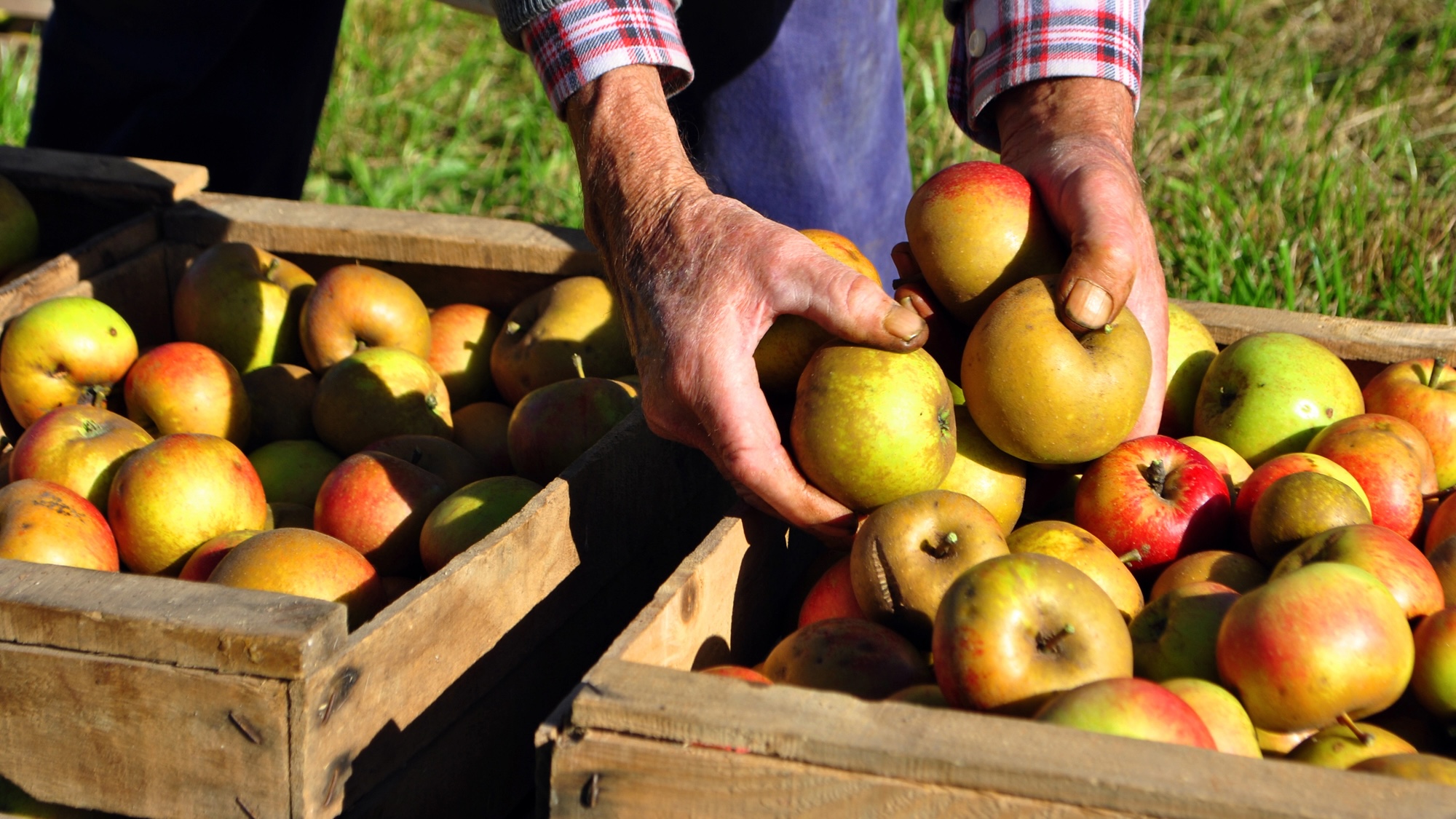
Recent research indicates that a significant number of individuals are willing to support their local communities, even at a personal financial cost. This insight comes from a free-to-play video game called Race Against Rot, developed by researchers at the University of Vermont. The game serves as a social experiment to explore new strategies for addressing challenges faced by small-scale farmers and their surrounding communities.
Despite the evident health and environmental benefits of supporting local agriculture, many people find it difficult to shop at seasonal markets due to higher prices. This situation poses a particular challenge for low-income families and residents in food deserts, as the cost of quality ingredients can be prohibitive.
Understanding the Challenges of Small Farms
The financial struggles of small farms are not due to price-gouging but rather reflect the broader state of the agricultural industry. According to the U.S. Department of Agriculture (USDA), approximately 88 percent of farms in the United States fall under the “small operation” classification, generating less than $350,000 annually in gross sales. After accounting for expenses, less than half of these small farms actually turn a profit.
In 2023, the University of Vermont launched Race Against Rot to illustrate the difficulties faced by farmers. Players assume the role of a small apple orchard operator, making decisions on profitability while navigating various policy scenarios. These scenarios include choosing between farmers market or wholesale distribution, providing a universal basic income to workers, and supporting localized food hubs.
Community Nourishment as a Key Concept
To encourage participation, over 1,000 players in the game could earn real cash rewards—$1 for every $40,000 in orchard profits. Interestingly, many opted to prioritize community welfare over personal gain, a concept termed “community nourishment.” According to Amy Trubek, the principal project investigator, there was a significant commitment among players to this value structure.
“We found that there was a very, very strong commitment to a value structure around community nourishment,”
Trubek stated in a university profile.
Co-author Carolyn Hricko expressed optimism about the findings, noting it was encouraging to see players adopt altruistic behaviors in a simulated environment. She remarked that when players experienced the challenges faced by farmers, they emerged willing to support community nourishment alongside their business viability.
Despite the positive findings, Trubek and Hricko acknowledge that real-world complexities make the situation more challenging. People often act more self-interestedly when real money and livelihoods are involved. The current food distribution systems do not typically prioritize the concept of community nourishment.
By analyzing the implications of a game like Race Against Rot, policymakers might uncover new pathways to foster equitable food systems. As the policy report authors note, “Equitable food systems solutions can only emerge from questions posed and data gathered that honestly reflect the structure and function of both our current food system and any vision for a better one.”
Ultimately, the vision for a more just and sustainable food system resonates with many. Hricko emphasized that “the public really cares about community well-being and the success and livelihoods of farmers,” indicating a strong desire for positive change.

Philadelphia Parks Launch Free Earth Month Events Starting April 1

Bradford’s Fish Fry Fridays Serve Community with Delicious Dinners

Trump Faces Growing Challenges Amid Rising Tensions with Iran

Scientists Probe the Universe’s Missing Topological Defects

Samsung Galaxy Watch 9 to Feature Larger 435mAh Battery

UConn Huskies Aim to Defend Title in 2026 NCAA Women’s Tournament

U.S. Littoral Combat Ships Dock in Malaysia Amid Regional Tensions

Healthy Choice Wellness Reports Quarterly Earnings, Shares Rise

Urgent News: Charles M. Payment Passes Away at 78 in Duluth

University of Hawaiʻi Joins $25.6M AI Project to Enhance Disaster Monitoring

Major Grant Enhances Cancer Care and Research in Hawaiʻi

Joleen Chaney, Beloved Journalist, Passes Leaving Lasting Legacy

San Francisco’s SFO to Welcome 16 Airlines with Nonstop Flights to Europe in 2026

Goldman Sachs Unveils 2026 Catalyst Playbook for Biotech Investors

Discover Top Business Smartphones for Professionals in 2026

Urgent Update: Tom Aspinall’s Vision Deteriorates After UFC 321

Texas Roadhouse Honors Veterans with Free Meal Vouchers

CD Projekt Red Confirms No Release for The Witcher 4 in 2026
-
Science9 months ago
University of Hawaiʻi Joins $25.6M AI Project to Enhance Disaster Monitoring
-
 Health8 months ago
Major Grant Enhances Cancer Care and Research in Hawaiʻi
-
 Top Stories9 months ago
Joleen Chaney, Beloved Journalist, Passes Leaving Lasting Legacy
-
 World7 months ago
San Francisco’s SFO to Welcome 16 Airlines with Nonstop Flights to Europe in 2026
-
 Business8 months ago
Goldman Sachs Unveils 2026 Catalyst Playbook for Biotech Investors
-
 Business8 months ago
Discover Top Business Smartphones for Professionals in 2026
-
 Top Stories9 months ago
Urgent Update: Tom Aspinall’s Vision Deteriorates After UFC 321
-
 Lifestyle9 months ago
Texas Roadhouse Honors Veterans with Free Meal Vouchers
-
 Entertainment8 months ago
CD Projekt Red Confirms No Release for The Witcher 4 in 2026
-

 Top Stories10 months ago
AI Disruption: AWS Faces Threat as Startups Shift Cloud Focus
-

 Health10 months ago
MIT Scientists Uncover Surprising Genomic Loops During Cell Division
-

 Entertainment10 months ago
Discover the Full Map of Pokémon Legends: Z-A’s Lumiose City