
Health
Ongoing Measles Outbreaks Challenge US Elimination Status, Officials Respond

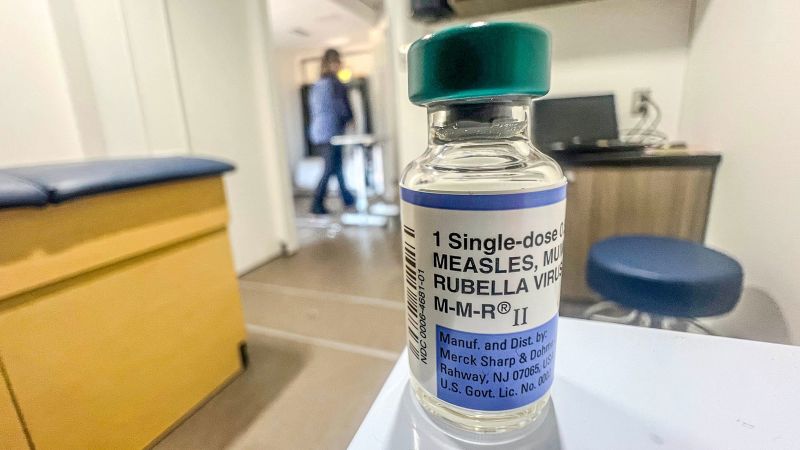
The ongoing measles outbreaks in various regions of the United States are raising concerns about the country’s status as a nation that has eliminated the virus. Despite this, a leader from the Centers for Disease Control and Prevention (CDC) stated on March 14, 2025, that the potential loss of this status is not a significant concern. The remarks came during a briefing focused on a South Carolina outbreak, which has now reported at least 646 cases according to the state’s health department.
Last year, a similar situation unfolded in West Texas, where approximately 760 cases were confirmed, making it one of the largest and most severe measles outbreaks in decades. Dr. Ralph Abraham, Principal Deputy Director of the CDC, emphasized that there is no conclusive evidence of transmission between outbreaks in different states. He commented, “Losing elimination status … does not mean that the measles would be widespread, nor would it alter any key measles elimination strategies.” Dr. Abraham recently joined the CDC and previously served as the surgeon general of Louisiana, where he reduced vaccine promotion efforts.
The CDC reported a total of 2,242 measles cases in the United States in 2025, the highest number since 1991. Measles was declared eliminated in the U.S. in 2000, but the Pan American Health Organization may reconsider this status in its upcoming meeting in April. When asked about the implications of such a change, Dr. Abraham stated, “not really,” implying that the public health strategies would remain intact.
The South Carolina outbreak is notably concerning, as it is quickly on track to surpass last year’s figures in West Texas. More than 500 individuals are currently in quarantine after exposure to confirmed cases, according to local health officials. Schools across the state, including elementary, middle, and high institutions, have reported unvaccinated students in quarantine. Exposures have also been identified at Clemson University and Anderson University.
Dr. Demetre Daskalakis, former director of the CDC’s National Center for Immunization and Respiratory Diseases, described the situation in South Carolina as “very, very active.” He noted that the outbreak is in a growth phase and stated, “We are nowhere close to the place that we would need to be able to say that this is coming under control.” The majority of cases—nearly 90% —have been among unvaccinated children, with only about 2% involving individuals who received the full two doses of the measles, mumps, and rubella (MMR) vaccine.
Concerns about vaccination have been heightened by public figures, including Hawaii Governor Josh Green, who criticized U.S. Health and Human Services Secretary Robert F. Kennedy Jr. for contributing to vaccine hesitancy. Governor Green stated, “What’s happening today with measles is absolutely public health malpractice, and it’s completely preventable.” He expressed alarm over the rising number of kindergarteners exempted from required vaccinations, marking the fifth consecutive year that MMR vaccine coverage has remained below the federal target of 95%.
The implications of these outbreaks extend beyond public health statistics. As communities grapple with rising measles cases, the CDC continues to advocate for vaccination as the most effective preventive measure. Dr. Abraham reiterated the agency’s commitment to supporting communities that may be hesitant about vaccinations, stating, “We’re open for business. We’re here to help, we understand concerns that those communities may have, and we’re willing to listen to alternatives” for treatment and prevention.
As the situation develops, the focus remains on controlling these outbreaks and reinforcing public confidence in vaccines to prevent further spread of measles across the United States.

Philadelphia Parks Launch Free Earth Month Events Starting April 1

Bradford’s Fish Fry Fridays Serve Community with Delicious Dinners

Trump Faces Growing Challenges Amid Rising Tensions with Iran

Scientists Probe the Universe’s Missing Topological Defects

Samsung Galaxy Watch 9 to Feature Larger 435mAh Battery

UConn Huskies Aim to Defend Title in 2026 NCAA Women’s Tournament

U.S. Littoral Combat Ships Dock in Malaysia Amid Regional Tensions

Healthy Choice Wellness Reports Quarterly Earnings, Shares Rise

Urgent News: Charles M. Payment Passes Away at 78 in Duluth

University of Hawaiʻi Joins $25.6M AI Project to Enhance Disaster Monitoring

Major Grant Enhances Cancer Care and Research in Hawaiʻi

Joleen Chaney, Beloved Journalist, Passes Leaving Lasting Legacy

San Francisco’s SFO to Welcome 16 Airlines with Nonstop Flights to Europe in 2026

Goldman Sachs Unveils 2026 Catalyst Playbook for Biotech Investors

Discover Top Business Smartphones for Professionals in 2026

Urgent Update: Tom Aspinall’s Vision Deteriorates After UFC 321

Texas Roadhouse Honors Veterans with Free Meal Vouchers

CD Projekt Red Confirms No Release for The Witcher 4 in 2026
-
Science9 months ago
University of Hawaiʻi Joins $25.6M AI Project to Enhance Disaster Monitoring
-
 Health8 months ago
Major Grant Enhances Cancer Care and Research in Hawaiʻi
-
 Top Stories9 months ago
Joleen Chaney, Beloved Journalist, Passes Leaving Lasting Legacy
-
 World7 months ago
San Francisco’s SFO to Welcome 16 Airlines with Nonstop Flights to Europe in 2026
-
 Business8 months ago
Goldman Sachs Unveils 2026 Catalyst Playbook for Biotech Investors
-
 Business8 months ago
Discover Top Business Smartphones for Professionals in 2026
-
 Top Stories9 months ago
Urgent Update: Tom Aspinall’s Vision Deteriorates After UFC 321
-
 Lifestyle9 months ago
Texas Roadhouse Honors Veterans with Free Meal Vouchers
-
 Entertainment8 months ago
CD Projekt Red Confirms No Release for The Witcher 4 in 2026
-

 Top Stories10 months ago
AI Disruption: AWS Faces Threat as Startups Shift Cloud Focus
-

 Health10 months ago
MIT Scientists Uncover Surprising Genomic Loops During Cell Division
-

 Entertainment10 months ago
Discover the Full Map of Pokémon Legends: Z-A’s Lumiose City