
Health
Pilot Program Connects Kidney Patients with Donors via Social Media

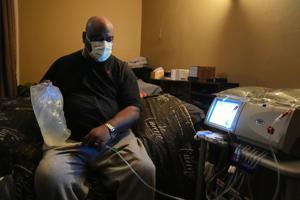
To address the urgent need for kidney donors, a pilot program in Pennsylvania is leveraging social media to connect patients with potential living donors. This initiative, known as the Great Social Experiment, was launched by filmmaker David Krissman and aims to help individuals like Fernando Moreno, who has been on dialysis for two years while waiting for a transplant.
Moreno, a truck driver from Vineland, New Jersey, has felt the strain of a limited social network. His hope for a new kidney has relied heavily on an increasing position on the national waiting list. This changed when a Philadelphia hospital connected him to the pilot program earlier this year. The program pairs patients with “angel advocates,” volunteers who use their social media platforms to share patients’ stories and potentially find living donors.
As of now, the program has not yet secured a donor for Moreno. Still, it has instilled a sense of optimism in him. “This process is great,” said the 50-year-old, whose father died of kidney failure at 65. “I’m just hoping there will be somebody out there that’s willing to take a chance.”
Testing New Approaches
The pilot program began in May 2023 at three Pennsylvania hospitals, including Temple University Hospital, UPMC-Harrisburg, and Jefferson University Hospital. It seeks to determine whether volunteer advocates can enhance the likelihood of finding a match for patients, especially those with limited social connections. “Most patients are too sick to do this on their own—many don’t have the skills to do it on their own,” Krissman emphasized.
The initiative is supported by the Gift of Life Donor Program, which is funding the project with a grant exceeding $100,000. So far, two of the five patients at Temple University have successfully found kidney donors, with one preparing for surgery. Additionally, one patient at UPMC-Harrisburg has also received a transplant.
Innovative Outreach
This novel approach has garnered attention from health officials. Richard Hasz Jr., Chief Executive of Gift of Life, remarked that this program is a unique endeavor aimed at identifying effective messaging that motivates potential living kidney donors. “This is the first of its kind that I’m aware of,” he noted, highlighting the potential for broader application in the future.
The program combines social media outreach with Krissman’s storytelling expertise to engage a wider audience. While there are existing platforms that allow patients to create “microsites” to share their stories, this initiative seeks to utilize a broader spectrum of potential donors by producing videos and other content that amplifies their messages.
Krissman’s personal experience with illness over two decades ago motivated him to tackle the challenges of increasing living kidney donations. After recovering from a debilitating condition, he realized the impact of chronic illness on patients’ lives. His previous efforts, including a podcast on kidney transplantation, led him to successfully connect patients with donors.
With the pilot program in Pennsylvania, Krissman hopes to replicate his earlier successes. His previous program in North Carolina matched three patients with living donors, demonstrating the potential effectiveness of such outreach.
Potential for Change
The significance of this program cannot be overstated, especially given the statistics surrounding kidney transplants in the United States. Approximately 90,000 people are currently awaiting kidney transplants, but only about 6,400 living kidney donations occurred last year. Many patients die each year while waiting for an organ transplant. Living kidney donations can significantly reduce the risk of organ rejection and allow surgeries to be scheduled at optimal times for all involved.
The National Kidney Foundation emphasizes that living donors must be at least 18 years old, with some centers setting the minimum age at 21. Potential donors undergo health screenings to ensure they do not have uncontrolled hypertension, diabetes, cancer, or other disqualifying conditions.
Participants in the angel advocate program, like Francis Beaumier, who has previously donated both a kidney and part of his liver, view it as an opportunity to help others. He notes, “It’s a great little way for everyone to make a small difference.” Another advocate, Holly Armstrong, hopes her involvement will inspire others to donate, stating, “Some people might just keep scrolling, but there might be someone like me, where they stop scrolling and say, ‘This boy needs a kidney.’”
At a kickoff event in Harrisburg for kidney patient Ahmad Collins, attendees listened intently as Krissman detailed the program’s goals and answered questions. Collins, a 50-year-old city government worker, has been reliant on 10 hours of nightly dialysis since a medical procedure damaged his kidneys. He expressed hope that strangers might step up to help. “They can be a superhero, so to speak,” Collins said, reflecting on the life-saving potential of living organ donation.
As this pilot program unfolds, it holds promise not just for Moreno and Collins but for many others in similar situations, urging a collective response to the critical need for living kidney donors.

Philadelphia Parks Launch Free Earth Month Events Starting April 1

Bradford’s Fish Fry Fridays Serve Community with Delicious Dinners

Trump Faces Growing Challenges Amid Rising Tensions with Iran

Scientists Probe the Universe’s Missing Topological Defects

Samsung Galaxy Watch 9 to Feature Larger 435mAh Battery

UConn Huskies Aim to Defend Title in 2026 NCAA Women’s Tournament

U.S. Littoral Combat Ships Dock in Malaysia Amid Regional Tensions

Healthy Choice Wellness Reports Quarterly Earnings, Shares Rise

Urgent News: Charles M. Payment Passes Away at 78 in Duluth

University of Hawaiʻi Joins $25.6M AI Project to Enhance Disaster Monitoring

Major Grant Enhances Cancer Care and Research in Hawaiʻi

Joleen Chaney, Beloved Journalist, Passes Leaving Lasting Legacy

San Francisco’s SFO to Welcome 16 Airlines with Nonstop Flights to Europe in 2026

Goldman Sachs Unveils 2026 Catalyst Playbook for Biotech Investors

Discover Top Business Smartphones for Professionals in 2026

Urgent Update: Tom Aspinall’s Vision Deteriorates After UFC 321

Texas Roadhouse Honors Veterans with Free Meal Vouchers

CD Projekt Red Confirms No Release for The Witcher 4 in 2026
-
Science9 months ago
University of Hawaiʻi Joins $25.6M AI Project to Enhance Disaster Monitoring
-
 Health8 months ago
Major Grant Enhances Cancer Care and Research in Hawaiʻi
-
 Top Stories9 months ago
Joleen Chaney, Beloved Journalist, Passes Leaving Lasting Legacy
-
 World7 months ago
San Francisco’s SFO to Welcome 16 Airlines with Nonstop Flights to Europe in 2026
-
 Business8 months ago
Goldman Sachs Unveils 2026 Catalyst Playbook for Biotech Investors
-
 Business8 months ago
Discover Top Business Smartphones for Professionals in 2026
-
 Top Stories10 months ago
Urgent Update: Tom Aspinall’s Vision Deteriorates After UFC 321
-
 Lifestyle9 months ago
Texas Roadhouse Honors Veterans with Free Meal Vouchers
-
 Entertainment8 months ago
CD Projekt Red Confirms No Release for The Witcher 4 in 2026
-

 Top Stories10 months ago
AI Disruption: AWS Faces Threat as Startups Shift Cloud Focus
-

 Health10 months ago
MIT Scientists Uncover Surprising Genomic Loops During Cell Division
-

 Entertainment10 months ago
Discover the Full Map of Pokémon Legends: Z-A’s Lumiose City