
Health
RFK Jr. Questions Vaccination Schedule, Ignites Controversy

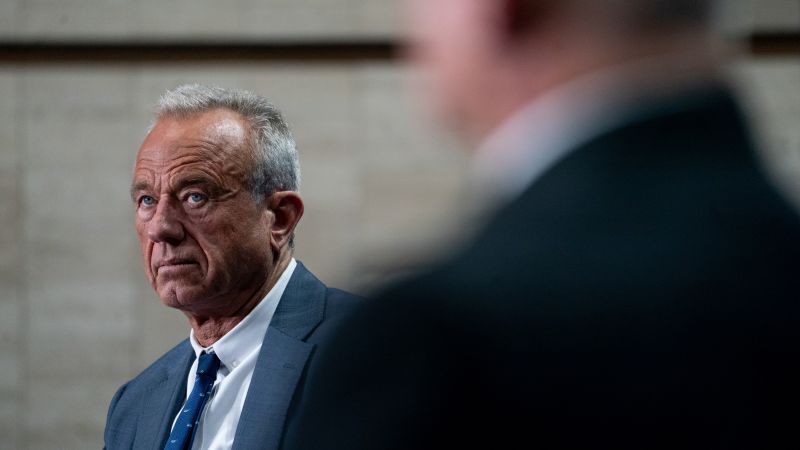
The childhood immunization schedule in the United States, which has been a cornerstone of public health for decades, is facing renewed scrutiny under the leadership of Robert F. Kennedy Jr. As the new Secretary of Health and Human Services, Kennedy announced significant changes to the vaccination recommendations, specifically targeting the longstanding hepatitis B vaccine for newborns. This decision, made on December 16, 2025, has raised concerns among health professionals regarding the safety and effectiveness of vaccines that have been rigorously tested and continuously monitored.
The U.S. childhood immunization schedule has been in place since 1995, when federal health authorities and medical organizations established a national standard for vaccinations from birth through adolescence. This schedule has evolved to include new vaccines as scientific understanding has advanced. Vaccines included in the schedule have undergone extensive testing in clinical trials involving millions of participants. These measures have drastically reduced the incidence of once-common childhood diseases.
Historical Context of Vaccine Development
For much of the 20th century, vaccination efforts were inconsistent across states and regions. While smallpox vaccination was mandated in many areas, there was no unified national schedule until federal oversight became necessary. The turning point came in 1955 after a tragic incident involving a faulty polio vaccine from Cutter Laboratories, which resulted in paralysis in several children. Following this, the Advisory Committee on Immunization Practices (ACIP) was established to provide expert guidance on vaccine use, unifying recommendations across the country.
The introduction of vaccines for diseases such as measles, mumps, and rubella throughout the 1960s marked significant advancements in public health. The combination vaccine, known as the MMR shot, became instrumental in preventing diseases that had previously claimed thousands of lives. The rubella vaccine, for example, not only protected children but also prevented severe birth defects in infants, highlighting the societal benefits of vaccination.
Technological advancements in vaccine development further enhanced the effectiveness of immunization. The introduction of conjugate vaccine technology in the 1980s allowed for vaccines that could stimulate a robust immune response in infants. The Haemophilus influenzae Type b (Hib) vaccine, licensed in 1990, resulted in a more than 99% reduction in related diseases among young children.
Impact of Recent Changes
Kennedy’s recent decision to remove the recommendation for the hepatitis B vaccine at birth marks a significant shift in policy. The CDC had added this vaccine to the schedule in 1991 due to the high risk of transmission from mothers to infants. While Kennedy has expressed concerns about vaccine safety, the hepatitis B vaccine has proven crucial in preventing chronic infections that can lead to serious health issues later in life.
Many health organizations, including the American Academy of Pediatrics and the American College of Obstetricians and Gynecologists, oppose the removal of the hepatitis B vaccination recommendation. They argue that the vaccine serves as a vital safety measure for newborns, particularly considering that a significant percentage of pregnant women are not screened for the virus.
In addition to this reversal, Kennedy has replaced all 17 members of the ACIP, appointing individuals who have previously expressed skepticism about vaccine safety. This move has alarmed healthcare professionals, who fear that it may undermine decades of progress in public health.
Kennedy’s administration appears to be aligning the U.S. vaccination schedule more closely with that of European countries, such as Denmark, which recommends fewer vaccines. However, experts caution that each country’s vaccination strategy is tailored to its specific public health needs and healthcare infrastructure. The fragmented nature of the U.S. healthcare system, with millions of uninsured individuals and significant gaps in vaccination coverage, complicates any efforts to mirror other nations’ approaches.
As the debate continues, health advocates stress the importance of evidence-based guidelines in vaccination practices. The future of the childhood immunization schedule remains uncertain, but the implications of Kennedy’s leadership could have lasting effects on public health strategies and the safety of children across the nation.

Philadelphia Parks Launch Free Earth Month Events Starting April 1

Bradford’s Fish Fry Fridays Serve Community with Delicious Dinners

Trump Faces Growing Challenges Amid Rising Tensions with Iran

Scientists Probe the Universe’s Missing Topological Defects

Samsung Galaxy Watch 9 to Feature Larger 435mAh Battery

UConn Huskies Aim to Defend Title in 2026 NCAA Women’s Tournament

U.S. Littoral Combat Ships Dock in Malaysia Amid Regional Tensions

Healthy Choice Wellness Reports Quarterly Earnings, Shares Rise

Urgent News: Charles M. Payment Passes Away at 78 in Duluth

University of Hawaiʻi Joins $25.6M AI Project to Enhance Disaster Monitoring

Major Grant Enhances Cancer Care and Research in Hawaiʻi

Joleen Chaney, Beloved Journalist, Passes Leaving Lasting Legacy

San Francisco’s SFO to Welcome 16 Airlines with Nonstop Flights to Europe in 2026

Goldman Sachs Unveils 2026 Catalyst Playbook for Biotech Investors

Discover Top Business Smartphones for Professionals in 2026

Urgent Update: Tom Aspinall’s Vision Deteriorates After UFC 321

Texas Roadhouse Honors Veterans with Free Meal Vouchers

CD Projekt Red Confirms No Release for The Witcher 4 in 2026
-
Science9 months ago
University of Hawaiʻi Joins $25.6M AI Project to Enhance Disaster Monitoring
-
 Health8 months ago
Major Grant Enhances Cancer Care and Research in Hawaiʻi
-
 Top Stories9 months ago
Joleen Chaney, Beloved Journalist, Passes Leaving Lasting Legacy
-
 World7 months ago
San Francisco’s SFO to Welcome 16 Airlines with Nonstop Flights to Europe in 2026
-
 Business8 months ago
Goldman Sachs Unveils 2026 Catalyst Playbook for Biotech Investors
-
 Business7 months ago
Discover Top Business Smartphones for Professionals in 2026
-
 Top Stories9 months ago
Urgent Update: Tom Aspinall’s Vision Deteriorates After UFC 321
-
 Lifestyle9 months ago
Texas Roadhouse Honors Veterans with Free Meal Vouchers
-
 Entertainment8 months ago
CD Projekt Red Confirms No Release for The Witcher 4 in 2026
-

 Top Stories10 months ago
AI Disruption: AWS Faces Threat as Startups Shift Cloud Focus
-

 Health10 months ago
MIT Scientists Uncover Surprising Genomic Loops During Cell Division
-

 Entertainment10 months ago
Discover the Full Map of Pokémon Legends: Z-A’s Lumiose City