
Health
Unraveling the Mystery of Presidential Health: Trump Under Scrutiny

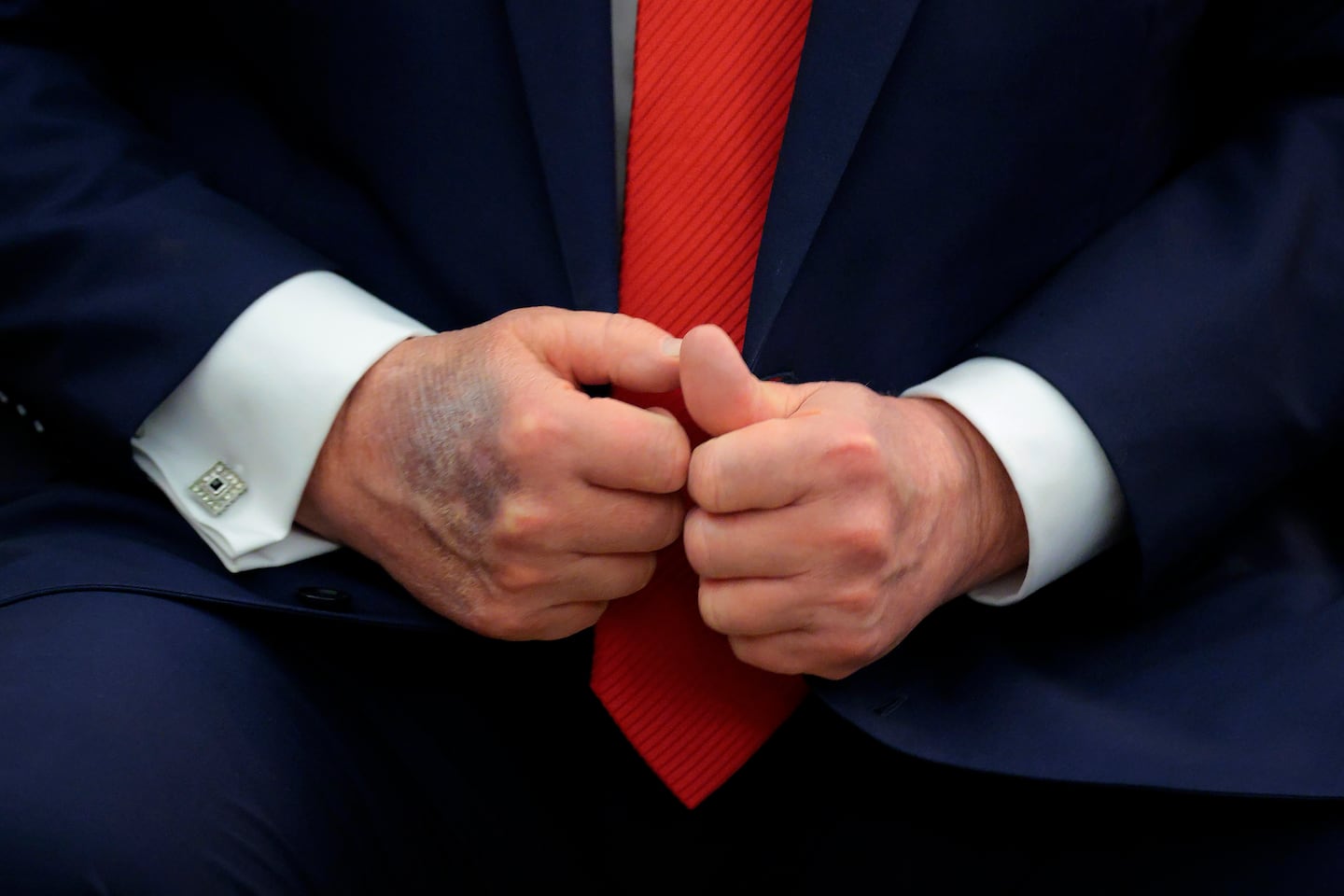
As public concern mounts regarding the health of Donald Trump, a closer examination reveals the longstanding challenges in discerning the truth about a sitting president’s physical and cognitive well-being. This scrutiny comes as Trump approaches his 80th birthday in June 2024, making him the oldest U.S. president in office, a distinction that has heightened attention on the health of aging leaders.
Recent reports, including a piece in New York Magazine, highlight troubling observations about Trump. These include visible bruises on his hands, occasional lapses in speech, and moments where he appears to doze off during meetings. A particular incident noted that he struggled to recall the term “Alzheimer’s” while insisting he does not suffer from it. Such instances contribute to growing concern among lawmakers, journalists, and voters regarding Trump’s mental acuity.
Historical Context of Presidential Health Disclosure
The difficulty in obtaining clear and accurate information about a president’s health is not a new phenomenon. Historically, U.S. presidents have managed to obscure their health issues. For example, in 1813, President James Madison attributed his absence from meetings to a malfunctioning watch rather than an illness. Later, Grover Cleveland‘s administration concealed a surgery for a cancerous tumor, and Woodrow Wilson‘s incapacitation following a stroke led to his wife and physician effectively running the White House.
This tradition continued into more recent administrations. In the 1980s, Ronald Reagan downplayed the severity of injuries sustained during an assassination attempt. Likewise, Trump minimized the seriousness of his COVID-19 infection. While active deception complicates transparency, there is no legal requirement for presidents to disclose their health status, creating a significant barrier for those seeking the truth.
The Current Landscape of Health Transparency
In 2024, Joe Biden‘s physician described a “detailed” neurological examination but did not clarify if it included a cognitive assessment. This lack of specificity underscores the challenges reporters face when trying to gather information about presidential health. Trump himself has been reticent to share details about his health, leaving aides to assert his vitality. For instance, his press secretary has characterized his occasional closed eyes during meetings as a sign of “actively listening,” while Trump attributes his bruising to excessive handshaking, a side effect of his high aspirin intake.
Some aides have gone so far as to claim that Trump is healthier than Barack Obama was at the end of his presidency, despite the implausibility of such assertions. The challenge remains that Trump’s behavior complicates the assessment of any decline associated with aging. According to Michelle Putnam, director of UMass Boston’s Gerontology Institute, the key sign of deterioration in older adults is change, which can be difficult to gauge given Trump’s historically erratic speech patterns and late-night social media activity.
While some political observers interpret Trump’s ambitions—such as his past attempts to purchase Greenland and his efforts to influence Venezuelan politics—as indicators of cognitive decline, others note that his work hours have diminished compared to his first term. He has also held fewer campaign rallies in 2024 than in 2016, which could suggest changes in his stamina.
Factors such as a lack of exercise, poor sleep, and an unhealthy diet can increase the risk of conditions like Alzheimer’s and dementia. Trump’s lifestyle choices, including refraining from alcohol and tobacco, along with access to high-quality medical care, may contribute positively to his overall health.
Despite the ongoing scrutiny, the absence of a definitive medical diagnosis complicates matters. Mary Trump, the former president’s niece and a vocal critic, has commented on her uncle’s demeanor, likening it to her grandfather’s “deer-in-the-headlights look.” Yet, such observations do not constitute a formal diagnosis, and medical professionals typically avoid making assessments without direct examination.
The public’s perception of a president’s health can often hinge on visible performance, particularly during moments of high visibility such as debates. Biden’s performance in the 2024 debates has reignited conversations about his age, yet a recent New York Times poll indicated that 58 percent of voters do not believe Trump is too old to effectively serve as president, a figure consistent with sentiments leading up to the previous election.
In a politically polarized environment, it becomes increasingly easy for individuals to overlook evidence that contradicts their beliefs. As the political landscape evolves, the complexities surrounding presidential health will likely remain a topic of considerable debate and speculation.

Philadelphia Parks Launch Free Earth Month Events Starting April 1

Bradford’s Fish Fry Fridays Serve Community with Delicious Dinners

Trump Faces Growing Challenges Amid Rising Tensions with Iran

Scientists Probe the Universe’s Missing Topological Defects

Samsung Galaxy Watch 9 to Feature Larger 435mAh Battery

UConn Huskies Aim to Defend Title in 2026 NCAA Women’s Tournament

U.S. Littoral Combat Ships Dock in Malaysia Amid Regional Tensions

Healthy Choice Wellness Reports Quarterly Earnings, Shares Rise

Urgent News: Charles M. Payment Passes Away at 78 in Duluth

University of Hawaiʻi Joins $25.6M AI Project to Enhance Disaster Monitoring

Major Grant Enhances Cancer Care and Research in Hawaiʻi

Joleen Chaney, Beloved Journalist, Passes Leaving Lasting Legacy

San Francisco’s SFO to Welcome 16 Airlines with Nonstop Flights to Europe in 2026

Goldman Sachs Unveils 2026 Catalyst Playbook for Biotech Investors

Discover Top Business Smartphones for Professionals in 2026

Urgent Update: Tom Aspinall’s Vision Deteriorates After UFC 321

Texas Roadhouse Honors Veterans with Free Meal Vouchers

CD Projekt Red Confirms No Release for The Witcher 4 in 2026
-
Science9 months ago
University of Hawaiʻi Joins $25.6M AI Project to Enhance Disaster Monitoring
-
 Health8 months ago
Major Grant Enhances Cancer Care and Research in Hawaiʻi
-
 Top Stories9 months ago
Joleen Chaney, Beloved Journalist, Passes Leaving Lasting Legacy
-
 World7 months ago
San Francisco’s SFO to Welcome 16 Airlines with Nonstop Flights to Europe in 2026
-
 Business8 months ago
Goldman Sachs Unveils 2026 Catalyst Playbook for Biotech Investors
-
 Business8 months ago
Discover Top Business Smartphones for Professionals in 2026
-
 Top Stories9 months ago
Urgent Update: Tom Aspinall’s Vision Deteriorates After UFC 321
-
 Lifestyle9 months ago
Texas Roadhouse Honors Veterans with Free Meal Vouchers
-
 Entertainment8 months ago
CD Projekt Red Confirms No Release for The Witcher 4 in 2026
-

 Top Stories10 months ago
AI Disruption: AWS Faces Threat as Startups Shift Cloud Focus
-

 Health10 months ago
MIT Scientists Uncover Surprising Genomic Loops During Cell Division
-

 Entertainment10 months ago
Discover the Full Map of Pokémon Legends: Z-A’s Lumiose City