
Politics
Judge Restricts ICE Tactics Against Protesters in Minneapolis

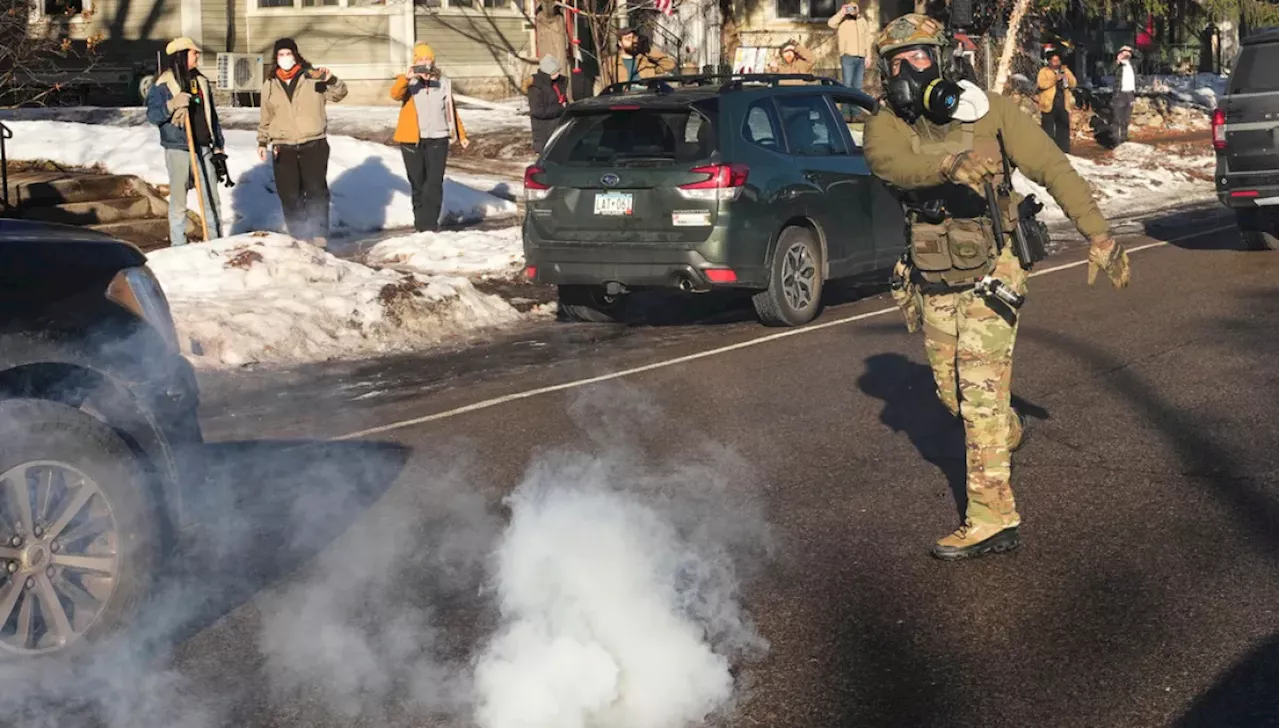
A U.S. District Judge has imposed restrictions on the crowd-control measures used by Immigration and Customs Enforcement (ICE) officers in response to protests in Minneapolis. In a ruling delivered on March 15, 2024, Judge Katherine Menendez determined that ICE officers could not arrest or use pepper spray against protesters who were not directly engaging in violent behavior.
The judge’s order specifically addresses actions taken by ICE during recent demonstrations, which have intensified following the death of Renee Good. According to the Department of Homeland Security (DHS), Good was fatally shot by an ICE officer after allegedly striking the officer with her vehicle. The protests that ensued have often escalated into violence, contributing to heightened tensions in the Twin Cities.
Judge Menendez’s ruling prohibits ICE officers from responding to situations where crowds form around them or when protesters are merely stalking ICE vehicles. The judge emphasized that the allegations presented by plaintiffs, which include claims of traffic stops, arrests, and the indiscriminate use of chemical irritants, suggest a pattern of behavior that chills First Amendment rights. She stated, “These kinds of conduct are those that undoubtedly give rise to an objective chill of First Amendment rights.”
In contrast, DHS lawyers outlined a number of actions they argue fall outside the protections of free speech, including assaulting federal officers and blocking their exits during volatile situations. The judge disagreed with many of these assertions, particularly finding that the act of following a law enforcement vehicle does not warrant a response.
The case, brought forth by the American Civil Liberties Union (ACLU) on behalf of six plaintiffs, seeks to address what they describe as unjustifiable assaults and arrests by ICE officers. The ACLU argues that the federal agency’s tactics are disproportionately targeted against certain communities, raising concerns about civil rights violations.
The protests in Minneapolis have frequently turned violent, leading to incidents such as the theft of a rifle from an FBI vehicle earlier in the week. The alleged thief was identified as a member of the Latin Kings gang, further complicating the situation surrounding the protests.
As demonstrations continue across the city, local leaders and advocates are scrutinizing the federal presence and actions of ICE. Minnesota officials have criticized these tactics, with some suggesting that the federal response constitutes an overreach that undermines local governance and civil liberties. The ongoing situation reflects a broader debate within the United States regarding immigration enforcement and the rights of protesters.
The judge’s order will remain in effect until the current operation concludes, or until conditions change such that the restrictions are no longer deemed necessary. As tensions in Minneapolis persist, the implications of this ruling could have far-reaching effects on how ICE interacts with communities engaged in protest.

Philadelphia Parks Launch Free Earth Month Events Starting April 1

Bradford’s Fish Fry Fridays Serve Community with Delicious Dinners

Trump Faces Growing Challenges Amid Rising Tensions with Iran

Scientists Probe the Universe’s Missing Topological Defects

Samsung Galaxy Watch 9 to Feature Larger 435mAh Battery

UConn Huskies Aim to Defend Title in 2026 NCAA Women’s Tournament

U.S. Littoral Combat Ships Dock in Malaysia Amid Regional Tensions

Healthy Choice Wellness Reports Quarterly Earnings, Shares Rise

Urgent News: Charles M. Payment Passes Away at 78 in Duluth

University of Hawaiʻi Joins $25.6M AI Project to Enhance Disaster Monitoring

Major Grant Enhances Cancer Care and Research in Hawaiʻi

Joleen Chaney, Beloved Journalist, Passes Leaving Lasting Legacy

San Francisco’s SFO to Welcome 16 Airlines with Nonstop Flights to Europe in 2026

Goldman Sachs Unveils 2026 Catalyst Playbook for Biotech Investors

Discover Top Business Smartphones for Professionals in 2026

Urgent Update: Tom Aspinall’s Vision Deteriorates After UFC 321

Texas Roadhouse Honors Veterans with Free Meal Vouchers

CD Projekt Red Confirms No Release for The Witcher 4 in 2026
-
Science9 months ago
University of Hawaiʻi Joins $25.6M AI Project to Enhance Disaster Monitoring
-
 Health8 months ago
Major Grant Enhances Cancer Care and Research in Hawaiʻi
-
 Top Stories9 months ago
Joleen Chaney, Beloved Journalist, Passes Leaving Lasting Legacy
-
 World7 months ago
San Francisco’s SFO to Welcome 16 Airlines with Nonstop Flights to Europe in 2026
-
 Business8 months ago
Goldman Sachs Unveils 2026 Catalyst Playbook for Biotech Investors
-
 Business8 months ago
Discover Top Business Smartphones for Professionals in 2026
-
 Top Stories9 months ago
Urgent Update: Tom Aspinall’s Vision Deteriorates After UFC 321
-
 Lifestyle9 months ago
Texas Roadhouse Honors Veterans with Free Meal Vouchers
-
 Entertainment8 months ago
CD Projekt Red Confirms No Release for The Witcher 4 in 2026
-

 Top Stories10 months ago
AI Disruption: AWS Faces Threat as Startups Shift Cloud Focus
-

 Health10 months ago
MIT Scientists Uncover Surprising Genomic Loops During Cell Division
-

 Entertainment10 months ago
Discover the Full Map of Pokémon Legends: Z-A’s Lumiose City