
Politics
North Dakota Republican Party Faces Financial Crisis Under New Chair

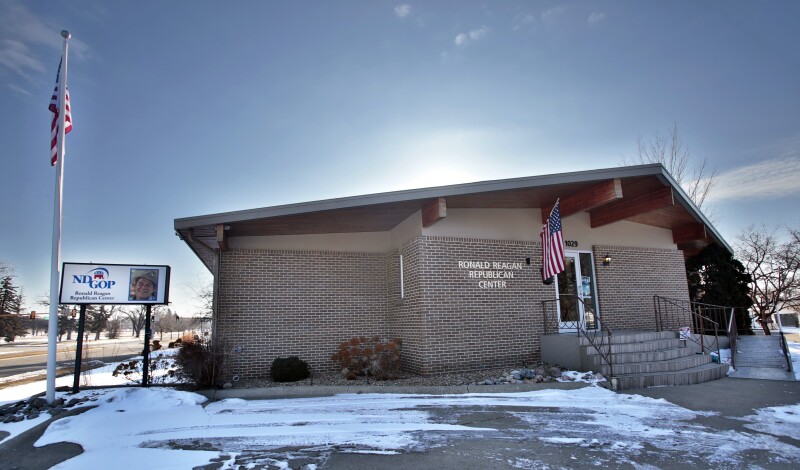
The financial situation of the North Dakota Republican Party (NDGOP) has deteriorated significantly under the leadership of new chairman Matthew Simon. Elected amid controversy, Simon represents a far-right faction within the party, which has prompted concerns about the party’s direction and fundraising capabilities.
Since assuming the role, Simon has faced criticism for opposing candidates endorsed by the party, including former Governor Doug Burgum, who he challenged when Burgum was considered for a position in President Donald Trump’s cabinet. His leadership has coincided with a series of contentious decisions, including the censure of Governor Kelly Armstrong over his veto of book-banning legislation and his property tax plan. Armstrong, who garnered nearly 70% of the vote in the previous gubernatorial election, has consistently maintained strong approval ratings, recently recorded at 66% in a survey by the North Dakota News Cooperative. Given this backdrop, the NDGOP’s fundraising woes are particularly alarming.
Financial records obtained from party meetings reveal a troubling trend. As of December 10, 2024, the NDGOP reported cash reserves of approximately $395,000. However, by September 8, 2024, this figure had plummeted to $158,000, and in the latest meeting, cash on hand had dropped further to just $146,000. While it is typical for political parties to experience a slowdown in fundraising during non-election years, party leaders are expressing concerns that the current decline may be indicative of deeper issues within the party.
Minutes from the party’s executive committee meetings highlight ongoing efforts to address the financial decline. The July 22, 2024, meeting noted the need to form a fundraising committee, reflecting concerns over cash reserves that were already lower than desired, standing at $220,000. Subsequent meetings have echoed this sentiment, with leaders acknowledging that current financial figures are below expectations compared to previous cycles.
Despite these efforts, the party’s official disclosures to the Federal Election Commission (FEC) paint a grim picture. In August 2024, the NDGOP reported contributions of just over $370, marking the lowest monthly figure since before the 2015-2016 election cycle. In comparison, the North Dakota Democratic-NPL Party reported over $24,000 in contributions during the same period, highlighting a stark contrast in fundraising capabilities.
The decline in the NDGOP’s financial health raises questions about the party’s future, particularly in the context of North Dakota’s political landscape. Although Republicans dominate the state’s electorate, the current financial struggles suggest a lack of support for the party’s far-right leadership. This situation does not necessarily signal a shift toward Democratic candidates, as North Dakota remains predominantly Republican.
The challenges facing Simon’s faction are underscored by recent election outcomes. Notably, Rick Becker, a prominent figure in the populist movement, faced significant losses in both his U.S. Senate and House campaigns during the last election cycles. Additionally, candidates like Julie Fedorchak and Kirsten Baesler were able to secure victories despite lacking the party’s endorsement, indicating a disconnect between party leadership and voter sentiment.
The NDGOP’s current predicament illustrates the difficulties of navigating a divided party. While the populist faction has gained traction within party leadership, their appeal does not seem to resonate with the broader Republican base in North Dakota. As the party continues to grapple with financial instability, the implications for its future direction and electoral success remain uncertain.

Philadelphia Parks Launch Free Earth Month Events Starting April 1

Bradford’s Fish Fry Fridays Serve Community with Delicious Dinners

Trump Faces Growing Challenges Amid Rising Tensions with Iran

Scientists Probe the Universe’s Missing Topological Defects

Samsung Galaxy Watch 9 to Feature Larger 435mAh Battery

UConn Huskies Aim to Defend Title in 2026 NCAA Women’s Tournament

U.S. Littoral Combat Ships Dock in Malaysia Amid Regional Tensions

Healthy Choice Wellness Reports Quarterly Earnings, Shares Rise

Urgent News: Charles M. Payment Passes Away at 78 in Duluth

University of Hawaiʻi Joins $25.6M AI Project to Enhance Disaster Monitoring

Major Grant Enhances Cancer Care and Research in Hawaiʻi

Joleen Chaney, Beloved Journalist, Passes Leaving Lasting Legacy

San Francisco’s SFO to Welcome 16 Airlines with Nonstop Flights to Europe in 2026

Goldman Sachs Unveils 2026 Catalyst Playbook for Biotech Investors

Discover Top Business Smartphones for Professionals in 2026

Urgent Update: Tom Aspinall’s Vision Deteriorates After UFC 321

Texas Roadhouse Honors Veterans with Free Meal Vouchers

CD Projekt Red Confirms No Release for The Witcher 4 in 2026
-
Science9 months ago
University of Hawaiʻi Joins $25.6M AI Project to Enhance Disaster Monitoring
-
 Health8 months ago
Major Grant Enhances Cancer Care and Research in Hawaiʻi
-
 Top Stories9 months ago
Joleen Chaney, Beloved Journalist, Passes Leaving Lasting Legacy
-
 World7 months ago
San Francisco’s SFO to Welcome 16 Airlines with Nonstop Flights to Europe in 2026
-
 Business8 months ago
Goldman Sachs Unveils 2026 Catalyst Playbook for Biotech Investors
-
 Business7 months ago
Discover Top Business Smartphones for Professionals in 2026
-
 Top Stories9 months ago
Urgent Update: Tom Aspinall’s Vision Deteriorates After UFC 321
-
 Lifestyle9 months ago
Texas Roadhouse Honors Veterans with Free Meal Vouchers
-
 Entertainment8 months ago
CD Projekt Red Confirms No Release for The Witcher 4 in 2026
-

 Top Stories10 months ago
AI Disruption: AWS Faces Threat as Startups Shift Cloud Focus
-

 Health10 months ago
MIT Scientists Uncover Surprising Genomic Loops During Cell Division
-

 Entertainment10 months ago
Discover the Full Map of Pokémon Legends: Z-A’s Lumiose City