
Politics
U.S. Faces Continued Maternal and Infant Health Crisis in 2025

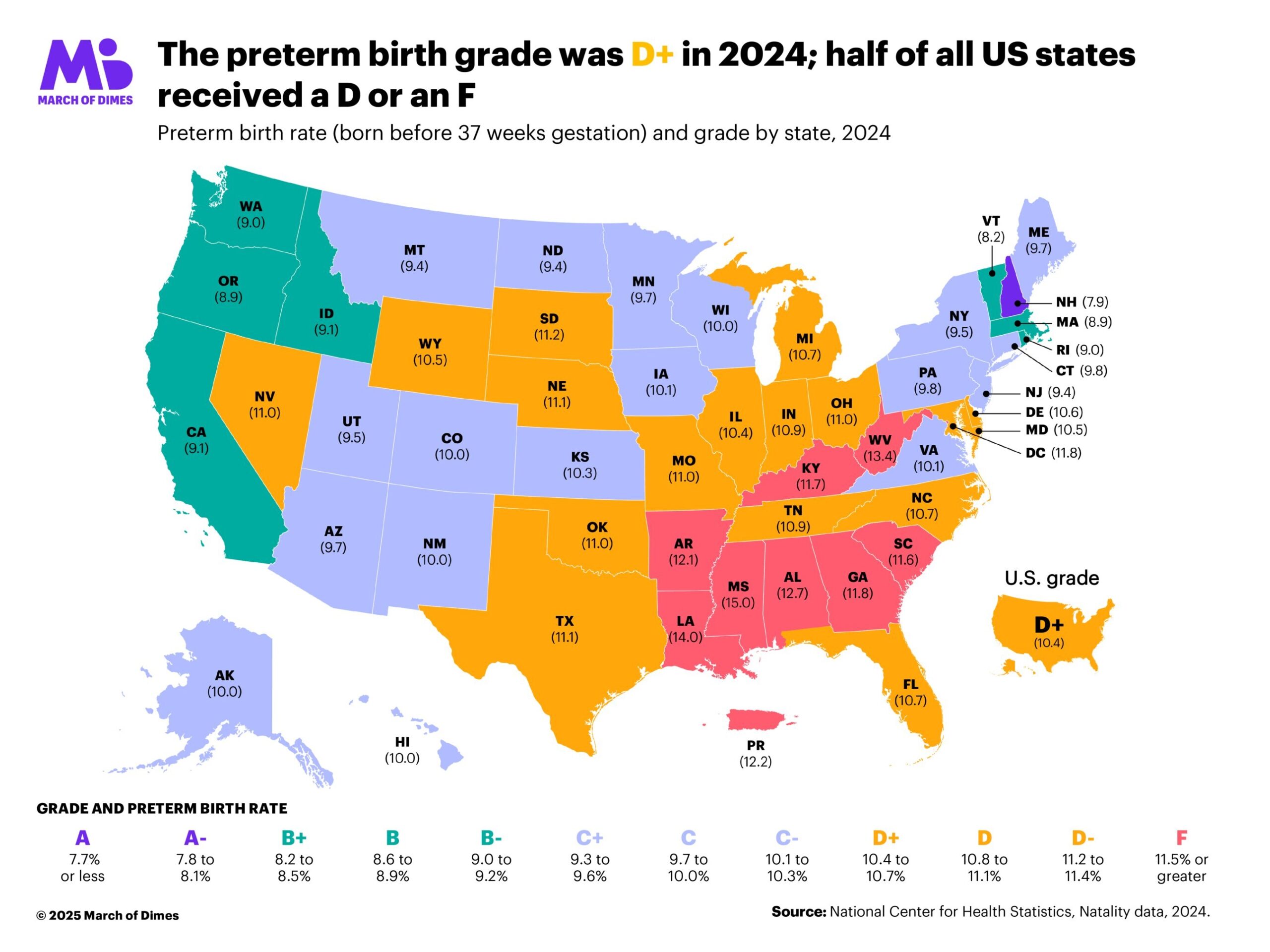
The United States continues to grapple with significant challenges in maternal and infant health, according to the latest findings from the March of Dimes. In its 2025 Report Card, released on November 17, the nation received a D+ grade for the fourth consecutive year, highlighting a persistent preterm birth rate of 10.4%. This statistic translates to approximately 380,000 babies born prematurely in 2024, representing one in ten births across the country.
The data reveal alarming trends, particularly regarding racial disparities and access to care. The preterm birth rate among infants born to Black mothers has escalated to 14.7%, nearly 1.5 times higher than the overall national rate. Furthermore, babies born to mothers covered by Medicaid face a preterm birth rate of 11.7%, in contrast to 9.6% for those with private insurance.
Concerning Trends in Maternal Health
The report underscores a troubling decline in prenatal care, with 24.5% of pregnant individuals not initiating care in the first trimester—a trend that has persisted for four years. Additionally, chronic health conditions among pregnant individuals are on the rise, with increases in hypertension by 6% and diabetes by 8%, both of which are known risk factors for premature births. Despite these alarming figures, the infant mortality rate remained unchanged at 5.6 deaths per 1,000 live births, resulting in over 20,000 infant deaths in 2023.
Dr. Michael Warren, Chief Medical and Health Officer of March of Dimes, expressed deep frustration at the stagnation of progress in maternal and infant health. “We have known about risk factors for preterm birth, including a prior history of preterm birth, chronic disease, and unequal access to care, for years,” he stated. “That the national rate remains unchanged while disparities continue to widen means we must deepen our commitment to research, expand maternity care access, and push for better policies that protect our nation’s moms and babies.”
Disparities and State-by-State Analysis
While some states showed improvement, the overall picture remains grim. Nineteen states improved their preterm birth rates, with South Dakota leading the way with a 10% decrease. In contrast, 21 states experienced worsening rates, with notable increases in Washington, D.C. (up 8%) and several other states, including Ohio and Kentucky.
The report also noted a fragile maternal health landscape; maternal mortality decreased to 18.6 deaths per 100,000 live births, returning to pre-pandemic levels. Nonetheless, disparities persisted, with Black, American Indian, Alaska Native, and Pacific Islander mothers facing mortality rates two to three times higher than their White counterparts. Over 30,000 women encounter severe complications annually during pregnancy.
Cindy Rahman, President and CEO of March of Dimes, emphasized the urgency of addressing systemic inequities. “This year’s Report Card shows that while we remain stalled in our progress on preterm birth, we are also losing ground in other critical areas of maternal and infant health,” she said. “Our country is stuck in a maternal and infant health crisis where too many families are being forgotten.”
March of Dimes is actively pursuing a multipronged strategy to combat these challenges. The organization is expanding its Prematurity Research Centers and has begun operating Mom & Baby Mobile Health Centers®, which provide prenatal and postpartum care directly within communities that lack access. They are also advocating for critical policies such as the Preventing Maternal Deaths Act, which aims to maintain funding for Maternal Mortality Review Committees, and the reauthorization of the PREEMIE Act to renew federal investment in research and data.
In addition to these efforts, March of Dimes is focused on enhancing access to doulas and midwives, strengthening telehealth initiatives in rural areas, and addressing the structural racism contributing to disparities in maternal and infant outcomes.
With the 2025 Report Card reaffirming the United States’ precarious status in maternal and infant health, March of Dimes remains committed to advancing research, expanding access to essential care, and advocating for policies that ensure the health and safety of mothers and their babies.
For further details, the full 2025 Report Card, which includes state-by-state and city-level data, as well as trend analyses, can be accessed at marchofdimes.org/reportcard.

Philadelphia Parks Launch Free Earth Month Events Starting April 1

Bradford’s Fish Fry Fridays Serve Community with Delicious Dinners

Trump Faces Growing Challenges Amid Rising Tensions with Iran

Scientists Probe the Universe’s Missing Topological Defects

Samsung Galaxy Watch 9 to Feature Larger 435mAh Battery

UConn Huskies Aim to Defend Title in 2026 NCAA Women’s Tournament

U.S. Littoral Combat Ships Dock in Malaysia Amid Regional Tensions

Healthy Choice Wellness Reports Quarterly Earnings, Shares Rise

Urgent News: Charles M. Payment Passes Away at 78 in Duluth

University of Hawaiʻi Joins $25.6M AI Project to Enhance Disaster Monitoring

Major Grant Enhances Cancer Care and Research in Hawaiʻi

Joleen Chaney, Beloved Journalist, Passes Leaving Lasting Legacy

San Francisco’s SFO to Welcome 16 Airlines with Nonstop Flights to Europe in 2026

Goldman Sachs Unveils 2026 Catalyst Playbook for Biotech Investors

Discover Top Business Smartphones for Professionals in 2026

Urgent Update: Tom Aspinall’s Vision Deteriorates After UFC 321

Texas Roadhouse Honors Veterans with Free Meal Vouchers

CD Projekt Red Confirms No Release for The Witcher 4 in 2026
-
Science9 months ago
University of Hawaiʻi Joins $25.6M AI Project to Enhance Disaster Monitoring
-
 Health8 months ago
Major Grant Enhances Cancer Care and Research in Hawaiʻi
-
 Top Stories9 months ago
Joleen Chaney, Beloved Journalist, Passes Leaving Lasting Legacy
-
 World7 months ago
San Francisco’s SFO to Welcome 16 Airlines with Nonstop Flights to Europe in 2026
-
 Business8 months ago
Goldman Sachs Unveils 2026 Catalyst Playbook for Biotech Investors
-
 Business8 months ago
Discover Top Business Smartphones for Professionals in 2026
-
 Top Stories9 months ago
Urgent Update: Tom Aspinall’s Vision Deteriorates After UFC 321
-
 Lifestyle9 months ago
Texas Roadhouse Honors Veterans with Free Meal Vouchers
-
 Entertainment8 months ago
CD Projekt Red Confirms No Release for The Witcher 4 in 2026
-

 Top Stories10 months ago
AI Disruption: AWS Faces Threat as Startups Shift Cloud Focus
-

 Health10 months ago
MIT Scientists Uncover Surprising Genomic Loops During Cell Division
-

 Entertainment10 months ago
Discover the Full Map of Pokémon Legends: Z-A’s Lumiose City