
Science
Archaeologists Uncover Insights on Easter Island’s Moai Statues

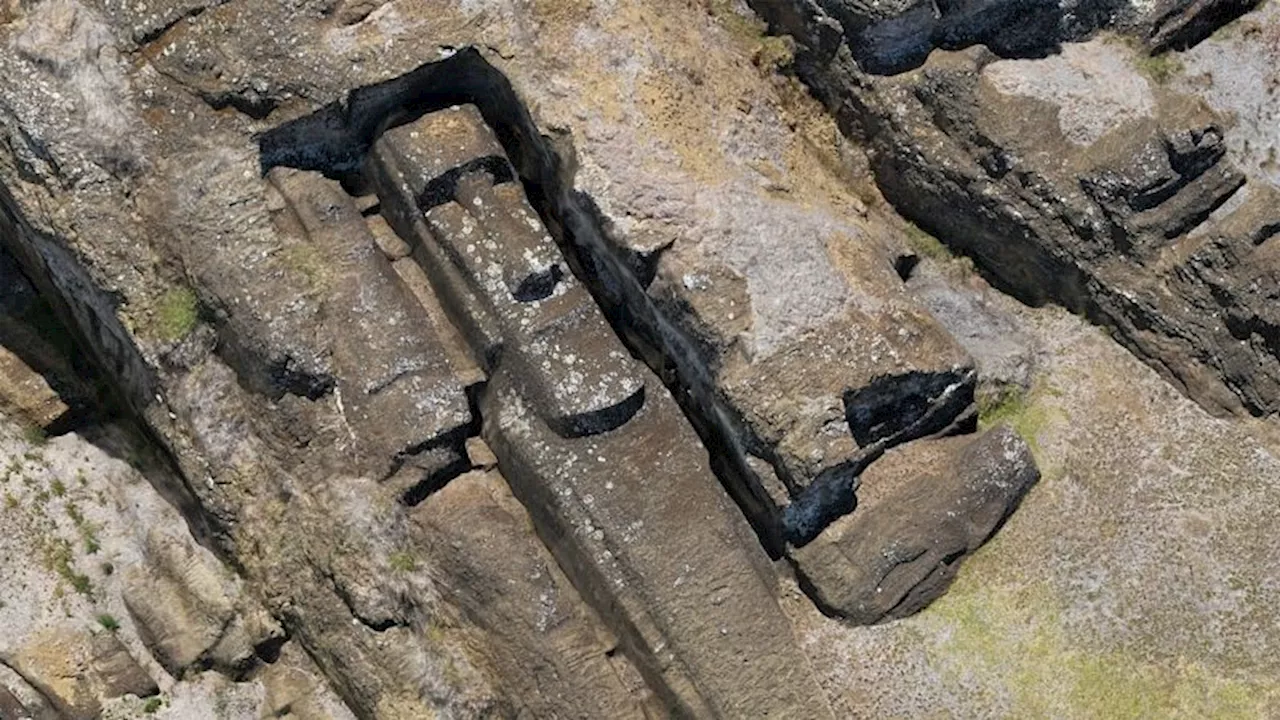
Archaeologists have unveiled new insights into the construction of the iconic moai statues on Easter Island, also known as Rapa Nui. A recent study published in the journal PLOS One utilized a high-resolution 3D model of the Rano Raraku quarry, revealing significant details about how these monumental stone heads were made and the societal structure of their creators.
The research indicates that the construction of the moai, which are renowned for their imposing stature, was likely organized by individual clans rather than a centralized authority. This challenges previous assumptions that a unified workforce managed the production of these statues. According to Carl Lipo, a professor of anthropology at Binghamton University and co-author of the study, the size and complexity of the statues initially suggested a need for centralized coordination. Yet, the findings point to a more decentralized, clan-based system.
3D Modeling Reveals Construction Techniques
Researchers constructed the first high-resolution model of the Rano Raraku quarry using 11,000 overlapping drone images through a technique called photogrammetry. The analysis identified 30 distinct sites of quarrying activity, indicating that multiple independent work areas operated simultaneously. This decentralized approach meant that the entire production process for the moai remained within specific zones, a stark contrast to industrial quarries where statues would move between different phases of production.
The study documented a total of 426 moai at various stages of completion, along with 341 trenches cut to outline blocks for carving and 133 voids where statues were successfully extracted. Notably, the unfinished moai included one that would have been the largest ever erected, named Te Tokanga, standing at approximately 21 meters tall and weighing around 270 tons if completed.
Reevaluating Rapa Nui Society
These findings contribute to an ongoing debate regarding the societal structure of Rapa Nui. Many historians and archaeologists have previously focused on the idea of a hierarchical society led by powerful chiefs. However, Lipo argues that if the production of the moai was indeed decentralized, there would be no central authority driving the community toward ecological collapse, a theory posited by geographer Jared Diamond in his book “Collapse: How Societies Choose to Fail or Succeed.”
The new research suggests that Rapa Nui may have been home to a resilient, sustainable society capable of adapting to its isolated environment. Lipo contends that the traditional narrative of a society driven to ruin by its leaders may not fully represent the complexities of Rapa Nui’s social dynamics. The evidence of clan-based production highlights a community making independent decisions rather than being driven by a singular authoritative force.
Critics of the study, such as Helene Martinsson-Wallin, a professor at Uppsala University, have pointed out that similar clan-based systems were identified over a century ago. She notes that several studies have illustrated how societies without a paramount chief can still engage in monumental construction. Additionally, Christopher Stevenson, an archaeologist at Virginia Commonwealth University, acknowledges the innovative approach of the research while suggesting that more data is needed to support the proposed decentralized production model.
The quarry at Rano Raraku, where these statues were crafted, stands as a testament to the remarkable achievements of the Polynesian people. As the archaeological community continues to explore the complexities of Rapa Nui, these findings serve to deepen our understanding of not only the moai but also the vibrant society that created them.

Philadelphia Parks Launch Free Earth Month Events Starting April 1

Bradford’s Fish Fry Fridays Serve Community with Delicious Dinners

Trump Faces Growing Challenges Amid Rising Tensions with Iran

Scientists Probe the Universe’s Missing Topological Defects

Samsung Galaxy Watch 9 to Feature Larger 435mAh Battery

UConn Huskies Aim to Defend Title in 2026 NCAA Women’s Tournament

U.S. Littoral Combat Ships Dock in Malaysia Amid Regional Tensions

Healthy Choice Wellness Reports Quarterly Earnings, Shares Rise

Urgent News: Charles M. Payment Passes Away at 78 in Duluth

University of Hawaiʻi Joins $25.6M AI Project to Enhance Disaster Monitoring

Major Grant Enhances Cancer Care and Research in Hawaiʻi

Joleen Chaney, Beloved Journalist, Passes Leaving Lasting Legacy

San Francisco’s SFO to Welcome 16 Airlines with Nonstop Flights to Europe in 2026

Goldman Sachs Unveils 2026 Catalyst Playbook for Biotech Investors

Discover Top Business Smartphones for Professionals in 2026

Urgent Update: Tom Aspinall’s Vision Deteriorates After UFC 321

Texas Roadhouse Honors Veterans with Free Meal Vouchers

CD Projekt Red Confirms No Release for The Witcher 4 in 2026
-
Science9 months ago
University of Hawaiʻi Joins $25.6M AI Project to Enhance Disaster Monitoring
-
 Health8 months ago
Major Grant Enhances Cancer Care and Research in Hawaiʻi
-
 Top Stories9 months ago
Joleen Chaney, Beloved Journalist, Passes Leaving Lasting Legacy
-
 World7 months ago
San Francisco’s SFO to Welcome 16 Airlines with Nonstop Flights to Europe in 2026
-
 Business8 months ago
Goldman Sachs Unveils 2026 Catalyst Playbook for Biotech Investors
-
 Business7 months ago
Discover Top Business Smartphones for Professionals in 2026
-
 Top Stories9 months ago
Urgent Update: Tom Aspinall’s Vision Deteriorates After UFC 321
-
 Lifestyle9 months ago
Texas Roadhouse Honors Veterans with Free Meal Vouchers
-
 Entertainment8 months ago
CD Projekt Red Confirms No Release for The Witcher 4 in 2026
-

 Top Stories10 months ago
AI Disruption: AWS Faces Threat as Startups Shift Cloud Focus
-

 Health10 months ago
MIT Scientists Uncover Surprising Genomic Loops During Cell Division
-

 Entertainment10 months ago
Discover the Full Map of Pokémon Legends: Z-A’s Lumiose City