
Science
Discovering Neutron Stars: The Universe’s Densest Remnants

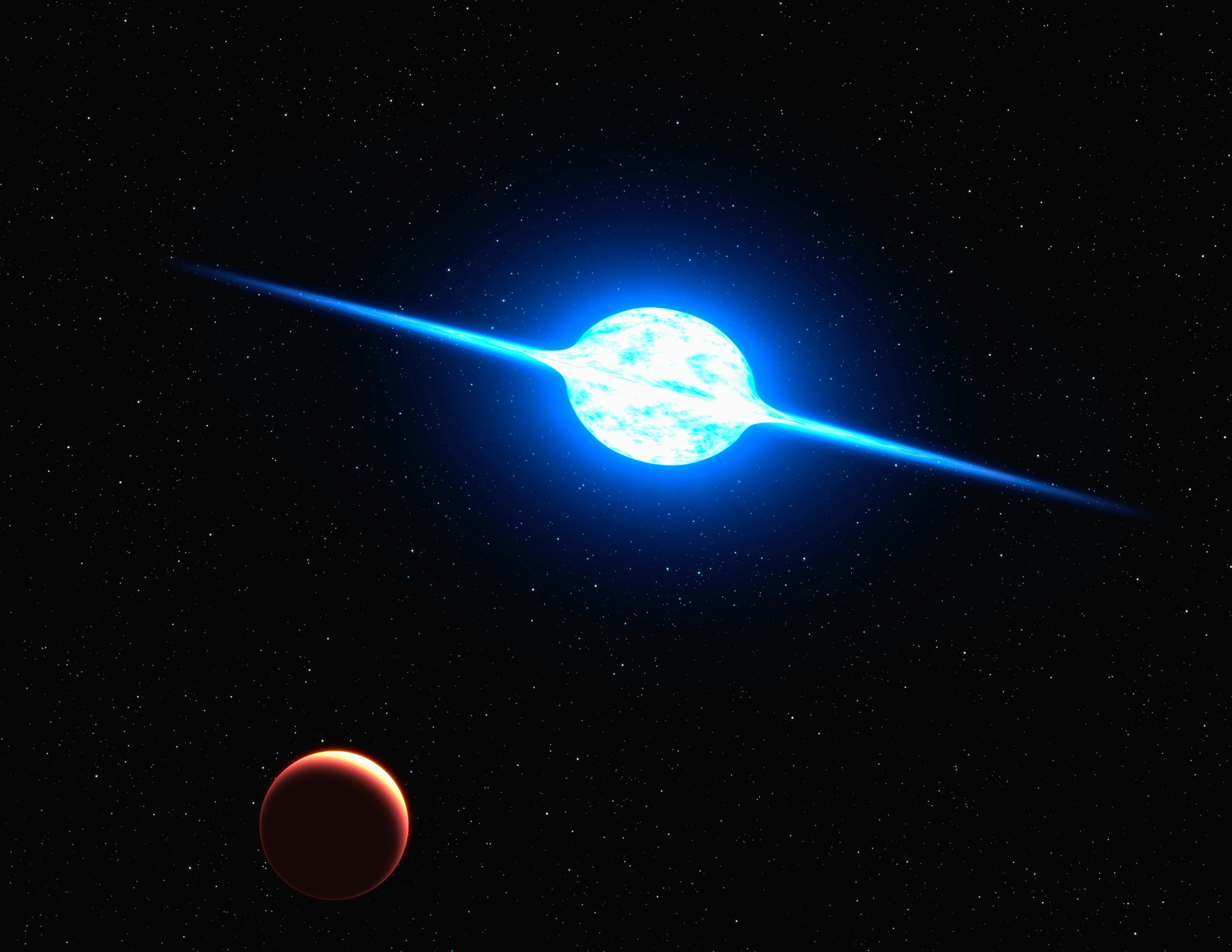
Neutron stars represent some of the most extreme objects in the universe, formed from the remnants of massive stars that have exhausted their nuclear fuel. When a star with a mass between eight and twenty times that of the Sun reaches the end of its life cycle, it experiences a catastrophic collapse under its own gravity, leading to a supernova explosion. This violent event leaves behind a stellar remnant no larger than a city, but with a mass that can exceed that of the Sun.
The conditions inside these collapsed stars reach densities around 1017 kilograms per cubic meter, equivalent to compressing the mass of Mount Everest into a teaspoon. At such extreme densities, atomic structures disintegrate, causing electrons and protons to merge into neutrons. This phenomenon results in neutron degeneracy pressure, a quantum force that halts further collapse and prevents the formation of black holes. What emerges is an object characterized by intense gravity, powerful magnetic fields, and rapid rotation.
Understanding the Structure and Dynamics of Neutron Stars
Neutron stars are born from core-collapse supernovae, which occurs when fusion in a massive star’s iron core ceases to produce energy. As internal pressure dissipates, electrons are compelled into protons, leading to the creation of neutrons and releasing a torrent of neutrinos that carry away much of the star’s gravitational binding energy. This dramatic collapse results in the ejection of the star’s outer layers while the core condenses into a neutron star.
The internal structure of neutron stars is marked by extreme pressure, leading to distinct layers. The outer crust is composed of tightly packed atomic nuclei, while deeper regions experience a phenomenon known as “neutron drip,” where neutrons escape from atomic bonds. Below this lies a superfluid outer core, predominantly made up of free neutrons and exotic particles, which may transition into quark matter in the deepest inner core.
A critical aspect of neutron stars is their mass limit, known as the Tolman–Oppenheimer–Volkoff boundary, estimated to be around 2.2 solar masses. If a neutron star exceeds this threshold, the neutron degeneracy pressure becomes insufficient to support it, resulting in collapse into a black hole. This boundary clearly delineates the fate of massive collapsed stars in the universe.
Neutron stars also exhibit remarkable rotational dynamics. As they contract, they conserve angular momentum, leading to incredible increases in rotation speed. A progenitor star that originally spins once per day can transform into a neutron star rotating hundreds of times per second. Some millisecond pulsars achieve rotational frequencies exceeding 700 hertz, emitting highly regular radio pulses that are detectable across vast distances, including throughout the Milky Way.
Magnetars and the Exotic Nature of Neutron Stars
Among neutron stars, a rare subclass known as magnetars possesses magnetic fields that can exceed 1015 gauss. These extraordinarily strong fields can cause the star’s crust to fracture, resulting in starquakes that release bursts of gamma rays more powerful than typical supernova emissions. Magnetars exemplify how neutron stars can store and release vast amounts of energy through magnetic processes alone.
Timing irregularities known as glitches further illustrate the complex interiors of these stellar remnants. These sudden changes in spin rates are believed to occur when superfluid vortices within the core unpin and redistribute angular momentum, briefly altering the star’s rotation with striking precision.
The advent of gravitational-wave astronomy has revolutionized our understanding of neutron stars. The detection of GW170817 marked the first observation of merging neutron stars emitting ripples in spacetime, measurable across hundreds of millions of light-years. This groundbreaking event established a direct link between neutron star collisions and the synthesis of heavy elements such as gold and platinum, highlighting their pivotal role in cosmic evolution.
Observations of neutron stars also help constrain the neutron star equation of state, narrowing down possible radius and density models. Current measurements suggest that typical neutron stars are approximately 11 to 13 kilometers wide, ruling out both overly soft and extremely rigid models of internal matter. The NICER (Neutron Star Interior Composition Explorer) mission aboard the International Space Station is instrumental in refining these measurements. By tracking X-ray hotspots on rotating neutron stars, astronomers validate mass-radius relationships that support dense yet stable cores.
Neutron stars undergo rapid cooling through neutrino emissions in their early life stages, shedding heat quickly over the first hundred thousand years. As neutrino output diminishes, surface cooling transitions to photon radiation, allowing astronomers to estimate the ages of neutron stars through thermal measurements. The cooling curves provide evidence for superfluidity within the core, with sudden temperature drops indicating enhanced neutrino interactions associated with paired neutrons—offering rare observational proof of quantum behavior on a cosmic scale.
These stellar remnants are not just fascinating objects; they also significantly influence galactic chemistry. Binary neutron star mergers eject neutron-rich materials that enrich galaxies with heavy elements crucial for planet formation and life. Without these stellar remnants, many elements beyond iron would be exceedingly rare, emphasizing their importance in the cosmic landscape.
Neutron stars exemplify matter pushed to its absolute limits, combining extreme gravity, density, magnetism, and rotation into compact laboratories inaccessible to Earth-based experiments. From pulsars to magnetars, these objects challenge our understanding of nuclear physics, relativity, and quantum mechanics within a single celestial body. As observational technologies advance, our grasp of neutron stars will continue to expand, revealing insights into the formation, evolution, and collisions of these remarkable remnants across the cosmos. Each new discovery brings the scientific community closer to unraveling the mysteries of matter under conditions that define the universe’s most extreme environments.

Philadelphia Parks Launch Free Earth Month Events Starting April 1

Bradford’s Fish Fry Fridays Serve Community with Delicious Dinners

Trump Faces Growing Challenges Amid Rising Tensions with Iran

Scientists Probe the Universe’s Missing Topological Defects

Samsung Galaxy Watch 9 to Feature Larger 435mAh Battery

UConn Huskies Aim to Defend Title in 2026 NCAA Women’s Tournament

U.S. Littoral Combat Ships Dock in Malaysia Amid Regional Tensions

Healthy Choice Wellness Reports Quarterly Earnings, Shares Rise

Urgent News: Charles M. Payment Passes Away at 78 in Duluth

University of Hawaiʻi Joins $25.6M AI Project to Enhance Disaster Monitoring

Major Grant Enhances Cancer Care and Research in Hawaiʻi

Joleen Chaney, Beloved Journalist, Passes Leaving Lasting Legacy

San Francisco’s SFO to Welcome 16 Airlines with Nonstop Flights to Europe in 2026

Goldman Sachs Unveils 2026 Catalyst Playbook for Biotech Investors

Discover Top Business Smartphones for Professionals in 2026

Urgent Update: Tom Aspinall’s Vision Deteriorates After UFC 321

Texas Roadhouse Honors Veterans with Free Meal Vouchers

CD Projekt Red Confirms No Release for The Witcher 4 in 2026
-
Science9 months ago
University of Hawaiʻi Joins $25.6M AI Project to Enhance Disaster Monitoring
-
 Health8 months ago
Major Grant Enhances Cancer Care and Research in Hawaiʻi
-
 Top Stories9 months ago
Joleen Chaney, Beloved Journalist, Passes Leaving Lasting Legacy
-
 World7 months ago
San Francisco’s SFO to Welcome 16 Airlines with Nonstop Flights to Europe in 2026
-
 Business8 months ago
Goldman Sachs Unveils 2026 Catalyst Playbook for Biotech Investors
-
 Business8 months ago
Discover Top Business Smartphones for Professionals in 2026
-
 Top Stories9 months ago
Urgent Update: Tom Aspinall’s Vision Deteriorates After UFC 321
-
 Lifestyle9 months ago
Texas Roadhouse Honors Veterans with Free Meal Vouchers
-
 Entertainment8 months ago
CD Projekt Red Confirms No Release for The Witcher 4 in 2026
-

 Top Stories10 months ago
AI Disruption: AWS Faces Threat as Startups Shift Cloud Focus
-

 Health10 months ago
MIT Scientists Uncover Surprising Genomic Loops During Cell Division
-

 Entertainment10 months ago
Discover the Full Map of Pokémon Legends: Z-A’s Lumiose City