
Science
Interstellar Comet 3I/ATLAS Reveals Secrets of Water Production

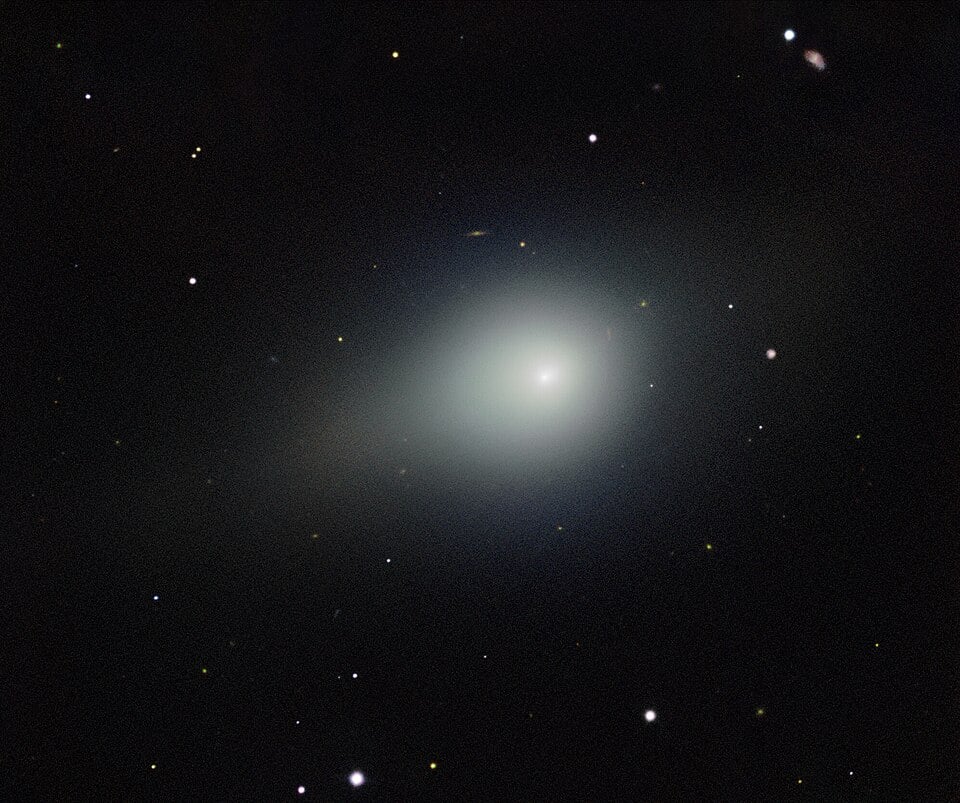
The interstellar comet 3I/ATLAS has provided significant insights into the nature of water production in comets after it passed close to the Sun on October 30, 2025. This comet is the third confirmed interstellar object detected, following the earlier visits from ‘Oumuamua in 2017 and 2I/Borisov in 2019. Unlike its predecessors, 3I/ATLAS has been observed in greater detail, particularly by the Solar and Heliosphere Observatory (SOHO), which has been monitoring solar activity for nearly 30 years.
Unveiling the Comet’s Water Production
The SOHO spacecraft, positioned 1.5 million kilometers from Earth, carries a camera known as SWAN, designed to detect specific wavelengths of ultraviolet light emitted by hydrogen atoms. Following 3I/ATLAS’s closest approach to the Sun, SWAN picked up a distinctive hydrogen glow around the comet. This glow is produced when sunlight interacts with water molecules ejected from the comet’s nucleus, breaking them apart and releasing hydrogen atoms that emit ultraviolet light.
On November 6, nine days after perihelion, measurements indicated that the comet was releasing water at an astonishing rate of 3.17 × 1029 molecules per second. To visualize this, it is comparable to filling an Olympic swimming pool every few seconds. Such substantial water production raises intriguing questions regarding the comet’s nucleus size and surface activity.
Understanding Comet Behavior and Composition
As 3I/ATLAS continued its journey, water production steadily declined. By early December, approximately 40 days post-perihelion, the rate had dropped to between 10 and 20 trillion trillion molecules per second. This pattern mirrors that of other comets in our Solar System, where reduced solar heating leads to decreased sublimation of ice as the comet moves away from the Sun.
The behavior of 3I/ATLAS suggests it has not fundamentally altered despite its long journey through interstellar space. The techniques used to assess its water production have been validated through over two decades of research and observations of more than 90 different comet apparitions. This involves correlating SWAN’s hydrogen measurements with daily solar ultraviolet output and accounting for solar rotation.
Studying the characteristics of 3I/ATLAS provides more than just insights into a single comet; it offers a glimpse into the conditions of its original planetary system. The comet’s water production could reflect the environment from which it originated, allowing scientists to compare it to the formation of our own Solar System and enhancing our understanding of the diversity of planetary systems across the galaxy.
By examining data from the Hubble Space Telescope, researchers estimate the nucleus diameter of 3I/ATLAS to be between 440 meters and 5.6 kilometers. If the water is sublimating directly from its surface, this indicates that a significant portion, potentially around 20 percent, of the surface must be active, which is considerably higher than the typical 3 to 5 percent observed in most Solar System comets.
As 3I/ATLAS exits our Solar System, traveling for millennia before approaching another star, the data collected by SWAN and other instruments provides a detailed snapshot of this remarkable interstellar visitor during its brief encounter with our neighborhood. This ongoing research promises to deepen our understanding of cometary science and the origins of water in the universe.
Source: Water Production of Interstellar Comet 3I/ATLAS from SOHO/SWAN Observations after Perihelion

Philadelphia Parks Launch Free Earth Month Events Starting April 1

Bradford’s Fish Fry Fridays Serve Community with Delicious Dinners

Trump Faces Growing Challenges Amid Rising Tensions with Iran

Scientists Probe the Universe’s Missing Topological Defects

Samsung Galaxy Watch 9 to Feature Larger 435mAh Battery

UConn Huskies Aim to Defend Title in 2026 NCAA Women’s Tournament

U.S. Littoral Combat Ships Dock in Malaysia Amid Regional Tensions

Healthy Choice Wellness Reports Quarterly Earnings, Shares Rise

Urgent News: Charles M. Payment Passes Away at 78 in Duluth

University of Hawaiʻi Joins $25.6M AI Project to Enhance Disaster Monitoring

Major Grant Enhances Cancer Care and Research in Hawaiʻi

Joleen Chaney, Beloved Journalist, Passes Leaving Lasting Legacy

San Francisco’s SFO to Welcome 16 Airlines with Nonstop Flights to Europe in 2026

Goldman Sachs Unveils 2026 Catalyst Playbook for Biotech Investors

Discover Top Business Smartphones for Professionals in 2026

Urgent Update: Tom Aspinall’s Vision Deteriorates After UFC 321

Texas Roadhouse Honors Veterans with Free Meal Vouchers

CD Projekt Red Confirms No Release for The Witcher 4 in 2026
-
Science9 months ago
University of Hawaiʻi Joins $25.6M AI Project to Enhance Disaster Monitoring
-
 Health8 months ago
Major Grant Enhances Cancer Care and Research in Hawaiʻi
-
 Top Stories9 months ago
Joleen Chaney, Beloved Journalist, Passes Leaving Lasting Legacy
-
 World7 months ago
San Francisco’s SFO to Welcome 16 Airlines with Nonstop Flights to Europe in 2026
-
 Business8 months ago
Goldman Sachs Unveils 2026 Catalyst Playbook for Biotech Investors
-
 Business8 months ago
Discover Top Business Smartphones for Professionals in 2026
-
 Top Stories9 months ago
Urgent Update: Tom Aspinall’s Vision Deteriorates After UFC 321
-
 Lifestyle9 months ago
Texas Roadhouse Honors Veterans with Free Meal Vouchers
-
 Entertainment8 months ago
CD Projekt Red Confirms No Release for The Witcher 4 in 2026
-

 Top Stories10 months ago
AI Disruption: AWS Faces Threat as Startups Shift Cloud Focus
-

 Health10 months ago
MIT Scientists Uncover Surprising Genomic Loops During Cell Division
-

 Entertainment10 months ago
Discover the Full Map of Pokémon Legends: Z-A’s Lumiose City