
Science
Massachusetts Faces Brain Drain as Leading Scientists Relocate

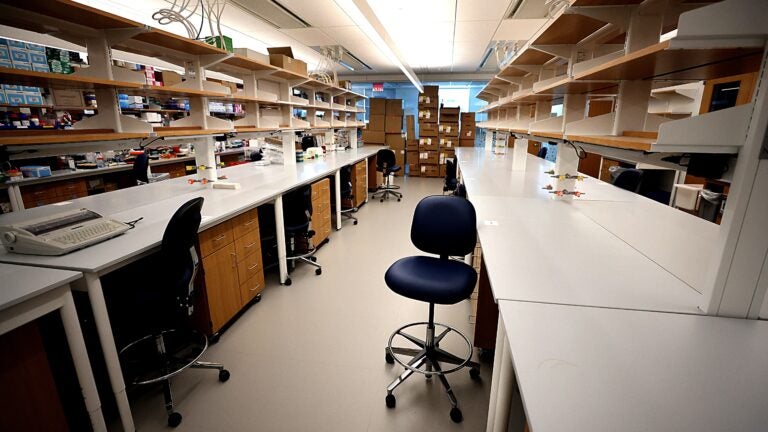
A notable shift is occurring in Massachusetts’ renowned biomedical landscape as leading scientists relocate due to funding cuts and immigration policy changes under the Trump administration. Prominent figures, such as a cancer researcher who has led a lab at Harvard University for two decades, are moving their operations to Texas, while others are abandoning academia altogether for more stable positions in New York and Canada.
These departures underscore a growing concern that the state, historically a global hub for biomedical research, is experiencing a significant brain drain. The implications of this exodus extend beyond individual careers, jeopardizing the state’s economy and the fight against critical diseases, including childhood cancers and Alzheimer’s disease.
To assess the impact of these changes, The Boston Globe collaborated with the MassINC Polling Group to survey nearly 4,000 scientists who have received funding from the National Institutes of Health (NIH). The response, while limited to 367 completed surveys, revealed alarming trends: over two-thirds of respondents advised their students to consider careers outside academia. The majority reported hiring freezes in their labs, and one-third had to lay off staff. Most concerning, more than one in six scientists noted losing researchers to institutions abroad since the Trump administration took office.
The survey results indicated that 68% of scientists felt funding cuts and policy changes had significantly diminished their research capabilities. Many expressed deep anxiety about the future of their work, with one researcher from Boston Children’s Hospital likening the effects to a catastrophic event: “This is like asking, how do you think dropping an atomic bomb on New York City will affect the future of Broadway musicals? This is a generational loss of innovation, technology, and economic power.”
The findings are particularly troubling given Massachusetts’s historical significance in medical advancements. The state has been at the forefront of groundbreaking research, including pioneering the first chemotherapy for childhood leukemia and developing the CRISPR gene-editing technology. Yet, as funding sources dwindle, scientists worry about the future viability of their institutions and the broader implications for public health.
Governor Maura Healey has voiced her concerns, highlighting that Massachusetts research institutions lost between $47 million and $100 million in NIH funding from the previous fiscal year. This decline has disrupted at least 18 clinical trials in the region, affecting thousands of patients. Healey asserts that the state risks losing its top talent to countries like Canada, which recently announced a $1.7 billion investment over 12 years to attract researchers.
The fallout from these federal cuts has been significant. The number of NIH-funded projects in Massachusetts dropped by at least 363 to 5,574, marking the lowest count since 2018. Many researchers are now facing uncertain futures, with hiring freezes and budget cuts becoming the norm. The effects are widespread: local economies are feeling the pinch as fewer researchers means reduced spending in communities reliant on the life sciences sector.
Despite some restoration of funding following legal challenges, the long-term damage is evident. The NIH has shifted its funding criteria, introducing a geographic balance approach that many fear could result in fewer resources for Massachusetts researchers. According to NIH director Dr. Jay Bhattacharya, the aim is to ensure that innovative proposals from all regions receive appropriate attention, but critics argue this could undermine Massachusetts’s position as a leader in scientific research.
The emotional toll on researchers is palpable. Many are reconsidering their career paths. For instance, Rachael Sirianni, a biomedical engineer at the University of Massachusetts Chan Medical School, expressed frustration over the uncertainty affecting her team’s productivity. Having seen her lab’s staff dwindle from eight to three, she is unsure how to navigate the future.
The situation has prompted some to leave Massachusetts altogether. Colleen Reynolds, a public health researcher who focused on LGBTQ reproductive health, relocated to the Netherlands for a postdoctoral role after losing her position due to funding cuts. She described her new environment as “fantastic,” contrasting it with the instability she experienced in the U.S.
As Massachusetts grapples with these challenges, the potential for a lasting impact on its scientific ecosystem remains high. The ongoing brain drain could reshape the landscape of biomedical research and innovation, with consequences that may extend beyond state borders. The urgency to restore funding and stabilize the research environment has never been clearer, as the state strives to retain its status as a leader in the fight against some of the most pressing health challenges of our time.

Philadelphia Parks Launch Free Earth Month Events Starting April 1

Bradford’s Fish Fry Fridays Serve Community with Delicious Dinners

Trump Faces Growing Challenges Amid Rising Tensions with Iran

Scientists Probe the Universe’s Missing Topological Defects

Samsung Galaxy Watch 9 to Feature Larger 435mAh Battery

UConn Huskies Aim to Defend Title in 2026 NCAA Women’s Tournament

U.S. Littoral Combat Ships Dock in Malaysia Amid Regional Tensions

Healthy Choice Wellness Reports Quarterly Earnings, Shares Rise

Urgent News: Charles M. Payment Passes Away at 78 in Duluth

University of Hawaiʻi Joins $25.6M AI Project to Enhance Disaster Monitoring

Major Grant Enhances Cancer Care and Research in Hawaiʻi

Joleen Chaney, Beloved Journalist, Passes Leaving Lasting Legacy

San Francisco’s SFO to Welcome 16 Airlines with Nonstop Flights to Europe in 2026

Goldman Sachs Unveils 2026 Catalyst Playbook for Biotech Investors

Discover Top Business Smartphones for Professionals in 2026

Urgent Update: Tom Aspinall’s Vision Deteriorates After UFC 321

Texas Roadhouse Honors Veterans with Free Meal Vouchers

CD Projekt Red Confirms No Release for The Witcher 4 in 2026
-
Science9 months ago
University of Hawaiʻi Joins $25.6M AI Project to Enhance Disaster Monitoring
-
 Health8 months ago
Major Grant Enhances Cancer Care and Research in Hawaiʻi
-
 Top Stories9 months ago
Joleen Chaney, Beloved Journalist, Passes Leaving Lasting Legacy
-
 World7 months ago
San Francisco’s SFO to Welcome 16 Airlines with Nonstop Flights to Europe in 2026
-
 Business8 months ago
Goldman Sachs Unveils 2026 Catalyst Playbook for Biotech Investors
-
 Business7 months ago
Discover Top Business Smartphones for Professionals in 2026
-
 Top Stories9 months ago
Urgent Update: Tom Aspinall’s Vision Deteriorates After UFC 321
-
 Lifestyle9 months ago
Texas Roadhouse Honors Veterans with Free Meal Vouchers
-
 Entertainment8 months ago
CD Projekt Red Confirms No Release for The Witcher 4 in 2026
-

 Top Stories10 months ago
AI Disruption: AWS Faces Threat as Startups Shift Cloud Focus
-

 Health10 months ago
MIT Scientists Uncover Surprising Genomic Loops During Cell Division
-

 Entertainment10 months ago
Discover the Full Map of Pokémon Legends: Z-A’s Lumiose City