
Science
New Protein Unveils Hidden Communication in the Brain

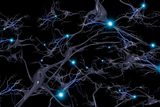
Researchers have developed a groundbreaking protein named iGluSnFR4 that allows scientists to observe signals entering brain cells for the first time. This advancement, led by a team at the Allen Institute and the Janelia Research Campus at the Howard Hughes Medical Institute, offers new insights into the complex communication networks within the brain. The findings were published on October 10, 2023, in the journal Nature Methods.
The complexity of the central nervous system has long posed challenges for neuroscientists. Previously, researchers could only measure the signals emitted by individual neurons, leaving a significant gap in understanding how these cells communicate with one another. The newly engineered protein, cleverly dubbed the “glue sniffer,” is designed to detect glutamate, the primary neurotransmitter essential for cognitive functions like thinking and memory. This protein provides a more comprehensive view of the signals that neurons receive, enhancing the understanding of brain activity.
Innovative Developments in Neuroscience
The iGluSnFR4 protein marks a significant evolution in the tools available to neuroscientists. According to Kaspar Podgorski, a co-author of the study and a neuroscientist at the Allen Institute, traditional methods have struggled to combine structural connectivity with functional communication. “Neuroscientists have pretty good ways of measuring structural connections between neurons, but we haven’t been good at combining these two kinds of information,” he stated in a press release.
Previously, the faint and rapid nature of chemical signals made them difficult to measure accurately. The introduction of the glue sniffer proteins allows researchers to access this critical information. Podgorski likens the advancement to reading a book with scrambled words; the new protein helps decipher the connections and meanings between neurons.
The research team has introduced two variants of the protein: iGluSnFR4f, which measures rapid signals, and iGluSnFR4s, designed for signals produced by larger groups of neurons. Experiments demonstrated the proteins’ ability to track activity in the mouse brain, revealing fluorescent signals that can be imaged through microscopy.
Implications for Understanding Brain Disorders
The implications of this research extend beyond basic neuroscience. Understanding how neurons communicate can illuminate the underlying mechanisms of various neurological disorders, including schizophrenia and epilepsy. Disruptions in glutamate signaling are often implicated in these conditions, making the glue sniffer a valuable tool for future research.
“What we have invented here is a way of measuring information that comes into neurons from different sources,” concluded Podgorski. This capability fills a critical gap in neuroscience research, enabling scientists to gain a better grasp of the computations that allow the brain to function effectively.
The development of the glue sniffer protein is set to revolutionize how neuroscientists study brain activity, potentially leading to new insights into both healthy brain function and the origins of neurological disorders. As research progresses, the hope is that these tools will provide a clearer picture of the intricate conversations taking place within our brains, facilitating advancements in treatments and therapies.
With the potential to reshape our understanding of brain communication, the iGluSnFR4 protein stands as a testament to the innovative spirit of modern neuroscience. The research not only enhances our knowledge of the brain’s hidden language but also opens new avenues for exploring the complexities of human cognition and behavior.

Philadelphia Parks Launch Free Earth Month Events Starting April 1

Bradford’s Fish Fry Fridays Serve Community with Delicious Dinners

Trump Faces Growing Challenges Amid Rising Tensions with Iran

Scientists Probe the Universe’s Missing Topological Defects

Samsung Galaxy Watch 9 to Feature Larger 435mAh Battery

UConn Huskies Aim to Defend Title in 2026 NCAA Women’s Tournament

U.S. Littoral Combat Ships Dock in Malaysia Amid Regional Tensions

Healthy Choice Wellness Reports Quarterly Earnings, Shares Rise

Urgent News: Charles M. Payment Passes Away at 78 in Duluth

University of Hawaiʻi Joins $25.6M AI Project to Enhance Disaster Monitoring

Major Grant Enhances Cancer Care and Research in Hawaiʻi

Joleen Chaney, Beloved Journalist, Passes Leaving Lasting Legacy

San Francisco’s SFO to Welcome 16 Airlines with Nonstop Flights to Europe in 2026

Goldman Sachs Unveils 2026 Catalyst Playbook for Biotech Investors

Discover Top Business Smartphones for Professionals in 2026

Urgent Update: Tom Aspinall’s Vision Deteriorates After UFC 321

Texas Roadhouse Honors Veterans with Free Meal Vouchers

CD Projekt Red Confirms No Release for The Witcher 4 in 2026
-
Science9 months ago
University of Hawaiʻi Joins $25.6M AI Project to Enhance Disaster Monitoring
-
 Health8 months ago
Major Grant Enhances Cancer Care and Research in Hawaiʻi
-
 Top Stories9 months ago
Joleen Chaney, Beloved Journalist, Passes Leaving Lasting Legacy
-
 World7 months ago
San Francisco’s SFO to Welcome 16 Airlines with Nonstop Flights to Europe in 2026
-
 Business8 months ago
Goldman Sachs Unveils 2026 Catalyst Playbook for Biotech Investors
-
 Business8 months ago
Discover Top Business Smartphones for Professionals in 2026
-
 Top Stories9 months ago
Urgent Update: Tom Aspinall’s Vision Deteriorates After UFC 321
-
 Lifestyle9 months ago
Texas Roadhouse Honors Veterans with Free Meal Vouchers
-
 Entertainment8 months ago
CD Projekt Red Confirms No Release for The Witcher 4 in 2026
-

 Top Stories10 months ago
AI Disruption: AWS Faces Threat as Startups Shift Cloud Focus
-

 Health10 months ago
MIT Scientists Uncover Surprising Genomic Loops During Cell Division
-

 Entertainment10 months ago
Discover the Full Map of Pokémon Legends: Z-A’s Lumiose City