
Science
New Study Uncovers Menga Dolmen’s Multicultural Significance

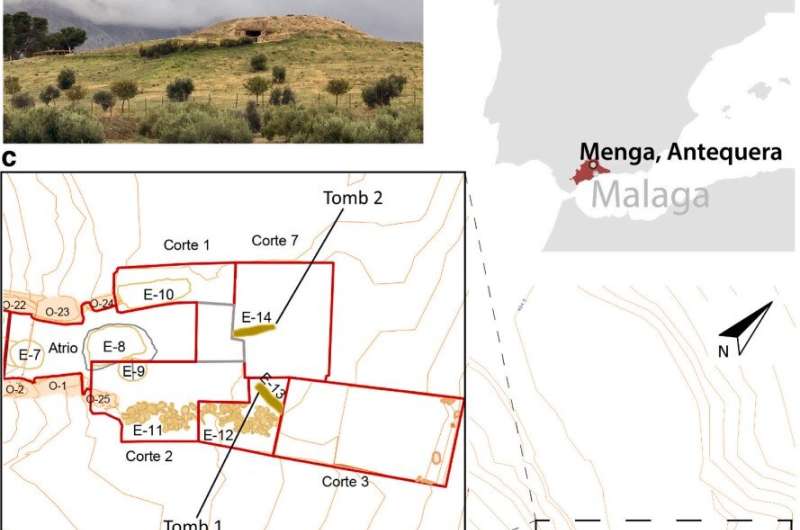
The Menga dolmen, a Neolithic monument in Antequera, Spain, has revealed its rich multicultural significance through a recent study that combines DNA analysis of medieval burials with the archaeological context of the site. This Neolithic structure, built around the fourth millennium BCE, remains a vital part of a UNESCO World Heritage site and has served as a burial and ritual site across various eras, including the Bronze Age, Iron Age, and medieval times.
Insights from Medieval Burials
Research published in the Journal of Archaeological Science: Reports focuses on two distinct burials dated to the 8th century AD and the 11th century AD. These findings highlight the continued use of the Menga dolmen well into the medieval period. Although the skeletal remains were poorly preserved, the study offers valuable insights into the burial practices of that time. The orientations of the remains indicate a potential link to Islamic burial customs, with both individuals’ heads positioned on their right side and facing southwest, aligning with the monument’s axis of symmetry.
During the period of these burials, the Iberian Peninsula was under Islamic rule, yet it was also home to diverse Christian, Jewish, and possibly pagan communities. The authors of the study note that the combination of burial positions and the monument’s alignment complicates the interpretation of these practices within such a multicultural society.
Diverse Ancestry Revealed
DNA analysis conducted on one of the individuals, referred to as “Menga1,” yielded significant results. Menga1 was identified as male, with a Y-chromosome lineage characteristic of European ancestry. Additionally, mitochondrial DNA analysis suggested connections to modern North African populations. The individual’s autosomal DNA revealed a complex heritage, comprising approximately 44% Iberian, 18% North African, and 37% Levantine ancestry.
The researchers highlight that North African-related ancestry has been present in southern Iberia since at least the 3rd or 4th century CE. This genetic mixing likely resulted from historical interactions facilitated by trade among Greek, Phoenician, Carthaginian, and later Roman societies. The onset of the Islamic period around 711 CE further enhanced connections to North Africa, fostering cultural exchanges and genetic diversity.
The findings underscore the Menga dolmen’s enduring cultural relevance, showcasing its role as a significant site for burial practices over a span of more than 5,000 years. The authors conclude that the alignment of these burials with the monument’s axis reflects its continued prominence in the landscape of Antequera, emphasizing a legacy that transcends individual faiths.
This research not only enriches our understanding of the Menga dolmen’s historical significance but also illustrates the complexity of cultural identities in medieval Spain. The study, led by Marina Silva and her team, provides a deeper appreciation for the long-standing traditions surrounding this remarkable monument.

Philadelphia Parks Launch Free Earth Month Events Starting April 1

Bradford’s Fish Fry Fridays Serve Community with Delicious Dinners

Trump Faces Growing Challenges Amid Rising Tensions with Iran

Scientists Probe the Universe’s Missing Topological Defects

Samsung Galaxy Watch 9 to Feature Larger 435mAh Battery

UConn Huskies Aim to Defend Title in 2026 NCAA Women’s Tournament

U.S. Littoral Combat Ships Dock in Malaysia Amid Regional Tensions

Healthy Choice Wellness Reports Quarterly Earnings, Shares Rise

Urgent News: Charles M. Payment Passes Away at 78 in Duluth

University of Hawaiʻi Joins $25.6M AI Project to Enhance Disaster Monitoring

Major Grant Enhances Cancer Care and Research in Hawaiʻi

Joleen Chaney, Beloved Journalist, Passes Leaving Lasting Legacy

San Francisco’s SFO to Welcome 16 Airlines with Nonstop Flights to Europe in 2026

Goldman Sachs Unveils 2026 Catalyst Playbook for Biotech Investors

Discover Top Business Smartphones for Professionals in 2026

Urgent Update: Tom Aspinall’s Vision Deteriorates After UFC 321

Texas Roadhouse Honors Veterans with Free Meal Vouchers

CD Projekt Red Confirms No Release for The Witcher 4 in 2026
-
Science9 months ago
University of Hawaiʻi Joins $25.6M AI Project to Enhance Disaster Monitoring
-
 Health8 months ago
Major Grant Enhances Cancer Care and Research in Hawaiʻi
-
 Top Stories9 months ago
Joleen Chaney, Beloved Journalist, Passes Leaving Lasting Legacy
-
 World7 months ago
San Francisco’s SFO to Welcome 16 Airlines with Nonstop Flights to Europe in 2026
-
 Business8 months ago
Goldman Sachs Unveils 2026 Catalyst Playbook for Biotech Investors
-
 Business8 months ago
Discover Top Business Smartphones for Professionals in 2026
-
 Top Stories9 months ago
Urgent Update: Tom Aspinall’s Vision Deteriorates After UFC 321
-
 Lifestyle9 months ago
Texas Roadhouse Honors Veterans with Free Meal Vouchers
-
 Entertainment8 months ago
CD Projekt Red Confirms No Release for The Witcher 4 in 2026
-

 Top Stories10 months ago
AI Disruption: AWS Faces Threat as Startups Shift Cloud Focus
-

 Health10 months ago
MIT Scientists Uncover Surprising Genomic Loops During Cell Division
-

 Entertainment10 months ago
Discover the Full Map of Pokémon Legends: Z-A’s Lumiose City