
Science
PNNL Advances Quantum Material Production with New Gas Systems

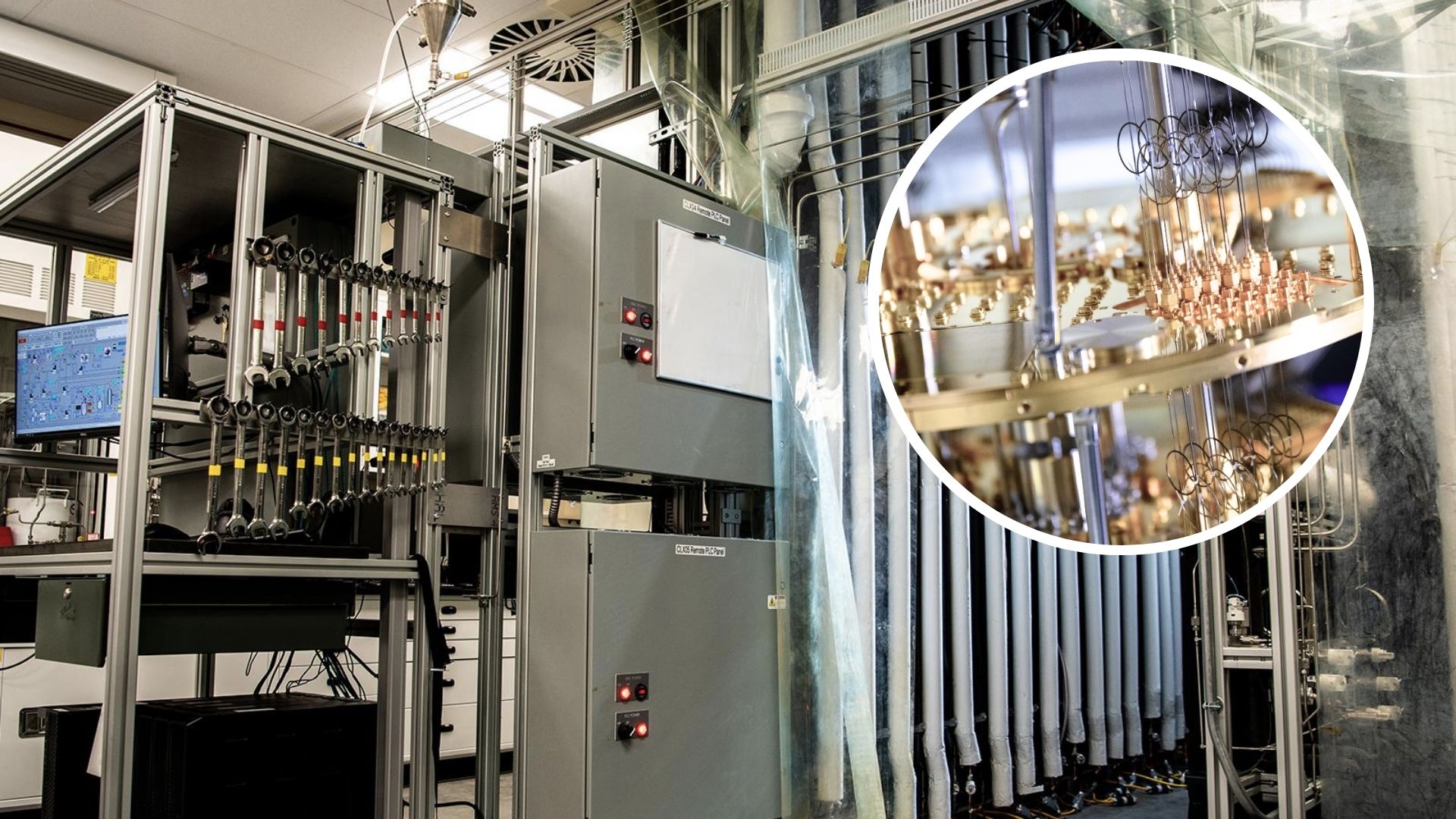
A significant breakthrough in the production of quantum materials has been achieved by the Pacific Northwest National Laboratory (PNNL) in Washington, D.C. The laboratory has successfully designed and built high-purity gas conversion and purification systems for two critical gases: silane and germane. These gases are vital for research and development in quantum information science and advanced technologies, including the semiconductor industry, where they are used to deposit thin films of silicon and germanium for advanced computing chips.
Enhancing the Supply Chain for Quantum Research
According to Christopher Landers, Director of the Office of Isotope Research and Development (R&D), this initiative is more than a scientific achievement; it is crucial for the strategic goals outlined in the Genesis Mission. Landers emphasized that the laboratory’s efforts are directly addressing the need for high-purity materials essential for breakthroughs in quantum information science and other national priorities. He stated, “Our work at PNNL is giving our scientists and industries the foundational tools needed to drive innovation in quantum computing and AI.”
PNNL is also continuing its research to enhance the isotopic enrichment of silane and germane using advanced thermal diffusion isotope separation (TDIS) technologies. The laboratory has previously developed systems for enriching other gases, such as argon and chlorine, but further research is necessary to ensure the safe operation of TDIS systems for silane and germane.
Safety and Innovation in Gas Purification
The laboratory’s expertise in implementing rigorous safety measures is crucial to the success of these systems. PNNL has developed automated control mechanisms that monitor numerous process variables, alerting operators if conditions deviate from expected levels. Mike Powell, the principal investigator of the project, acknowledged the complexities involved, stating, “Isotopic dilution of enriched silicon is a challenging problem. But we carefully designed our systems and handling procedures to maintain the starting feedstock isotopic purity through to the final silane and germane products.”
PNNL’s commitment to research and development includes designing and operating specialized systems that create a pathway from commercially available enriched starting compounds to device-compatible precursor gases. To bolster the supply chain and enhance efficiency, the laboratory is also working on techniques to directly enrich these gases, which simplifies production and minimizes the risk of impurities.
These advancements are expected to support a wide range of advanced technologies, including next-generation semiconductor devices and other precision materials. The initiative underscores the commitment of the Isotope Research Program (IRP) to build a resilient infrastructure for specialized materials. Additionally, IRP is dedicated to pursuing further research and development or collaborating with industry partners to achieve purities and specifications for these materials that are currently unavailable in the market.
Through these innovative efforts, PNNL is positioning itself at the forefront of quantum material production, contributing to both national security and technological advancement.

Philadelphia Parks Launch Free Earth Month Events Starting April 1

Bradford’s Fish Fry Fridays Serve Community with Delicious Dinners

Trump Faces Growing Challenges Amid Rising Tensions with Iran

Scientists Probe the Universe’s Missing Topological Defects

Samsung Galaxy Watch 9 to Feature Larger 435mAh Battery

UConn Huskies Aim to Defend Title in 2026 NCAA Women’s Tournament

U.S. Littoral Combat Ships Dock in Malaysia Amid Regional Tensions

Healthy Choice Wellness Reports Quarterly Earnings, Shares Rise

Urgent News: Charles M. Payment Passes Away at 78 in Duluth

University of Hawaiʻi Joins $25.6M AI Project to Enhance Disaster Monitoring

Major Grant Enhances Cancer Care and Research in Hawaiʻi

Joleen Chaney, Beloved Journalist, Passes Leaving Lasting Legacy

San Francisco’s SFO to Welcome 16 Airlines with Nonstop Flights to Europe in 2026

Goldman Sachs Unveils 2026 Catalyst Playbook for Biotech Investors

Discover Top Business Smartphones for Professionals in 2026

Urgent Update: Tom Aspinall’s Vision Deteriorates After UFC 321

Texas Roadhouse Honors Veterans with Free Meal Vouchers

CD Projekt Red Confirms No Release for The Witcher 4 in 2026
-
Science9 months ago
University of Hawaiʻi Joins $25.6M AI Project to Enhance Disaster Monitoring
-
 Health8 months ago
Major Grant Enhances Cancer Care and Research in Hawaiʻi
-
 Top Stories9 months ago
Joleen Chaney, Beloved Journalist, Passes Leaving Lasting Legacy
-
 World7 months ago
San Francisco’s SFO to Welcome 16 Airlines with Nonstop Flights to Europe in 2026
-
 Business8 months ago
Goldman Sachs Unveils 2026 Catalyst Playbook for Biotech Investors
-
 Business7 months ago
Discover Top Business Smartphones for Professionals in 2026
-
 Top Stories9 months ago
Urgent Update: Tom Aspinall’s Vision Deteriorates After UFC 321
-
 Lifestyle9 months ago
Texas Roadhouse Honors Veterans with Free Meal Vouchers
-
 Entertainment8 months ago
CD Projekt Red Confirms No Release for The Witcher 4 in 2026
-

 Top Stories10 months ago
AI Disruption: AWS Faces Threat as Startups Shift Cloud Focus
-

 Health10 months ago
MIT Scientists Uncover Surprising Genomic Loops During Cell Division
-

 Entertainment10 months ago
Discover the Full Map of Pokémon Legends: Z-A’s Lumiose City