
Science
Sciencenter’s 30-Year Journey Sparks Curiosity through Hands-On Learning

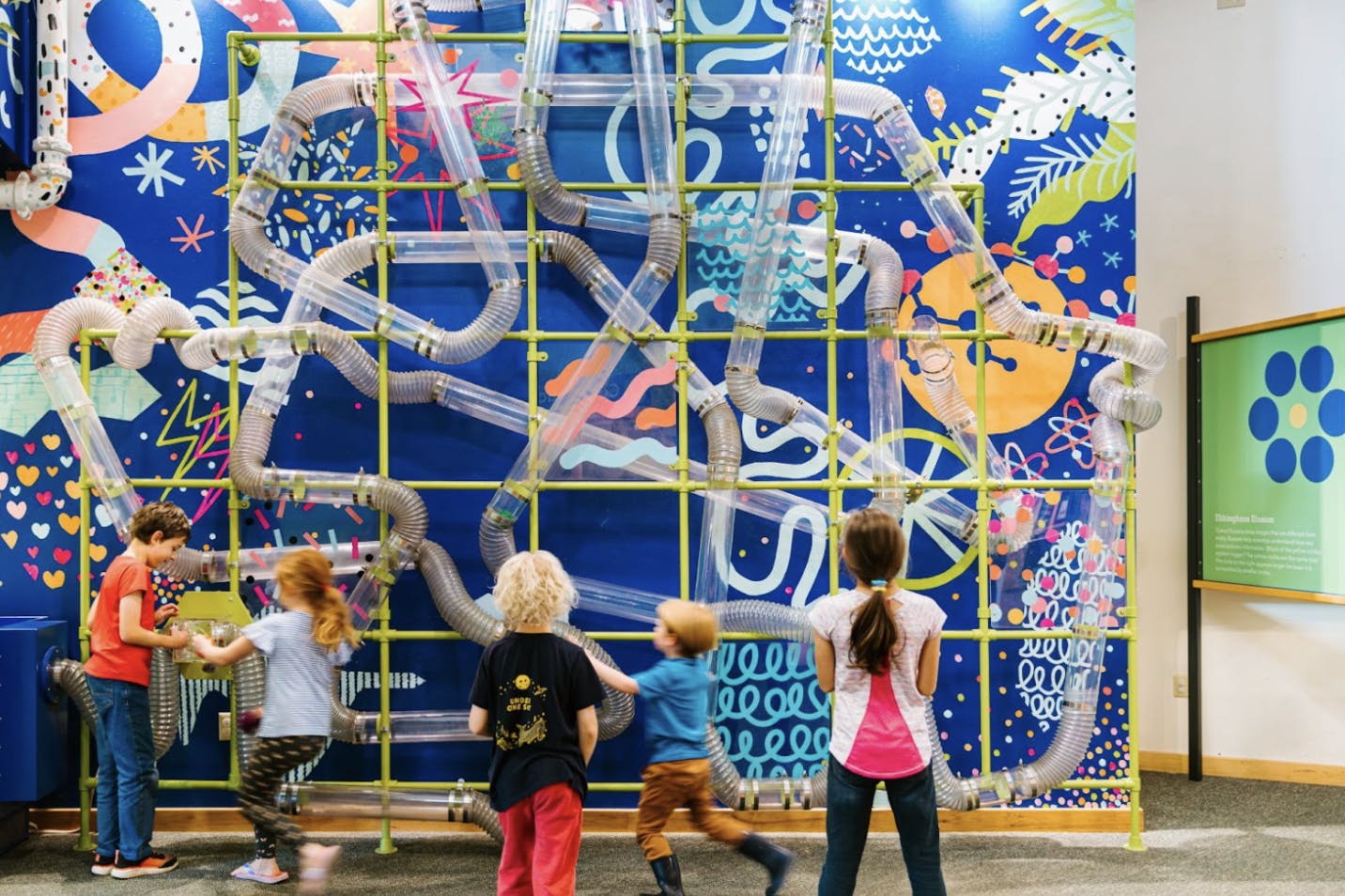
The Sciencenter, an interactive science museum located in Ithaca, New York, has dedicated over 30 years to fostering curiosity and engagement through hands-on learning experiences. Unlike typical modern environments filled with screens, the Sciencenter buzzes with the sounds of discovery—children laugh, explore, and interact with exhibits designed to ignite their interest in science.
Sierra Coathup, the Sciencenter’s volunteer program manager, recently witnessed a memorable moment in the Saltonstall Animal Room, which hosts a variety of amphibians, reptiles, and fish. A child excitedly exclaimed to their parent, “See, I told you it was real!” while dashing towards an axolotl tank. Coathup reflected on the experience, noting the unexpected role reversal where the child acted as the educator. Such moments are the result of the Sciencenter’s commitment to its mission: to cultivate a community of curious, collaborative, and critical thinkers.
Engineering Curiosity through Interactive Experiences
As formal education progresses, the natural curiosity that fuels children’s interest in science often diminishes, shifting from exploration to rote memorization. According to Professor Chris Schaffer from Cornell University’s biomedical engineering program, science is typically a favorite subject among students until the end of middle school. He highlights the detrimental effects of traditional classroom environments, which frequently reframe science as a mere collection of facts.
Schaffer emphasizes the significance of interactive spaces that nurture curiosity through active participation. “It really is an exploratory process for discovery that keeps visitors engaged in science,” he stated. Research supports his assertion; a 33-year longitudinal study demonstrated that early hands-on experiences significantly shape individuals’ lifelong interests in science.
Creating engaging exhibits requires more than just colorful displays. At the Sciencenter, curiosity is meticulously engineered through extensive research, prototyping, and testing. Each exhibit, while only capturing attention for a brief moment, is the product of a comprehensive five-year development cycle.
A prime example of this process is the Bridges to Bioengineering project, a collaboration involving faculty and students from Cornell’s Meinig School of Biomedical Engineering. Now in its third year, this bilingual traveling exhibition—available in both Spanish and English—aims to bridge the gap between complex biomedical concepts and public understanding.
The project began with a phase known as “front-end evaluation,” where Adrienne Testa, the director of exhibitions, and her team identified key questions about public perceptions of biomedical engineering. They conducted interviews with professionals, students, and parents across various schools in Tompkins County and Groton, N.Y.. The second phase involved testing prototypes to assess if the exhibits successfully captured attention and communicated scientific principles effectively.
In a workshop located in the Sciencenter’s basement, the current phase of development focuses on refining the exhibition based on feedback from initial public interactions. Schaffer noted the importance of monitoring visitor engagement, asking questions regarding their enjoyment and the knowledge gained from the experience. This iterative approach ensures that the final design is both effective and engaging.
Extending the Reach of Discovery
The Sciencenter’s commitment to fostering curiosity is not limited to its Ithaca location. In 2025, the Sciencenter’s completed traveling exhibitions are expected to reach 14 states and two Canadian provinces, engaging hundreds of thousands of people. Testa mentioned plans for an exhibition to be hosted at a children’s science museum in Chengdu, China, demonstrating the Sciencenter’s ambition to share its model of discovery across cultural and geographical boundaries.
This dedication to curiosity is evident in the daily experiences of visitors. The Sciencenter aims to ensure that discovery remains tangible, hands-on, and enjoyable. The culmination of years of careful planning and execution manifests in simple yet profound moments, like a child confidently announcing to their parents, “See? I told you it was real!”
Through the efforts of its staff, researchers, and thousands of volunteers, the Sciencenter continues to champion an environment where curiosity thrives, proving that learning can—and should—be an engaging adventure.

Philadelphia Parks Launch Free Earth Month Events Starting April 1

Bradford’s Fish Fry Fridays Serve Community with Delicious Dinners

Trump Faces Growing Challenges Amid Rising Tensions with Iran

Scientists Probe the Universe’s Missing Topological Defects

Samsung Galaxy Watch 9 to Feature Larger 435mAh Battery

UConn Huskies Aim to Defend Title in 2026 NCAA Women’s Tournament

U.S. Littoral Combat Ships Dock in Malaysia Amid Regional Tensions

Healthy Choice Wellness Reports Quarterly Earnings, Shares Rise

Urgent News: Charles M. Payment Passes Away at 78 in Duluth

University of Hawaiʻi Joins $25.6M AI Project to Enhance Disaster Monitoring

Major Grant Enhances Cancer Care and Research in Hawaiʻi

Joleen Chaney, Beloved Journalist, Passes Leaving Lasting Legacy

San Francisco’s SFO to Welcome 16 Airlines with Nonstop Flights to Europe in 2026

Goldman Sachs Unveils 2026 Catalyst Playbook for Biotech Investors

Discover Top Business Smartphones for Professionals in 2026

Urgent Update: Tom Aspinall’s Vision Deteriorates After UFC 321

Texas Roadhouse Honors Veterans with Free Meal Vouchers

CD Projekt Red Confirms No Release for The Witcher 4 in 2026
-
Science9 months ago
University of Hawaiʻi Joins $25.6M AI Project to Enhance Disaster Monitoring
-
 Health8 months ago
Major Grant Enhances Cancer Care and Research in Hawaiʻi
-
 Top Stories9 months ago
Joleen Chaney, Beloved Journalist, Passes Leaving Lasting Legacy
-
 World7 months ago
San Francisco’s SFO to Welcome 16 Airlines with Nonstop Flights to Europe in 2026
-
 Business8 months ago
Goldman Sachs Unveils 2026 Catalyst Playbook for Biotech Investors
-
 Business7 months ago
Discover Top Business Smartphones for Professionals in 2026
-
 Top Stories9 months ago
Urgent Update: Tom Aspinall’s Vision Deteriorates After UFC 321
-
 Lifestyle9 months ago
Texas Roadhouse Honors Veterans with Free Meal Vouchers
-
 Entertainment8 months ago
CD Projekt Red Confirms No Release for The Witcher 4 in 2026
-

 Top Stories10 months ago
AI Disruption: AWS Faces Threat as Startups Shift Cloud Focus
-

 Health10 months ago
MIT Scientists Uncover Surprising Genomic Loops During Cell Division
-

 Entertainment10 months ago
Discover the Full Map of Pokémon Legends: Z-A’s Lumiose City