
Science
Scientists Uncover Limit on Lifespan of Advanced Civilisations

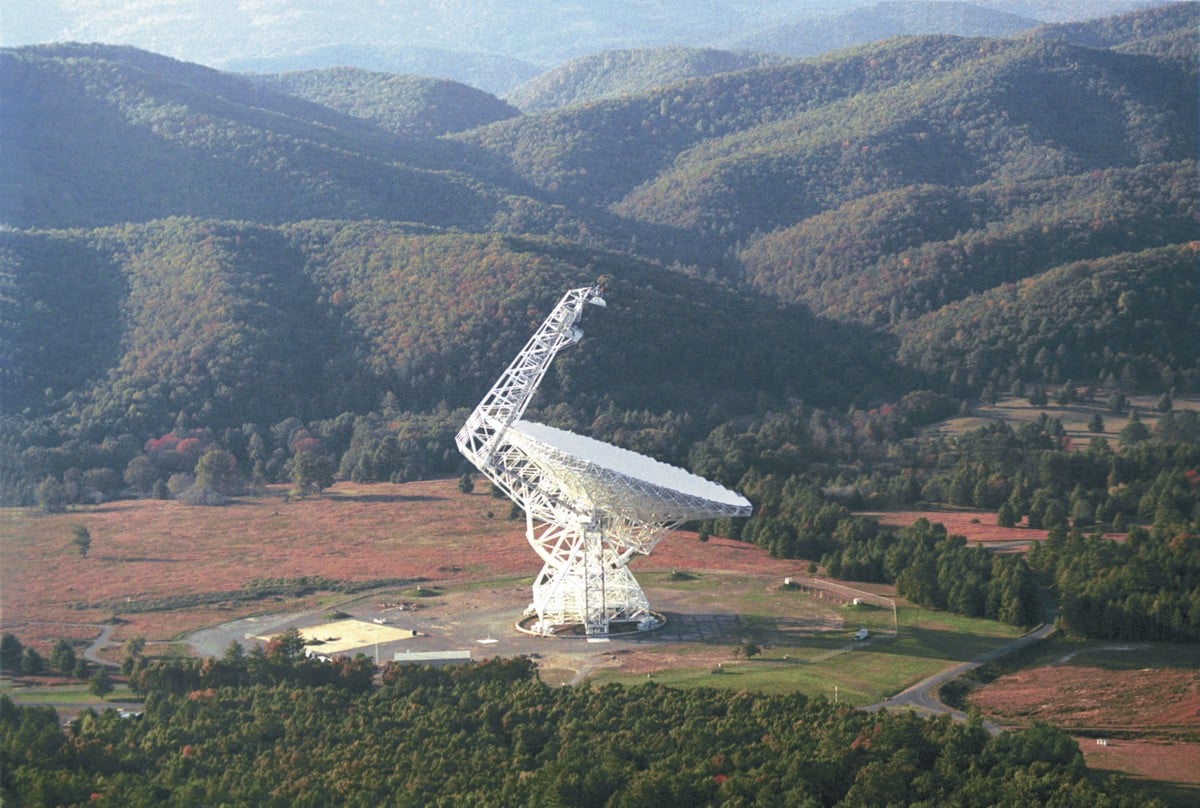
The question of why humanity has not encountered extraterrestrial civilisations has intrigued scientists for decades. This inquiry, known as the Fermi paradox, was famously articulated by physicist Enrico Fermi, who wondered, “Where is everybody?” Despite the universe’s vastness and the estimated 13 billion years of its existence, no evidence of other intelligent life has emerged. Now, physicists from Sharif University of Technology in Tehran, Sohrab Rahvar and Shahin Rouhani, have approached this enduring mystery with a fresh perspective, suggesting that the silence itself may indicate a limited lifespan for technologically advanced civilisations.
The researchers argue that if intelligent life is relatively common, the absence of contact with other civilisations implies that they may not exist anymore. Given the age of the Galaxy and its interconnected nature, any long-lived technological society would likely have left some trace of its existence. The absence of signals or probes leads to a troubling conclusion: technologically advanced civilisations may only survive for about 5,000 years, a strikingly short timeframe when compared to the millions of years one might expect.
To arrive at their conclusion, Rahvar and Rouhani built on the Drake Equation, which estimates the number of communicating civilisations in the Galaxy. They introduced constraints based on electromagnetic communication, noting that radio telescopes have been listening for signals long enough that our “light cone” encompasses the entire history of the Galaxy for roughly the past 100,000 years. Any civilisation broadcasting detectable signals within this timeframe should, in theory, have been heard by now.
This silence is not merely a reflection of humanity’s technological limitations. The authors assert that it is indicative of a genuine absence of detectable civilisations. Their calculations suggest that if intelligent life is prevalent, technological societies must typically perish within 5,000 years. This figure starkly highlights humanity’s vulnerability; having only been a technological civilisation for approximately 200 years, we find ourselves at the beginning of a precarious period in our history.
The paper outlines several existential threats that could contribute to the downfall of civilisations, including asteroid impacts, supervolcano eruptions, climate change, pandemics, nuclear war, artificial intelligence, and rogue biotechnology. The authors reference historical examples of collapsed civilisations, such as the Romans and the Maya, which never fully recovered. In an increasingly interconnected world, the potential for a global catastrophe is unprecedented.
While the mathematics suggests a limit on the lifespan of civilisations, it does not imply that they must all end within this timeframe. Alternative explanations remain viable, including the possibility that civilisations choose not to communicate or that humanity is among the first intelligent species to emerge. The distances between stars may also hinder contact.
Despite these alternatives, the implications of this research are hard to ignore. The Galaxy may have once been teeming with civilisations that achieved remarkable feats, only to fall silent before making contact with others. Whether through war, environmental collapse, or the misuse of technology, the universe appears to impose a strict limit on the duration of intelligence.
As humanity continues to navigate its future, understanding our place in the cosmos becomes increasingly crucial. The study highlights the urgent need for awareness of the threats we face and the potential outcomes of our technological pursuits. The question of whether we will endure or follow the same fate as those before us remains open, but the research serves as a sobering reminder of our fragile existence in an expansive universe.

Philadelphia Parks Launch Free Earth Month Events Starting April 1

Bradford’s Fish Fry Fridays Serve Community with Delicious Dinners

Trump Faces Growing Challenges Amid Rising Tensions with Iran

Scientists Probe the Universe’s Missing Topological Defects

Samsung Galaxy Watch 9 to Feature Larger 435mAh Battery

UConn Huskies Aim to Defend Title in 2026 NCAA Women’s Tournament

U.S. Littoral Combat Ships Dock in Malaysia Amid Regional Tensions

Healthy Choice Wellness Reports Quarterly Earnings, Shares Rise

Urgent News: Charles M. Payment Passes Away at 78 in Duluth

University of Hawaiʻi Joins $25.6M AI Project to Enhance Disaster Monitoring

Major Grant Enhances Cancer Care and Research in Hawaiʻi

Joleen Chaney, Beloved Journalist, Passes Leaving Lasting Legacy

San Francisco’s SFO to Welcome 16 Airlines with Nonstop Flights to Europe in 2026

Goldman Sachs Unveils 2026 Catalyst Playbook for Biotech Investors

Discover Top Business Smartphones for Professionals in 2026

Urgent Update: Tom Aspinall’s Vision Deteriorates After UFC 321

Texas Roadhouse Honors Veterans with Free Meal Vouchers

CD Projekt Red Confirms No Release for The Witcher 4 in 2026
-
Science9 months ago
University of Hawaiʻi Joins $25.6M AI Project to Enhance Disaster Monitoring
-
 Health8 months ago
Major Grant Enhances Cancer Care and Research in Hawaiʻi
-
 Top Stories9 months ago
Joleen Chaney, Beloved Journalist, Passes Leaving Lasting Legacy
-
 World7 months ago
San Francisco’s SFO to Welcome 16 Airlines with Nonstop Flights to Europe in 2026
-
 Business8 months ago
Goldman Sachs Unveils 2026 Catalyst Playbook for Biotech Investors
-
 Business7 months ago
Discover Top Business Smartphones for Professionals in 2026
-
 Top Stories9 months ago
Urgent Update: Tom Aspinall’s Vision Deteriorates After UFC 321
-
 Lifestyle9 months ago
Texas Roadhouse Honors Veterans with Free Meal Vouchers
-
 Entertainment8 months ago
CD Projekt Red Confirms No Release for The Witcher 4 in 2026
-

 Top Stories10 months ago
AI Disruption: AWS Faces Threat as Startups Shift Cloud Focus
-

 Health10 months ago
MIT Scientists Uncover Surprising Genomic Loops During Cell Division
-

 Entertainment10 months ago
Discover the Full Map of Pokémon Legends: Z-A’s Lumiose City