
Science
SpaceX Set to Launch Starlink 17-33 Mission After Brief Stand Down

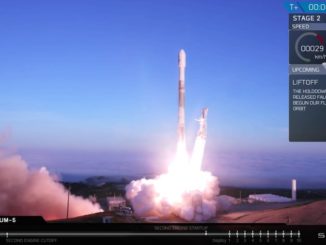
SpaceX is poised to launch its Falcon 9 rocket on the Starlink 17-33 mission from the Vandenberg Space Force Base in California. This marks a return to flight following a brief stand down that lasted less than a week. The launch, scheduled for February 7, 2024, at 9:21 a.m. PST (12:21 p.m. EST / 17:21 UTC), will deploy 25 additional Starlink satellites into low Earth orbit. Currently, there are more than 9,600 satellites orbiting the planet, according to astronomer Jonathan McDowell.
The Falcon 9 rocket will lift off from pad 4E, following a south-southwest trajectory. Coverage of the event will begin approximately 30 minutes prior to liftoff, providing real-time updates for space enthusiasts and stakeholders alike.
Details on the Falcon 9 Mission
The upcoming launch utilizes the Falcon 9 first stage booster with tail number 1088, which will be flying for the 13th time. This booster has previously supported several missions, including NASA’s SPHEREx and Transporter-12, as well as two launches for the National Reconnaissance Office.
Approximately 8.5 minutes post-launch, booster B1088 is expected to land on the drone ship ‘Of Course I Still Love You’, stationed in the Pacific Ocean. If successful, this will mark the 176th landing on that vessel and the 568th booster landing for SpaceX, showcasing the company’s ongoing commitment to reusability in spaceflight.
Context of the Recent Stand Down
SpaceX is returning to its normal launch cadence after a rare period of quiet and some delays. Following the launch of the Starlink 17-32 mission on February 2, 2024, the company had originally planned to launch the Starlink 6-103 mission from Space Launch Complex 40 at Cape Canaveral Space Force Station just a day later. However, an in-flight anomaly was reported during the previous launch.
“During today’s launch, the second stage experienced an off-nominal condition during preparation for the deorbit burn,” SpaceX stated on February 2. “The vehicle then performed as designed to successfully passivate the stage. The first two MVac burns were nominal and safely deployed all 25 Starlink satellites to their intended orbit.”
In the aftermath, SpaceX rolled back the Starlink satellites intended for the 6-103 mission to their facilities at NASA’s Kennedy Space Center. The Falcon 9 booster, tail number 1101, was subsequently prepared for the upcoming launch of Crew-12, set for the following week.
The Federal Aviation Administration (FAA) concluded its investigation into the anomaly on Friday evening, allowing SpaceX to resume its licensed flights. “The FAA oversaw and accepted the findings of the SpaceX-led investigation. The final mishap report cites the probable root cause was the Falcon 9 stage 2 engine’s failure to ignite prior to the deorbit burn,” the FAA noted in its statement. The agency confirmed that SpaceX has implemented technical and organizational measures to prevent future occurrences, thereby authorizing the Falcon 9 vehicle to return to flight.
As the aerospace community awaits the launch, all eyes will be on SpaceX as it continues to expand its Starlink constellation, providing essential satellite internet services worldwide.

Philadelphia Parks Launch Free Earth Month Events Starting April 1

Bradford’s Fish Fry Fridays Serve Community with Delicious Dinners

Trump Faces Growing Challenges Amid Rising Tensions with Iran

Scientists Probe the Universe’s Missing Topological Defects

Samsung Galaxy Watch 9 to Feature Larger 435mAh Battery

UConn Huskies Aim to Defend Title in 2026 NCAA Women’s Tournament

U.S. Littoral Combat Ships Dock in Malaysia Amid Regional Tensions

Healthy Choice Wellness Reports Quarterly Earnings, Shares Rise

Urgent News: Charles M. Payment Passes Away at 78 in Duluth

University of Hawaiʻi Joins $25.6M AI Project to Enhance Disaster Monitoring

Major Grant Enhances Cancer Care and Research in Hawaiʻi

Joleen Chaney, Beloved Journalist, Passes Leaving Lasting Legacy

San Francisco’s SFO to Welcome 16 Airlines with Nonstop Flights to Europe in 2026

Goldman Sachs Unveils 2026 Catalyst Playbook for Biotech Investors

Discover Top Business Smartphones for Professionals in 2026

Urgent Update: Tom Aspinall’s Vision Deteriorates After UFC 321

Texas Roadhouse Honors Veterans with Free Meal Vouchers

CD Projekt Red Confirms No Release for The Witcher 4 in 2026
-
Science9 months ago
University of Hawaiʻi Joins $25.6M AI Project to Enhance Disaster Monitoring
-
 Health8 months ago
Major Grant Enhances Cancer Care and Research in Hawaiʻi
-
 Top Stories9 months ago
Joleen Chaney, Beloved Journalist, Passes Leaving Lasting Legacy
-
 World7 months ago
San Francisco’s SFO to Welcome 16 Airlines with Nonstop Flights to Europe in 2026
-
 Business8 months ago
Goldman Sachs Unveils 2026 Catalyst Playbook for Biotech Investors
-
 Business8 months ago
Discover Top Business Smartphones for Professionals in 2026
-
 Top Stories9 months ago
Urgent Update: Tom Aspinall’s Vision Deteriorates After UFC 321
-
 Lifestyle9 months ago
Texas Roadhouse Honors Veterans with Free Meal Vouchers
-
 Entertainment8 months ago
CD Projekt Red Confirms No Release for The Witcher 4 in 2026
-

 Top Stories10 months ago
AI Disruption: AWS Faces Threat as Startups Shift Cloud Focus
-

 Health10 months ago
MIT Scientists Uncover Surprising Genomic Loops During Cell Division
-

 Entertainment10 months ago
Discover the Full Map of Pokémon Legends: Z-A’s Lumiose City