
Science
Thwaites Glacier Faces Accelerating Threat of Collapse

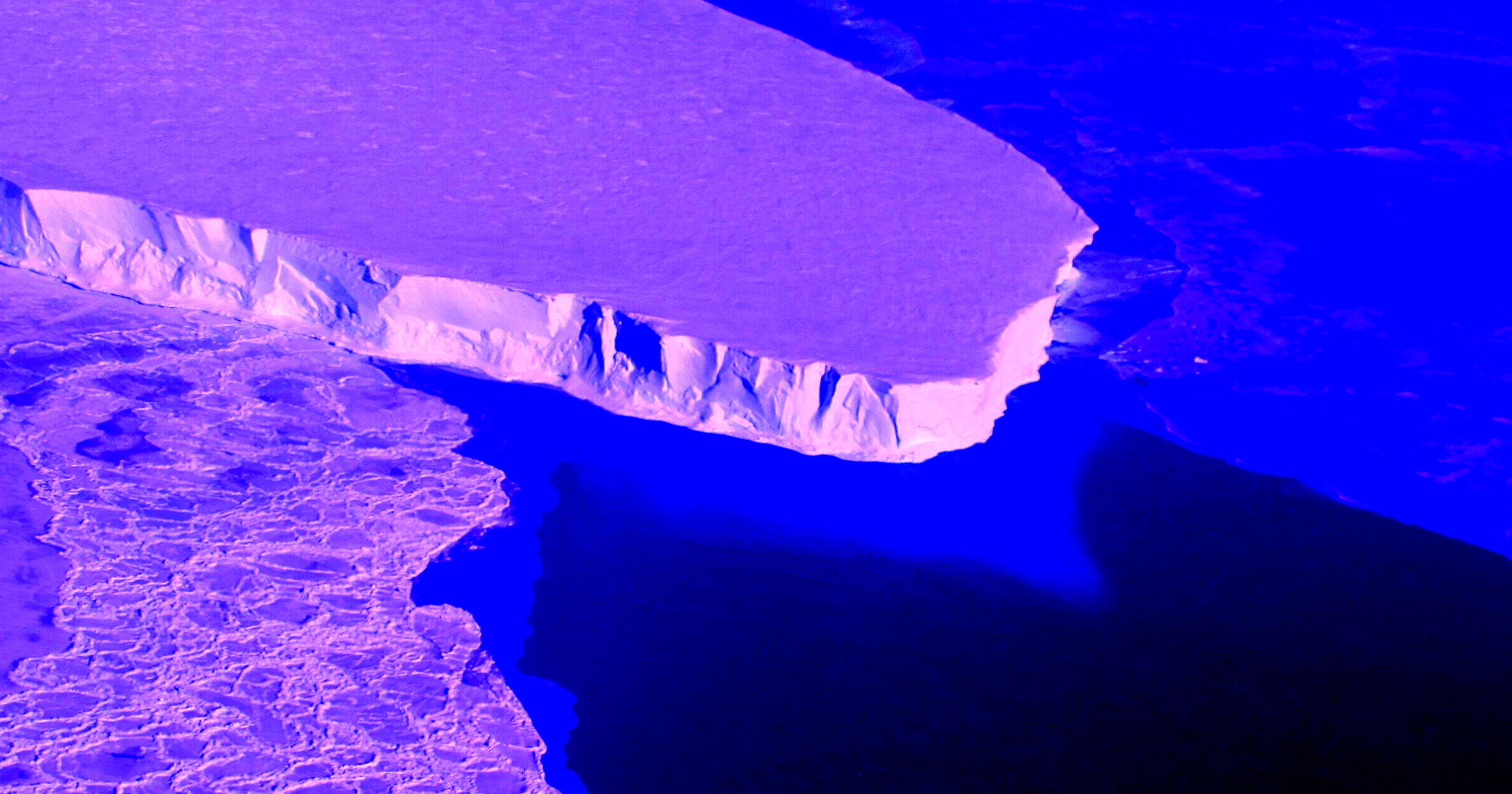
The Thwaites Glacier in Antarctica, often referred to as the “Doomsday Glacier,” is exhibiting alarming signs of instability that could lead to a catastrophic collapse. A recent study from the International Thwaites Glacier Collaboration (ITGC) reveals that the glacier’s retreat has significantly accelerated, raising concerns about the potential for a rise in global sea levels of up to 11 feet. This change could threaten millions of coastal residents worldwide.
Researchers from the University of Manitoba have analyzed satellite data spanning from 2002 to 2022, uncovering troubling developments in the glacier’s structure. The study highlights that large cracks are forming in the ice shelf, undermining its integrity. The research indicates that over the past two decades, the total length of fractures has increased dramatically, growing from approximately 100 miles to over 200 miles. Despite this growth, the average length of the cracks has decreased, suggesting that new stressors are impacting the glacier.
Warming Waters Contributing to Ice Instability
Underwater conditions are equally concerning. Another study has found that warming ocean waters are eroding ice shelves, including Thwaites Glacier, at an accelerated pace. This melting process can now be observed in real-time, with changes occurring within mere hours or days. Researchers noted that swirling eddies of warmer water, capable of spanning up to six miles, are intensifying the melting beneath the glacier.
The international research team also identified a concerning feedback loop. As cold freshwater from the glacier mixes with warmer, saltier ocean water, it creates turbulence that accelerates the melting process. “This positive feedback loop could gain intensity in a warming climate,” stated Lia Siegelman, an assistant professor at UC San Diego, in an interview with CNN.
Future Projections and Urgent Action Needed
The ITGC’s report scheduled for release in March 2025 offers a grim outlook. Although a full collapse of the glacier is not expected in the immediate future, the report warns of a rapid and continued retreat throughout the 21st and 22nd centuries. “Our findings indicate it is set to retreat further, and faster,” the report asserts.
The urgency of addressing climate change has never been clearer. The ITGC emphasizes that immediate and sustained climate change mitigation efforts, particularly decarbonisation, are essential to delaying ice loss and preventing the initiation of similar retreat in other vulnerable areas of Antarctica.
As scientists continue to study the Thwaites Glacier, the implications of its potential collapse remain a pressing concern for global communities. The future of coastal cities hangs in the balance, underscoring the need for concerted action to combat climate change now.

Philadelphia Parks Launch Free Earth Month Events Starting April 1

Bradford’s Fish Fry Fridays Serve Community with Delicious Dinners

Trump Faces Growing Challenges Amid Rising Tensions with Iran

Scientists Probe the Universe’s Missing Topological Defects

Samsung Galaxy Watch 9 to Feature Larger 435mAh Battery

UConn Huskies Aim to Defend Title in 2026 NCAA Women’s Tournament

U.S. Littoral Combat Ships Dock in Malaysia Amid Regional Tensions

Healthy Choice Wellness Reports Quarterly Earnings, Shares Rise

Urgent News: Charles M. Payment Passes Away at 78 in Duluth

University of Hawaiʻi Joins $25.6M AI Project to Enhance Disaster Monitoring

Major Grant Enhances Cancer Care and Research in Hawaiʻi

Joleen Chaney, Beloved Journalist, Passes Leaving Lasting Legacy

San Francisco’s SFO to Welcome 16 Airlines with Nonstop Flights to Europe in 2026

Goldman Sachs Unveils 2026 Catalyst Playbook for Biotech Investors

Discover Top Business Smartphones for Professionals in 2026

Urgent Update: Tom Aspinall’s Vision Deteriorates After UFC 321

Texas Roadhouse Honors Veterans with Free Meal Vouchers

CD Projekt Red Confirms No Release for The Witcher 4 in 2026
-
Science9 months ago
University of Hawaiʻi Joins $25.6M AI Project to Enhance Disaster Monitoring
-
 Health8 months ago
Major Grant Enhances Cancer Care and Research in Hawaiʻi
-
 Top Stories9 months ago
Joleen Chaney, Beloved Journalist, Passes Leaving Lasting Legacy
-
 World7 months ago
San Francisco’s SFO to Welcome 16 Airlines with Nonstop Flights to Europe in 2026
-
 Business8 months ago
Goldman Sachs Unveils 2026 Catalyst Playbook for Biotech Investors
-
 Business8 months ago
Discover Top Business Smartphones for Professionals in 2026
-
 Top Stories9 months ago
Urgent Update: Tom Aspinall’s Vision Deteriorates After UFC 321
-
 Lifestyle9 months ago
Texas Roadhouse Honors Veterans with Free Meal Vouchers
-
 Entertainment8 months ago
CD Projekt Red Confirms No Release for The Witcher 4 in 2026
-

 Top Stories10 months ago
AI Disruption: AWS Faces Threat as Startups Shift Cloud Focus
-

 Health10 months ago
MIT Scientists Uncover Surprising Genomic Loops During Cell Division
-

 Entertainment10 months ago
Discover the Full Map of Pokémon Legends: Z-A’s Lumiose City