
World
China Criticizes U.S. Capture of Maduro, Sees Strategic Opportunity

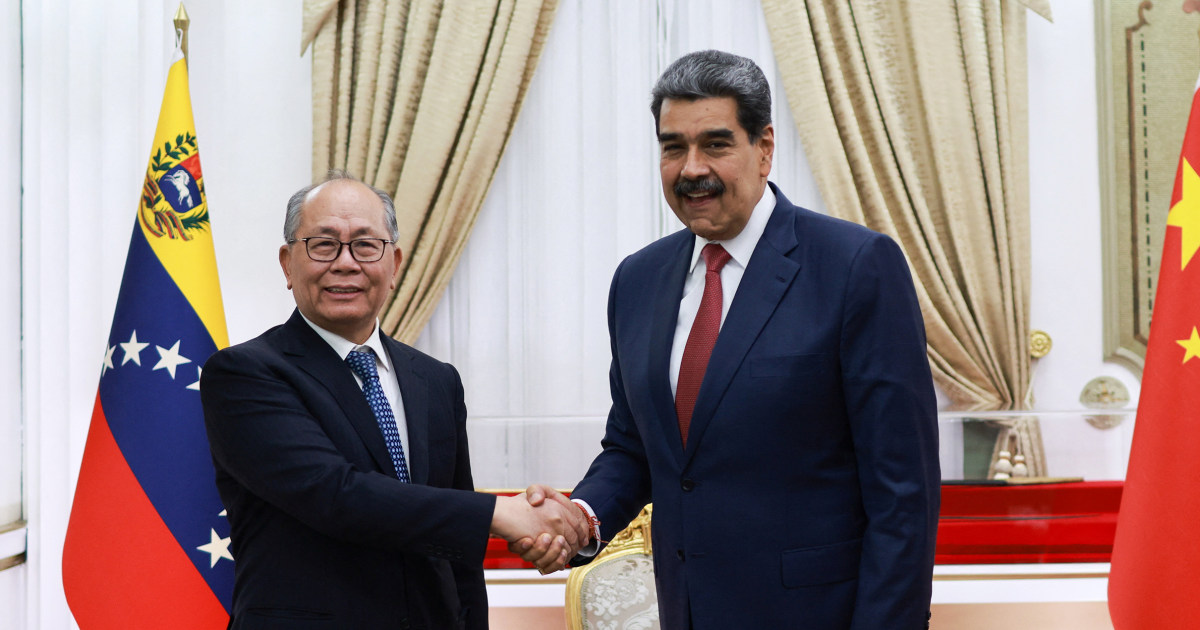
Beijing has condemned the recent capture of Venezuelan President Nicolás Maduro by U.S. forces, asserting that the action violates international law and threatens stability in Latin America. This criticism comes amidst a military buildup by the United States and growing tensions surrounding China’s own ambitions regarding Taiwan. While some observers perceive parallels between these geopolitical events, experts suggest that China is more focused on leveraging the situation to challenge U.S. dominance on the global stage.
During a meeting with Irish Prime Minister Micheál Martin, Chinese leader Xi Jinping remarked on the “turbulence” in international relations, emphasizing that “unilateral bullying seriously impacts the international order.” His comments, while not explicitly naming the United States, reflect a broader sentiment in Beijing that American actions undermine its credibility in Latin America.
Chinese state media have characterized the U.S. intervention in Venezuela as an example of hegemonic behavior. Wu Xinbo, dean of the Institute of International Studies at Fudan University, criticized the U.S. approach, stating, “How can you trust a country that would deal with its weak neighbors this way?” This sentiment underscores a growing narrative in China that positions it as a defender of the rules-based international order.
China’s Foreign Ministry has demanded the immediate release of Maduro and his wife, Cilia Flores, who face drug trafficking charges in New York. The capture occurred shortly after Maduro met with Qiu Xiaoqi, China’s special envoy for Latin American affairs, highlighting the close ties between the two nations. While China has been Venezuela’s primary economic partner, providing substantial financial support amid crippling sanctions, its military commitments remain ambiguous.
Despite the heavy investment in Venezuela, experts note that Beijing has refrained from taking more concrete actions to avoid jeopardizing its ongoing trade negotiations with the U.S. The fallout from the U.S. attack raises concerns about the future of Chinese investments in the region. Wu warned that Latin American nations may become more cautious in their dealings with China as a result of this incident.
The U.S. military’s intervention in Venezuela has also sparked fears that it might embolden China regarding its claims over Taiwan. Some commentators on Chinese social media interpreted Trump’s remarks about the U.S. being “in charge” as a potential call to action against Taiwan. Yet, Wu maintains that the situations are fundamentally different, asserting that “Venezuela is an independent sovereign state, and Taiwan is part of China.”
The Taiwanese government has yet to issue a statement about Maduro’s capture, although it faces mounting pressure from Beijing. The recent military exercises around Taiwan, which simulated a blockade, have heightened concerns among Taiwanese officials about the implications of U.S. actions in neighboring regions.
According to Ryan Hass, director of the John L. Thornton China Center at Brookings, the U.S. strike may not significantly change Beijing’s strategic calculus regarding Taiwan. However, it could lead to heightened scrutiny of American commitments in the region, particularly concerning military support for Taiwan.
Chinese officials have consistently emphasized noninterventionist policies in Latin America, but a recent policy paper highlighted a shift towards increased military and law enforcement cooperation with the region. This suggests a potentially more assertive stance as China aims to expand its influence in a region traditionally dominated by the U.S.
As the geopolitical landscape continues to evolve, the events surrounding Maduro’s capture may have far-reaching consequences for U.S.-China relations and the broader dynamics in Latin America. The implications for Taiwan and the regional balance of power are yet to fully materialize, but the unfolding situation underscores the complexities of international diplomacy in today’s interconnected world.

Philadelphia Parks Launch Free Earth Month Events Starting April 1

Bradford’s Fish Fry Fridays Serve Community with Delicious Dinners

Trump Faces Growing Challenges Amid Rising Tensions with Iran

Scientists Probe the Universe’s Missing Topological Defects

Samsung Galaxy Watch 9 to Feature Larger 435mAh Battery

UConn Huskies Aim to Defend Title in 2026 NCAA Women’s Tournament

U.S. Littoral Combat Ships Dock in Malaysia Amid Regional Tensions

Healthy Choice Wellness Reports Quarterly Earnings, Shares Rise

Urgent News: Charles M. Payment Passes Away at 78 in Duluth

University of Hawaiʻi Joins $25.6M AI Project to Enhance Disaster Monitoring

Major Grant Enhances Cancer Care and Research in Hawaiʻi

Joleen Chaney, Beloved Journalist, Passes Leaving Lasting Legacy

San Francisco’s SFO to Welcome 16 Airlines with Nonstop Flights to Europe in 2026

Goldman Sachs Unveils 2026 Catalyst Playbook for Biotech Investors

Discover Top Business Smartphones for Professionals in 2026

Urgent Update: Tom Aspinall’s Vision Deteriorates After UFC 321

Texas Roadhouse Honors Veterans with Free Meal Vouchers

CD Projekt Red Confirms No Release for The Witcher 4 in 2026
-
Science9 months ago
University of Hawaiʻi Joins $25.6M AI Project to Enhance Disaster Monitoring
-
 Health8 months ago
Major Grant Enhances Cancer Care and Research in Hawaiʻi
-
 Top Stories9 months ago
Joleen Chaney, Beloved Journalist, Passes Leaving Lasting Legacy
-
 World7 months ago
San Francisco’s SFO to Welcome 16 Airlines with Nonstop Flights to Europe in 2026
-
 Business8 months ago
Goldman Sachs Unveils 2026 Catalyst Playbook for Biotech Investors
-
 Business8 months ago
Discover Top Business Smartphones for Professionals in 2026
-
 Top Stories9 months ago
Urgent Update: Tom Aspinall’s Vision Deteriorates After UFC 321
-
 Lifestyle9 months ago
Texas Roadhouse Honors Veterans with Free Meal Vouchers
-
 Entertainment8 months ago
CD Projekt Red Confirms No Release for The Witcher 4 in 2026
-

 Top Stories10 months ago
AI Disruption: AWS Faces Threat as Startups Shift Cloud Focus
-

 Health10 months ago
MIT Scientists Uncover Surprising Genomic Loops During Cell Division
-

 Entertainment10 months ago
Discover the Full Map of Pokémon Legends: Z-A’s Lumiose City