
World
Ryanair Cuts Routes Across Europe, Impacting Millions in 2026

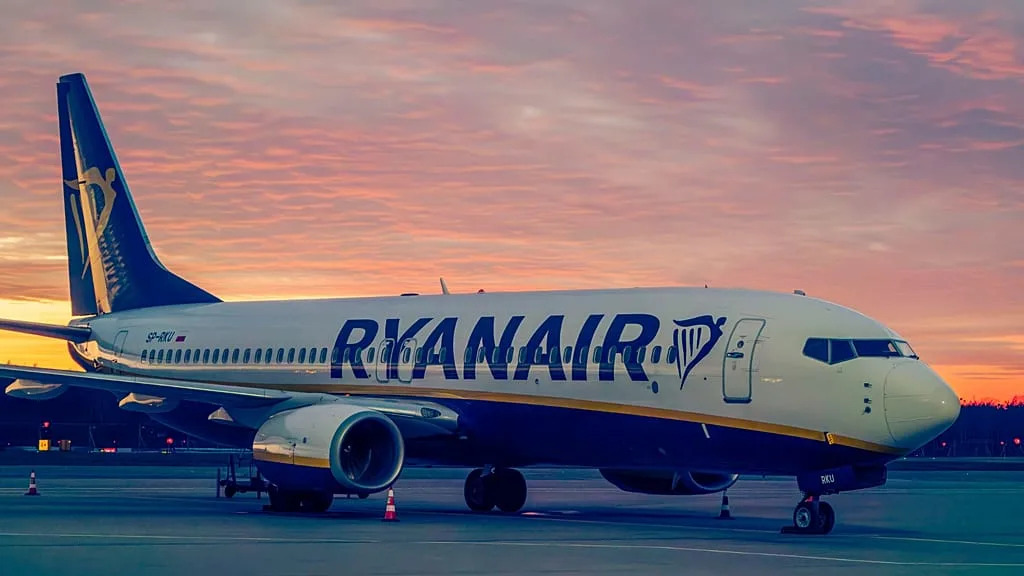
Ryanair, the leading European budget airline, has announced significant route cuts for 2026 that will affect millions of travelers. The airline plans to discontinue flights to several key destinations, particularly in Germany, Spain, France, Belgium, and Portugal, resulting in a reduction of approximately three million available seats. This decision comes amid broader operational changes and challenges faced by the airline as it navigates a competitive landscape.
Major Route Cuts in Germany
In a recent statement, Ryanair revealed plans to cut 24 routes to and from Germany, effectively eliminating nearly 800,000 seats for the Winter 2025/2026 schedule. Airports such as Hamburg, Berlin, Cologne, Memmingen, Frankfurt-Hahn, Dresden, Dortmund, and Leipzig will see significant reductions in operations. The airline’s chief executive, Michael O’Leary, has criticized the high air traffic control and security fees, as well as elevated aviation taxes imposed by the German government, which he claims hinder competitiveness.
“Germany’s sky-high access costs stand in stark contrast to countries like Ireland, Spain, and Poland, where no aviation taxes exist,” Ryanair stated in a press release. The airline noted that Germany’s air traffic market is struggling, operating at just 88 percent of pre-COVID levels, prompting a shift of capacity to more cost-effective countries.
Impact on Spain and Other Destinations
Ryanair is also scaling back its operations in Spain, cutting about 1.2 million seats from its summer 2026 schedule. This includes halting all flights to Asturias and Vigo, closing its base at Santiago de Compostela, and reducing capacity from Santander and Zaragoza. The airline attributes these cuts to ongoing disputes with the Spanish airport operator Aena over rising taxes and fees.
Ryanair has expressed concerns that regional Spanish airports are becoming less competitive compared to alternatives in Morocco and Italy. According to the airline, Aena’s pricing model forces smaller airports to charge rates similar to busier hubs, prompting a shift in focus toward larger airports where demand and fares are higher.
In France, Ryanair has already eliminated 750,000 seats and 25 routes for Winter 2025, primarily due to increased airline taxes. While the airline plans to resume flights to Bergerac in summer 2026, services to Brive and Strasbourg remain suspended. Further cancellations could occur if the financial landscape does not improve.
Belgium is also facing route reductions, with Ryanair set to cut 20 routes and one million seats from its Brussels and Charleroi operations. The newly implemented aviation tax, which has doubled to €10 per passenger, has been cited as a primary reason for this decision. The airline is urging the Belgian government to reconsider these taxes, warning that failure to do so could lead to a collapse in traffic and increased fares.
In Portugal, Ryanair plans to cease all six routes to the Azores by March 2026, affecting approximately 400,000 passengers annually. The airline has criticized rising air traffic control fees and a new €2 travel tax as detrimental to its operations. Ryanair argues that these costs make the Azores less accessible, particularly when competing against lower-cost alternatives.
Additionally, Ryanair is set to make reductions in Bosnia and Serbia, reallocating resources to destinations with increasing summer demand. In Banja Luka, weekly flights will drop from six to two, while services from Niš will also see a reduction.
The airline’s decisions reflect a broader trend of shifting capacity and resources in response to changing market conditions and rising operational costs across Europe. Ryanair’s restructuring may lead to increased competition from other airlines, as rivals like Vueling, Binter, and Iberia step in to fill the void left by the budget carrier.
As Ryanair continues to navigate these challenges, it remains open to reassessing its capacity should the regulatory environment improve. The airline has emphasized the necessity for government intervention to foster a more competitive aviation market in Europe, particularly in the wake of increased taxation and operational fees.

Philadelphia Parks Launch Free Earth Month Events Starting April 1

Bradford’s Fish Fry Fridays Serve Community with Delicious Dinners

Trump Faces Growing Challenges Amid Rising Tensions with Iran

Scientists Probe the Universe’s Missing Topological Defects

Samsung Galaxy Watch 9 to Feature Larger 435mAh Battery

UConn Huskies Aim to Defend Title in 2026 NCAA Women’s Tournament

U.S. Littoral Combat Ships Dock in Malaysia Amid Regional Tensions

Healthy Choice Wellness Reports Quarterly Earnings, Shares Rise

Urgent News: Charles M. Payment Passes Away at 78 in Duluth

University of Hawaiʻi Joins $25.6M AI Project to Enhance Disaster Monitoring

Major Grant Enhances Cancer Care and Research in Hawaiʻi

Joleen Chaney, Beloved Journalist, Passes Leaving Lasting Legacy

San Francisco’s SFO to Welcome 16 Airlines with Nonstop Flights to Europe in 2026

Goldman Sachs Unveils 2026 Catalyst Playbook for Biotech Investors

Discover Top Business Smartphones for Professionals in 2026

Urgent Update: Tom Aspinall’s Vision Deteriorates After UFC 321

Texas Roadhouse Honors Veterans with Free Meal Vouchers

CD Projekt Red Confirms No Release for The Witcher 4 in 2026
-
Science9 months ago
University of Hawaiʻi Joins $25.6M AI Project to Enhance Disaster Monitoring
-
 Health8 months ago
Major Grant Enhances Cancer Care and Research in Hawaiʻi
-
 Top Stories9 months ago
Joleen Chaney, Beloved Journalist, Passes Leaving Lasting Legacy
-
 World7 months ago
San Francisco’s SFO to Welcome 16 Airlines with Nonstop Flights to Europe in 2026
-
 Business8 months ago
Goldman Sachs Unveils 2026 Catalyst Playbook for Biotech Investors
-
 Business7 months ago
Discover Top Business Smartphones for Professionals in 2026
-
 Top Stories9 months ago
Urgent Update: Tom Aspinall’s Vision Deteriorates After UFC 321
-
 Lifestyle9 months ago
Texas Roadhouse Honors Veterans with Free Meal Vouchers
-
 Entertainment8 months ago
CD Projekt Red Confirms No Release for The Witcher 4 in 2026
-

 Top Stories10 months ago
AI Disruption: AWS Faces Threat as Startups Shift Cloud Focus
-

 Health10 months ago
MIT Scientists Uncover Surprising Genomic Loops During Cell Division
-

 Entertainment10 months ago
Discover the Full Map of Pokémon Legends: Z-A’s Lumiose City